

Devices & setup
Withings and MoveVitals: scales, blood pressure and sleep
Withings smart scales, blood pressure monitors, watches and sleep mats feed body composition, blood pressure and sleep into MoveVitals automatically.
Written by MoveVitals Editorial Collective
Community-authored educational content. Individual clinical review is identified only when a named review is actually recorded.
Editorial standards & corrections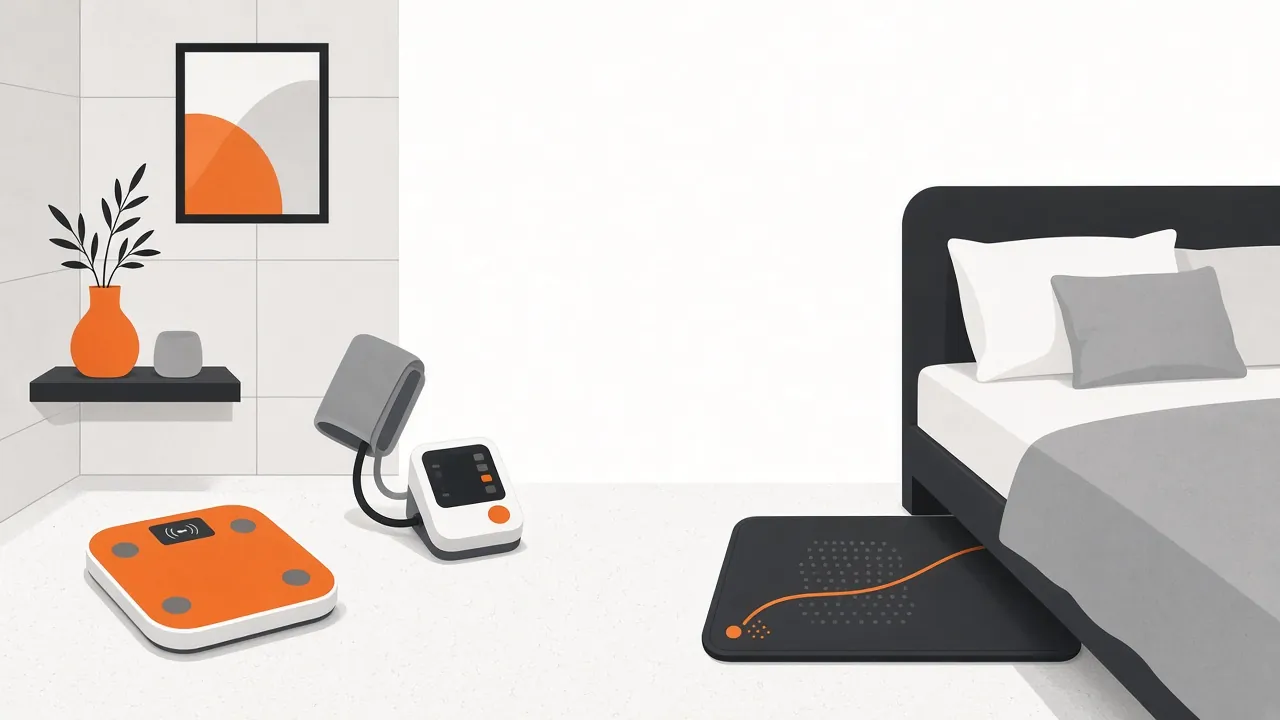
Key takeaways
- New Withings measurements are pushed to MoveVitals within minutes after the device syncs to Withings Health Mate.
- Smart scales can send weight, body fat, muscle, bone, water and visceral fat depending on the model, while BPM monitors send systolic, diastolic and heart rate.
- Scale body fat comes from impedance, which depends on hydration, so weigh at the same time each morning and use the 7-day average weight rather than single readings.
- If several people share a scale, make sure each is recognised in the Withings app, because MoveVitals receives only your profile's measurements.
What syncs
| Device type | Data |
|---|---|
| Smart scales (Body, Body+, Body Comp, Body Scan) | Weight, body fat, muscle, bone, water, visceral fat (model-dependent) |
| Blood pressure monitors (BPM) | Systolic, diastolic, heart rate |
| Watches (ScanWatch etc.) | Steps, heart rate, SpO2, sleep, temperature |
| Sleep Analyzer | Sleep stages, duration, heart rate, breathing disturbances |
| Thermometer (Thermo) | Body temperature |
How to connect
- In MoveVitals: Connections → Connect Withings.
- Sign in to your Withings account and approve read access.
- New measurements are pushed via Withings notifications within minutes after the device syncs to Withings Health Mate.
Tips for reliable body data
- Weigh at the same time each morning; impedance depends on hydration.
- If several people use the scale, make sure each is recognised correctly in the Withings app — MoveVitals receives only your profile's measurements.
- With a Garmin Index or WHOOP weight too, set the weight priority to your Withings scale.
Units
Weight is stored in kg and shown in kg or lb based on your profile setting.
More on the Withings integration page.
Worked example
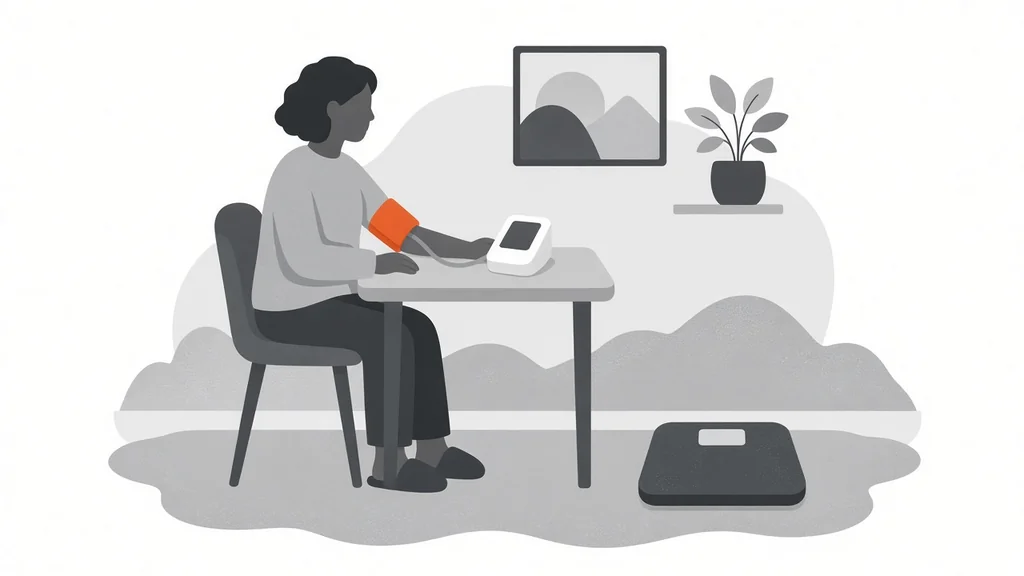
Illustrative scenario. Grace weighs herself on a Withings scale every morning after the bathroom, before breakfast. Day-to-day her weight swings between 64.2 and 65.4 kg, but the 7-day average falls 0.3 kg per week over two months. Her scale's body-fat estimate reads 27%; a DEXA scan shows 30%, so she treats the scale as a trend tool. She also takes blood pressure twice each morning with a Withings cuff; MoveVitals shows her weekly average.
Action steps
- Weigh at the same time daily: after waking and the bathroom, before eating.
- Stand barefoot with dry feet on a hard, level floor.
- Use the 7-day average weight, not single readings.
- Take two blood-pressure readings a minute apart after 5 minutes seated.
- Calibrate body-fat expectations against a DEXA scan if you have one.
Related guides
- Body weight: why daily numbers jump and how to read the trend
- Body fat percentage: healthy ranges and how smart scales measure it
- Blood pressure: categories, home measurement and what moves it
- DEXA scans: the most accurate way to measure body fat — and calibrate your scale
- Sleep apnea detection on watches and rings: how breathing-disturbance alerts work
FAQ
Why is my body fat different from DEXA? Scales estimate via impedance; trends matter more than absolute values.
Are blood pressure readings shared with anyone? No. Your data stays private and read-only access is used.
Why does my body fat jump after a workout? Bioimpedance depends on hydration; sweating or a big drink changes the reading, so measure at a consistent time.
Can several family members share one scale? Yes. Withings recognises users by weight range; check that readings are assigned to the right profile before they sync.
References
- Whelton et al. (2018). 2017 ACC/AHA/AAPA/ABC/ACPM/AGS/APhA/ASH/ASPC/NMA/PCNA Guideline for the Prevention, Detection, Evaluation, and Management of High Blood Pressure in Adults: A Report of the American College of Cardiology/American Heart Association Task Force on Clinical Practice Guidelines. Hypertension. https://doi.org/10.1161/HYP.0000000000000065
- Neeland et al. (2019). Visceral and ectopic fat, atherosclerosis, and cardiometabolic disease: a position statement. The Lancet Diabetes & Endocrinology. https://doi.org/10.1016/s2213-8587%2819%2930084-1
For general information only. This is not medical advice — talk to a qualified professional about your health.
Keep reading
Devices & setup
How MoveVitals handles multiple devices: provenance, duplicates and conflicts
5 min read
Metrics explained
Blood oxygen (SpO2): what wearables measure and when to worry
4 min read
Devices & setup
Garmin Connect and MoveVitals: activities, health and Body Battery
3 min read
Metrics explained
Sleep stages: light, deep and REM sleep explained
4 min read
Metrics explained
How much sleep do you need? Sleep duration and sleep debt
4 min read
Metrics explained
Sleep efficiency: what percentage of time in bed you actually sleep
3 min read