

Mobility & stretching
Mobility vs flexibility: what's the difference and what do you need?
Flexibility is how far a muscle can lengthen; mobility is how well you can actively move a joint through its range with control. Athletes mostly need mobility.
Written by MoveVitals Editorial Collective
Community-authored educational content. Individual clinical review is identified only when a named review is actually recorded.
Editorial standards & corrections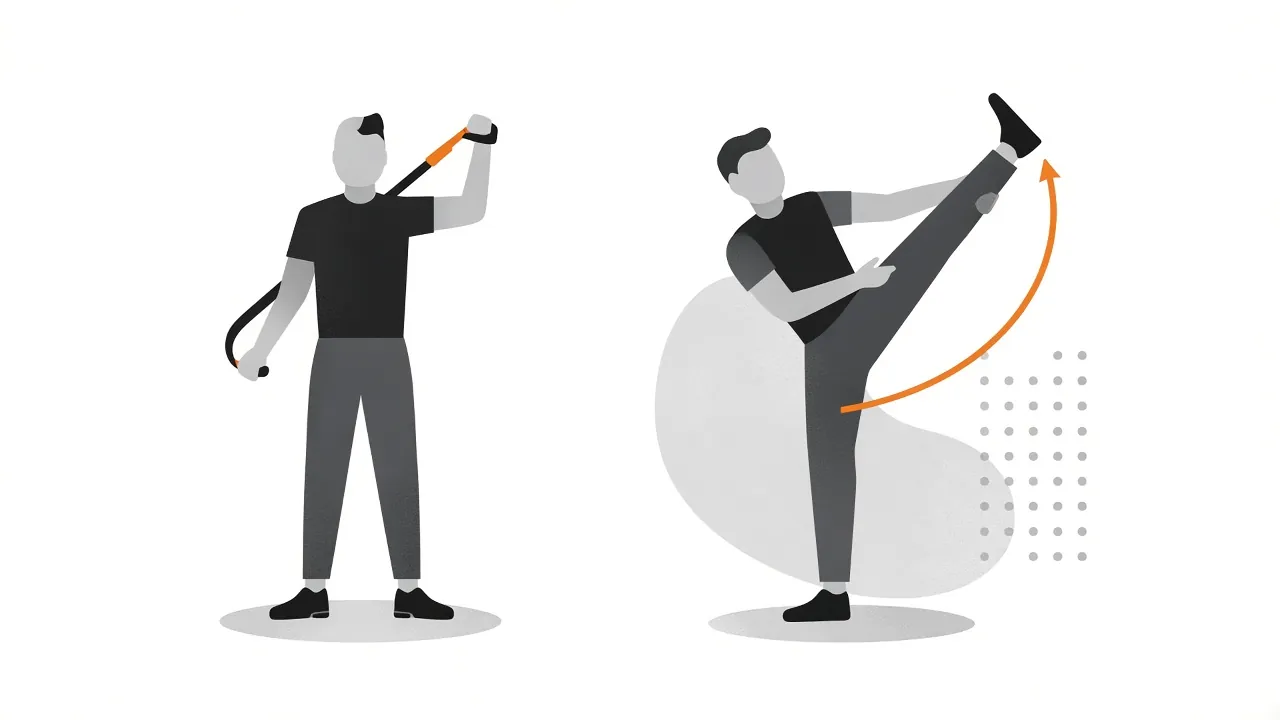
Key takeaways
- Good self-checks are a deep squat with heels down and hips below knees, a knee-to-wall test with toes about 10 cm away, and about 45° of seated rotation each way.
- Daily sessions of 5–10 minutes beat an hour once a week, and 10–20 minutes 3–5 times a week is enough for most people.
- Train mobility with dynamic drills before training and loaded moves such as deep goblet squats, and keep static stretching for after training or separate sessions.
- If the gap between passive and active range is large, train control at end range rather than only stretching; hypermobile people need stability and strength more than stretching.
| Flexibility | Mobility | |
|---|---|---|
| Definition | Passive range of motion | Active, controlled range of motion |
| Example | Someone pulls your leg up while you lie down | You lift your own leg and hold it there |
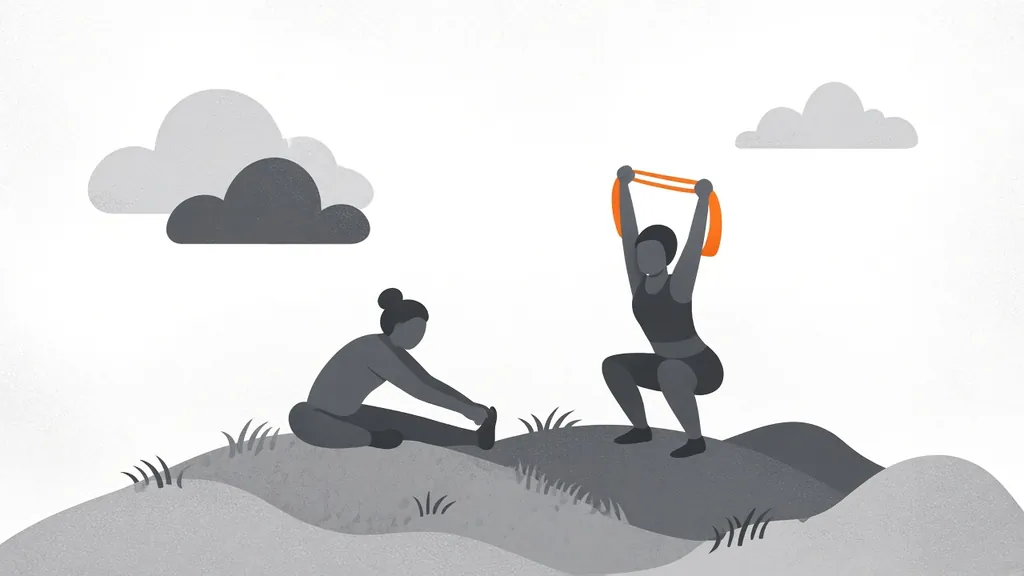
| Trained by | Static stretching | Strength through range, dynamic drills, controlled rotations |
Good mobility means you can reach positions your sport needs — a deep squat, a long running stride, an aero position on the bike — with strength and control.
Why it matters
- Efficient movement: less energy wasted fighting stiffness
- Lower injury risk when joints and tissues tolerate the positions you load
- Healthy ageing: maintaining range of motion preserves independence
Quick self-checks
| Test | Good sign |
|---|---|
| Deep squat, heels down | Hips below knees, chest upright |
| Knee-to-wall (ankle) | Knee touches wall with toes ~10 cm away — see ankle mobility |
| Thomas test (hip flexors) | Thigh rests flat when the other knee is hugged — see hip mobility |
| Seated rotation | ~45° each way through the upper back — see thoracic mobility |
How to train mobility
- Daily 5–10 minutes beats an hour once a week.
- Combine dynamic drills before training — see warm-up routine.
- Use loaded mobility: deep goblet squats, split squats, Romanian deadlifts through full range.
- Keep static stretching for after training or separate sessions — see static vs dynamic stretching.
Worked example
Illustrative scenario. Leo can pull his straight leg to about 90° lying on his back with a strap (good passive flexibility), but in a standing active leg raise he only reaches about 60°, and his deep squat collapses. The 30° gap tells him he lacks control at end range rather than muscle length. Instead of more long static holds, he adds 3 sessions a week of active work: controlled leg raises, Cossack squats and loaded end-range holds of 10–20 seconds. Six weeks later his active leg raise is about 75° and his squat depth has improved without extra stretching time.
Action steps
- Compare passive vs active range for key joints (e.g., straight-leg raise).
- If the gap is large, train control at end range rather than only stretching.
- Use static stretching mainly after training or as a separate session.
- Warm up with dynamic movements before running or lifting.
- Retest every 4–6 weeks.
Related guides
- Static vs dynamic stretching: which, when and how long?
- Hip mobility for runners and cyclists: a 10-minute routine
- Ankle mobility: the knee-to-wall test and exercises that work
- Thoracic spine mobility: for cyclists, rowers and desk workers
- A daily stretching routine: 10 minutes, what to hold and what to skip
- Yoga and your wearable: heart rate, calories, HRV and stress
FAQ
Can you be too flexible? Hypermobile people need stability and strength more than stretching.
Does yoga count? Yes — especially styles that include active holds and strength.
Do I need to be flexible to be mobile? You need enough passive range, but mobility also requires strength and control within that range.
How long should mobility sessions be? 10–20 minutes, 3–5 times a week, is enough for most people.
Does yoga count as mobility training? Many yoga styles combine flexibility and active control, so yes, especially poses held with effort.
References
- Behm et al. (2016). Acute effects of muscle stretching on physical performance, range of motion, and injury incidence in healthy active individuals: a systematic review. Applied Physiology, Nutrition, and Metabolism. https://doi.org/10.1139/apnm-2015-0235
- Garber et al. (2011). Quantity and Quality of Exercise for Developing and Maintaining Cardiorespiratory, Musculoskeletal, and Neuromotor Fitness in Apparently Healthy Adults. Medicine & Science in Sports & Exercise. https://doi.org/10.1249/MSS.0b013e318213fefb
For general information only. This is not medical advice — talk to a qualified professional about your health.
Keep reading
Mobility & stretching
The ideal warm-up: raise, activate, mobilise, potentiate
3 min read
Training science
Zone 2 training: the science and how to do it right
4 min read
Training science
Polarized training (80/20): easy most of the time, hard some of the time
4 min read
Mobility & stretching
Hip mobility for runners and cyclists: a 10-minute routine
3 min read
Training science
Interval training and HIIT: designing sessions that work
4 min read
Devices & setup
Strava and MoveVitals: workouts, streams and devices that arrive via Strava
3 min read