

Recovery & sleep
Alcohol, HRV and sleep: what your wearable shows the night after
Alcohol is one of the clearest effects visible in wearable data. Even moderate drinking raises resting heart rate, lowers HRV and fragments sleep.
Written by MoveVitals Editorial Collective
Community-authored educational content. Individual clinical review is identified only when a named review is actually recorded.
Editorial standards & corrections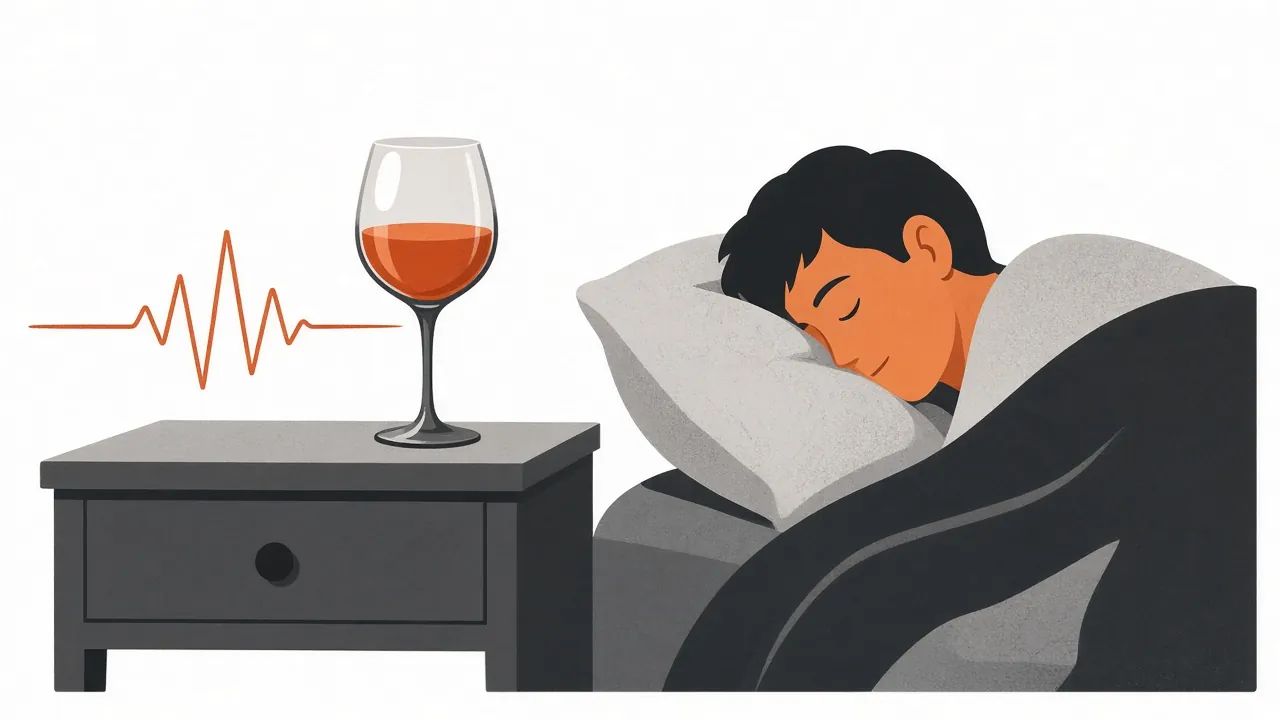
Key takeaways
- After 2–4 evening drinks, resting heart rate typically rises 3 to 10 bpm and HRV falls 10 to 30 % or more, with the lowest heart rate reached later in the night.
- Alcohol helps you fall asleep but suppresses REM sleep and causes awakenings in the second half of the night as levels fall.
- Recovery markers can stay depressed for 1–2 nights after heavy drinking, and alcohol impairs muscle protein synthesis and glycogen replenishment after training.
- If you drink, finish at least 3–4 hours before bed and alternate each drink with water; this may reduce, but not remove, the effect on sleep and HRV.
What happens physiologically
- Alcohol is metabolised over several hours, keeping the sympathetic nervous system active and the heart working harder.
- It dilates blood vessels and raises skin temperature.
- It helps you fall asleep but suppresses REM sleep and causes awakenings in the second half of the night as levels fall.
- It's a diuretic and disrupts temperature regulation.
What you typically see in the data
| Metric | Typical change after 2–4 drinks in the evening |
|---|---|
| Resting heart rate | +3 to +10 bpm, lowest point reached later in the night |
| HRV | −10 to −30 % or more |
| Sleep stages | Less REM, more awake time late in the night |
| Skin temperature | Elevated |
| WHOOP Recovery / Oura Readiness | Often yellow or red |
Effects scale with dose and timing. Drinking earlier in the evening, with food and water, reduces — but doesn't remove — the impact.
For athletes
- Alcohol impairs muscle protein synthesis and glycogen replenishment after training.
- Recovery markers can stay depressed for 1–2 nights after heavy drinking.
- Avoid alcohol the night before key sessions and races.
Using your data
Tag drinking days and compare averages. Many people find a visible pattern within a few weeks — a powerful, personal motivator.
Worked example
Illustrative scenario. Daniel's usual overnight RMSSD is around 55 ms and resting heart rate about 52 bpm. After two glasses of wine at a late dinner, his wearable shows RMSSD near 38 ms, resting heart rate near 59 bpm, and a recovery score in the red, even though he slept 7.5 hours. This matches a large real-world study of wearable data in which alcohol reduced overnight HRV in a dose-dependent way (Pietilä 2018). A sensible response: keep the planned workout easy, hydrate, and expect numbers to normalise within one to two nights.
Action steps
- Log drinks in your app so you can see the pattern in your own data.
- Finish alcohol at least 3–4 hours before bed if you drink.
- Alternate each drink with water.
- Treat the next day's low HRV as real physiological stress: swap intensity for an easy session.
- Compare weeks with and without alcohol to judge the effect for yourself.
Related guides
- Normal heart rate variability (HRV) by age: RMSSD vs SDNN
- Resting heart rate: normal ranges and what changes it
- Sleep hygiene: evidence-based habits for better sleep
- WHOOP Recovery score: what drives it and how to act on it
FAQ
Is one drink measurable? Often yes: a small rise in resting heart rate or drop in HRV, especially close to bedtime.
Does red wine help heart health? The evidence doesn't support drinking for health benefits.
How long does alcohol affect HRV? Effects are usually largest the same night and may linger into the next day, especially after several drinks.
Does drinking earlier in the evening help? Finishing alcohol several hours before bed may reduce, but not remove, its impact on sleep and HRV.
References
- Pietilä et al. (2018). Acute Effect of Alcohol Intake on Cardiovascular Autonomic Regulation During the First Hours of Sleep in a Large Real-World Sample of Finnish Employees: Observational Study. JMIR Mental Health. https://doi.org/10.2196/mental.9519
- Shaffer et al. (2017). An Overview of Heart Rate Variability Metrics and Norms. Frontiers in Public Health. https://doi.org/10.3389/fpubh.2017.00258
- Irish et al. (2015). The role of sleep hygiene in promoting public health: A review of empirical evidence. Sleep Medicine Reviews. https://doi.org/10.1016/j.smrv.2014.10.001
For general information only. This is not medical advice — talk to a qualified professional about your health.
Keep reading
Metrics explained
Normal heart rate variability (HRV) by age: RMSSD vs SDNN
6 min read
Metrics explained
Resting heart rate: normal ranges and what changes it
4 min read
Devices & setup
Oura Ring and MoveVitals: sleep, readiness and temperature in one place
3 min read
Devices & setup
How MoveVitals handles multiple devices: provenance, duplicates and conflicts
5 min read
Recovery & sleep
Sleep hygiene: evidence-based habits for better sleep
4 min read
Devices & setup
WHOOP and MoveVitals: what syncs and how to get the most from it
3 min read