

Mobility & stretching
Hip mobility for runners and cyclists: a 10-minute routine
Hours of sitting and cycling shorten the hip flexors and limit hip extension. Restoring it helps running stride, power and lower-back comfort.
Written by MoveVitals Editorial Collective
Community-authored educational content. Individual clinical review is identified only when a named review is actually recorded.
Editorial standards & corrections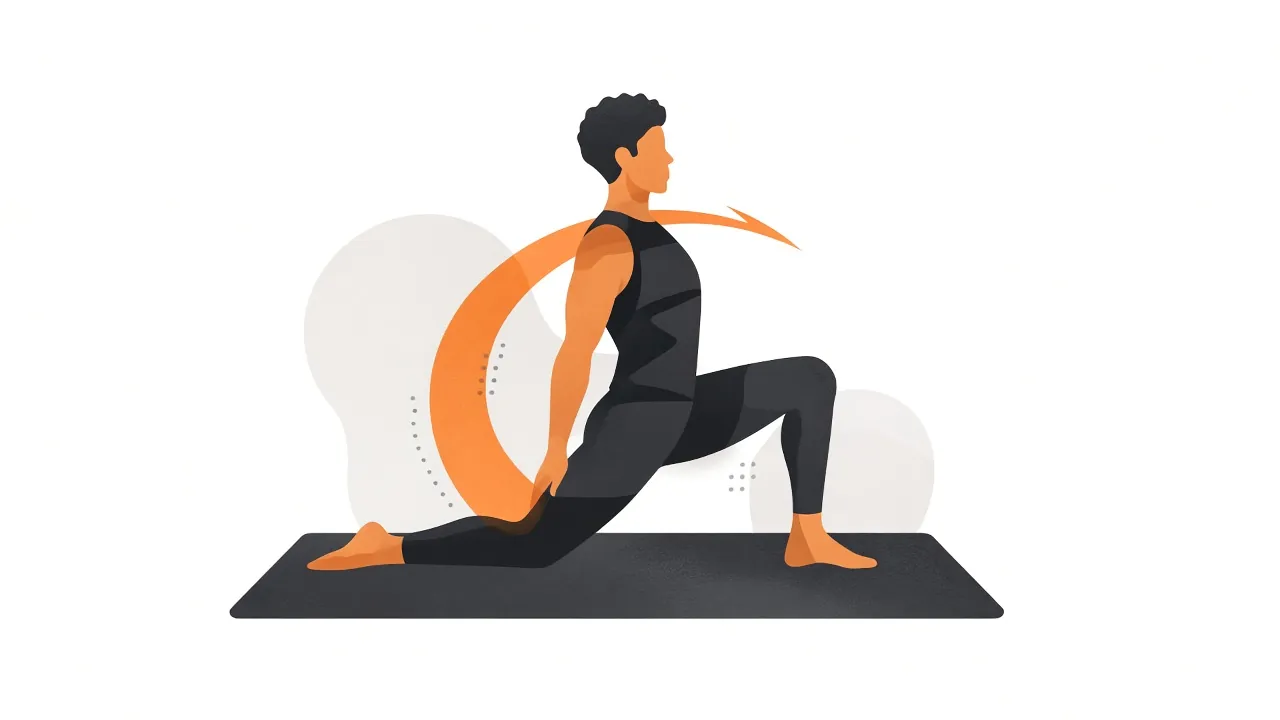
Key takeaways
- Limited hip extension often shows up as overstriding, a forward-tilted pelvis, lower-back tension or "tight" hamstrings.
- A 10-minute hip routine combines 90/90 switches (8–10 per side), a half-kneeling hip flexor stretch and couch stretch (2 × 45 s per side) and glute bridges (2 × 12).
- Most people feel easier movement within 2–4 weeks of daily practice.
- A stretch sensation is fine, but pinching pain in the front of the hip is not, so reduce the range or see a physio.
Why hips get stiff
- Sitting keeps hips flexed for hours
- Cycling never fully extends the hip
- Weak glutes let other muscles take over
Limited hip extension often shows up as overstriding, a forward-tilted pelvis, lower-back tension or "tight" hamstrings.
The 10-minute routine
| Exercise | Dose | Focus |
|---|---|---|
| 90/90 hip switches | 8–10 per side | Internal and external rotation |
| Half-kneeling hip flexor stretch with glute squeeze | 2 × 45 s per side | Hip flexors (psoas, rectus femoris) |
| Couch stretch | 2 × 45 s per side | Quads and hip flexors |
| World's greatest stretch | 5 per side | Hips, hamstrings, thoracic spine |
| Glute bridge with 2 s hold | 2 × 12 | Active hip extension |
| Cossack squat | 6 per side | Adductors, lateral mobility |
Do it after training or on rest days. Before running, use the dynamic parts only — see warm-up routine.
Strength completes mobility
Mobility gains stick when you can control the new range. Add single-leg work and hip thrusts — see strength training for endurance athletes.
Cyclist tip
Check your bike fit: a saddle too low or too far forward increases hip flexion stress. A proper fit can solve "tight hips" faster than stretching.
Worked example
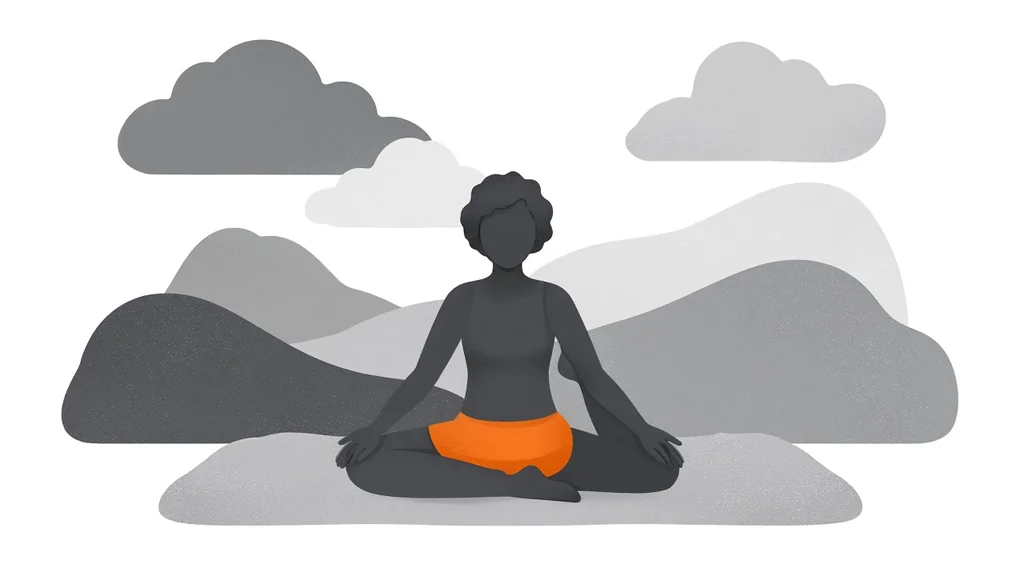
Illustrative scenario. Owen sits 9 hours a day and rides 6 hours a week. In a half-kneeling position he cannot tuck his pelvis without arching his back, and his 90/90 position feels blocked on the right. He does the 10-minute routine 5 days a week — half-kneeling hip-flexor stretch with glute squeeze, 90/90 transitions, deep squat hold and glute bridges. After 4–6 weeks his 90/90 rotations feel smoother and his lower back no longer aches after long rides. Change is gradual and individual.
Action steps
- Hold a half-kneeling hip-flexor stretch 2 × 30–45 s per side with the glute squeezed.
- Do 8–10 slow 90/90 transitions.
- Hold a supported deep squat for 60 seconds.
- Finish with 2 × 12 glute bridges to strengthen the new range.
- Retest the 90/90 position every 2 weeks and note side-to-side differences.
Related guides
- Ankle mobility: the knee-to-wall test and exercises that work
- Thoracic spine mobility: for cyclists, rowers and desk workers
- Mobility vs flexibility: what's the difference and what do you need?
- Desk work and posture: moving more matters more than sitting perfectly
- A daily stretching routine: 10 minutes, what to hold and what to skip
FAQ
How long until I notice a change? Most people feel easier movement within 2–4 weeks of daily practice.
Should it hurt? A stretch sensation is fine; pinching pain in the front of the hip isn't — reduce range or see a physio.
Should I stretch hips before or after running? Dynamic moves suit before; longer static holds work well after training or as a separate session.
Can tight hips cause knee pain? Hip strength and control can influence knee loading, but knee pain has many causes; see a physiotherapist if it persists.
References
- Behm et al. (2016). Acute effects of muscle stretching on physical performance, range of motion, and injury incidence in healthy active individuals: a systematic review. Applied Physiology, Nutrition, and Metabolism. https://doi.org/10.1139/apnm-2015-0235
- Afonso et al. (2021). Strength Training versus Stretching for Improving Range of Motion: A Systematic Review and Meta-Analysis. Healthcare. https://doi.org/10.3390/healthcare9040427
For general information only. This is not medical advice — talk to a qualified professional about your health.
Keep reading
Mobility & stretching
Mobility vs flexibility: what's the difference and what do you need?
3 min read
Mobility & stretching
The ideal warm-up: raise, activate, mobilise, potentiate
3 min read
Training science
Zone 2 training: the science and how to do it right
4 min read
Devices & setup
Strava and MoveVitals: workouts, streams and devices that arrive via Strava
3 min read
Training science
Polarized training (80/20): easy most of the time, hard some of the time
4 min read
Metrics explained
VO2 max: what it means and how to improve it
4 min read