

Mobility & stretching
Desk work and posture: moving more matters more than sitting perfectly
There's no single perfect posture. The best posture is the next one — regular movement breaks and a sensible setup protect your back, neck and metabolism.
Written by MoveVitals Editorial Collective
Community-authored educational content. Individual clinical review is identified only when a named review is actually recorded.
Editorial standards & corrections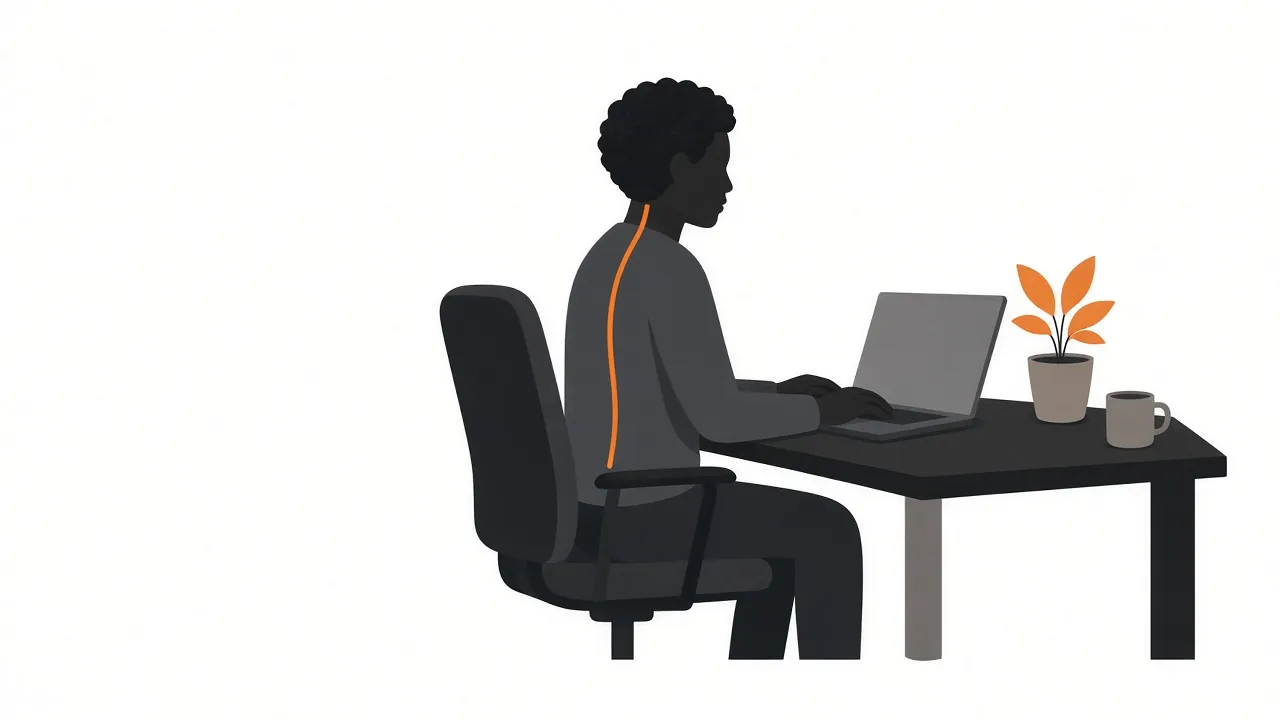
Key takeaways
- Research has not found that slouching alone causes back pain; staying in any position for too long and low overall activity seem to matter more.
- Every 30–60 minutes, stand up for 2–5 minutes, and take short walks after meals, which also help blood glucose.
- Set the top of the screen at or slightly below eye level, an arm's length away, with elbows near 90° and feet flat.
- Alternating sitting and standing is better than doing either all day, and posture correctors may remind you to move but don't build strength.
Rethinking posture
Research has not found that slouching alone causes back pain. Prolonged static positions, low activity and stress are bigger factors. The goal is variety and movement, not rigid "correct" sitting.
A sensible workstation
| Element | Guideline |
|---|---|
| Screen | Top at or slightly below eye level, arm's length away |
| Keyboard | Elbows near 90°, shoulders relaxed |
| Chair | Feet flat, hips slightly above knees, lower back supported |
| Laptop | Use a stand and external keyboard for long sessions |
| Standing desk | Alternate sitting and standing; don't stand all day |
Movement breaks
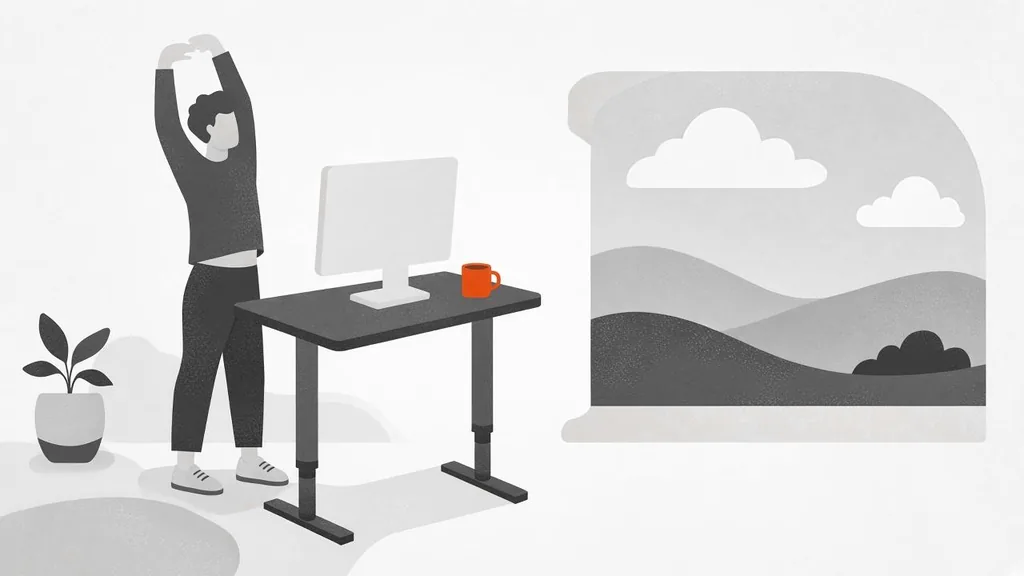
- Every 30–60 minutes, stand up for 2–5 minutes
- Walking meetings and phone calls add steps
- Short walks after meals also help blood glucose
A 5-minute desk routine
- Chin tucks × 10
- Seated thoracic rotation × 8 per side — see thoracic mobility
- Standing hip flexor stretch × 30 s per side — see hip mobility
- Doorway chest stretch × 30 s
- Bodyweight squats × 10
Using your data
Many watches send inactivity reminders. Long sedentary periods often show up as high daytime stress and low step counts — use them as cues to move.
Worked example
Illustrative scenario. Grace works 9 hours a day at a laptop and her watch shows about 4,000 steps on workdays. Instead of trying to hold a perfect upright posture, she raises her screen to eye level, adds a separate keyboard, and sets a 45-minute reminder to stand, walk to get water or do a 2-minute mobility routine. She takes phone calls standing. After a month her workday step count averages about 6,500, and her neck stiffness at the end of the day is noticeably less. The WHO guidelines recommend limiting sedentary time and replacing it with activity of any intensity, which is the habit she is building.
Action steps
- Set your screen at about eye level and keep the keyboard close so shoulders stay relaxed.
- Change position every 30–60 minutes: stand, walk or stretch.
- Alternate sitting and standing if you have a standing desk.
- Do a 2–5-minute mobility routine for the neck, upper back and hips during the day.
- Use step counts and inactivity alerts to check how much you move on workdays.
Related guides
- Daily steps: is 10,000 really the target?
- Thoracic spine mobility: for cyclists, rowers and desk workers
- Hip mobility for runners and cyclists: a 10-minute routine
- Mobility vs flexibility: what's the difference and what do you need?
- A daily stretching routine: 10 minutes, what to hold and what to skip
- Core training that matters: planks, anti-rotation and what a wearable can tell you
FAQ
Are standing desks healthier? Alternating is better than either sitting or standing all day.
Do posture correctors help? They may remind you to move, but don't build strength.
Does bad posture cause back pain? The link is weaker than often claimed; staying in any position for too long and low overall activity seem to matter more.
Can exercise after work offset sitting all day? It helps a lot, but breaking up long sitting periods during the day adds further benefits.
References
- Bull et al. (2020). World Health Organization 2020 guidelines on physical activity and sedentary behaviour. British Journal of Sports Medicine. https://doi.org/10.1136/bjsports-2020-102955
- Garber et al. (2011). Quantity and Quality of Exercise for Developing and Maintaining Cardiorespiratory, Musculoskeletal, and Neuromotor Fitness in Apparently Healthy Adults. Medicine & Science in Sports & Exercise. https://doi.org/10.1249/MSS.0b013e318213fefb
For general information only. This is not medical advice — talk to a qualified professional about your health.
Keep reading
Devices & setup
Garmin Connect and MoveVitals: activities, health and Body Battery
3 min read
Mobility & stretching
Injury prevention for runners: load, strength and listening early
4 min read
Devices & setup
How MoveVitals handles multiple devices: provenance, duplicates and conflicts
5 min read
Mobility & stretching
Mobility vs flexibility: what's the difference and what do you need?
3 min read
Sports
Walking for fitness and weight loss: pace, heart rate zones and how much is enough
9 min read
Mobility & stretching
Hip mobility for runners and cyclists: a 10-minute routine
3 min read