

Mobility & stretching
Static vs dynamic stretching: which, when and how long?
Dynamic stretching suits warm-ups; static stretching builds flexibility when done regularly, ideally after training or in separate sessions.
Written by MoveVitals Editorial Collective
Community-authored educational content. Individual clinical review is identified only when a named review is actually recorded.
Editorial standards & corrections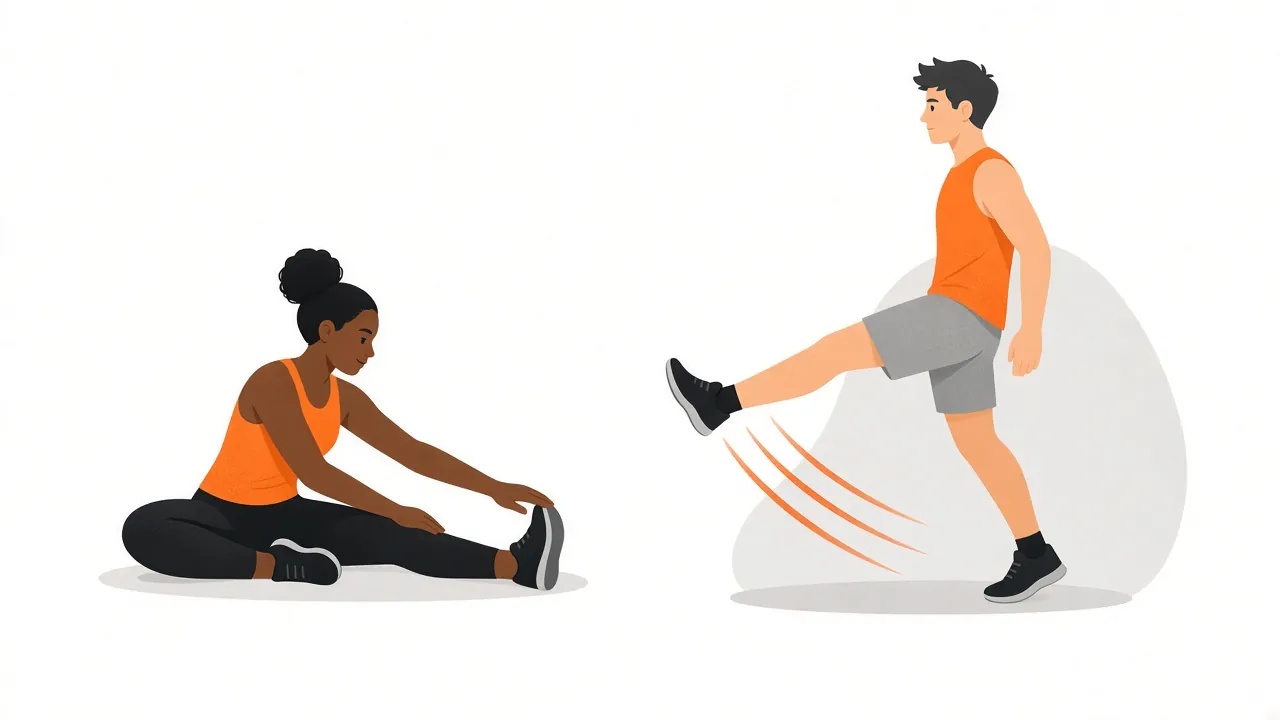
Key takeaways
- Long static holds above 60 seconds can briefly reduce power, while dynamic stretching such as leg swings and walking lunges is neutral to positive for performance.
- Static stretching works at 30–60 seconds per muscle in total per session, such as 2 × 30 seconds, on 5 or more days a week for meaningful long-term gains.
- Many people notice flexibility changes after 3–6 weeks of regular stretching, partly from increased stretch tolerance.
- Evidence on stretching and injuries is mixed, and a full warm-up appears more useful than stretching alone for reducing injury risk.
- Stretch to mild tension, never sharp pain, and use 5–10 minutes of sport-like dynamic moves before training.
| Static stretching | Dynamic stretching | |
|---|---|---|
| What | Hold a lengthened position | Move through range rhythmically |
| Example | Hamstring stretch held 30 s | Leg swings, walking lunges |
| Best time | After training, separate sessions | Warm-up |
| Effect on performance | Long holds (> 60 s) can briefly reduce power | Neutral to positive |
| Builds long-term flexibility | Yes | Some |
How much static stretching?
- 30–60 seconds per muscle in total per session (e.g. 2 × 30 s)
- 5+ days per week for meaningful long-term gains
- Mild tension, never sharp pain
A useful combination
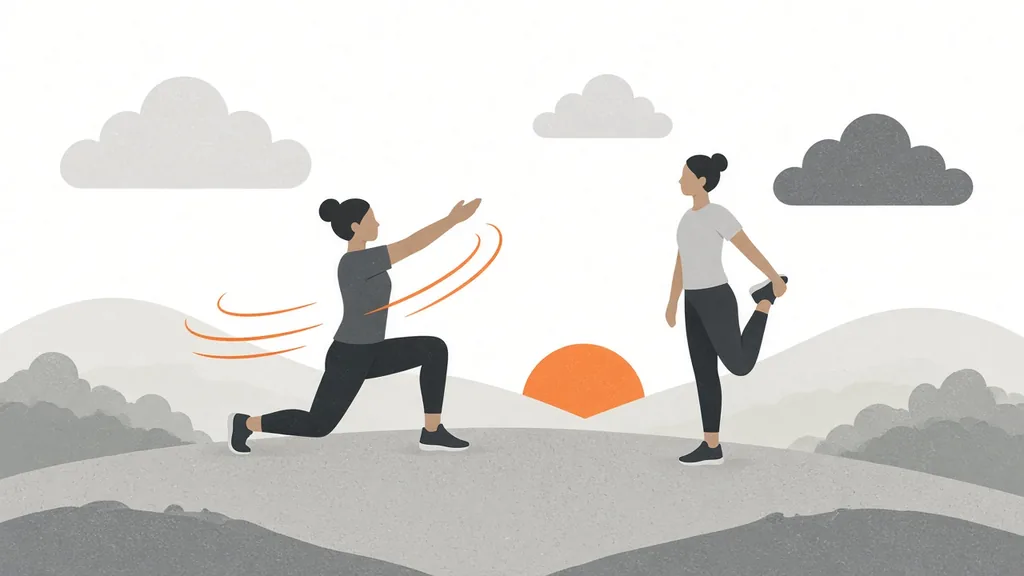
- Before training: dynamic warm-up
- After training or evening: static stretches for areas that limit you (often calves, hip flexors, hamstrings)
- Weekly: strength through full range — the most effective "mobility" work, see mobility vs flexibility
Does stretching prevent injuries?
Evidence is mixed. Stretching alone has a small effect on injury risk; strength training and gradual load progression matter more — see injury prevention for runners.
Other methods
- PNF stretching (contract–relax) can produce larger flexibility gains.
- Yoga combines static, dynamic and strength elements.
Worked example
Illustrative scenario. Before sprint sessions, Leo used to hold each hamstring and calf stretch for 60 seconds. He swaps to a 10-minute dynamic warm-up — leg swings, walking lunges, A-skips and three build-up strides — and moves his static stretches (2–3 × 30 s per muscle) to the evening after training. Over six weeks his sit-and-reach improves by about 4 cm and his sprints feel sharper. Research suggests short static holds (under ~60 s) inside a full warm-up have little negative effect, so this is a preference-plus-evidence choice rather than a strict rule. Figures are illustrative.
Action steps
- Use dynamic movements that mimic your sport for 5–10 minutes before training.
- Keep any pre-exercise static holds short (under ~60 s per muscle) and follow them with dynamic work.
- Do longer static stretching after training or in a separate session.
- Aim for 2–3 sessions a week if your goal is long-term flexibility.
- Stretch to mild tension, never sharp pain.
Related guides
- The ideal warm-up: raise, activate, mobilise, potentiate
- Mobility vs flexibility: what's the difference and what do you need?
- Hip mobility for runners and cyclists: a 10-minute routine
- The cool-down: what it does (and doesn't do)
- A daily stretching routine: 10 minutes, what to hold and what to skip
FAQ
Should I stretch before a race? Use dynamic movements; keep static holds short if you like them.
Does stretching reduce soreness? Not meaningfully.
Does stretching prevent injuries? Evidence is mixed; a full warm-up appears more useful than stretching alone for reducing injury risk.
How long until flexibility improves? Many people notice changes after 3–6 weeks of regular stretching, partly from increased stretch tolerance.
References
- Behm et al. (2016). Acute effects of muscle stretching on physical performance, range of motion, and injury incidence in healthy active individuals: a systematic review. Applied Physiology, Nutrition, and Metabolism. https://doi.org/10.1139/apnm-2015-0235
- Soligard et al. (2016). How much is too much? (Part 1) International Olympic Committee consensus statement on load in sport and risk of injury. British Journal of Sports Medicine. https://doi.org/10.1136/bjsports-2016-096581
For general information only. This is not medical advice — talk to a qualified professional about your health.
Keep reading
Mobility & stretching
Mobility vs flexibility: what's the difference and what do you need?
3 min read
Mobility & stretching
The ideal warm-up: raise, activate, mobilise, potentiate
3 min read
Training science
Zone 2 training: the science and how to do it right
4 min read
Training science
Polarized training (80/20): easy most of the time, hard some of the time
4 min read
Mobility & stretching
Hip mobility for runners and cyclists: a 10-minute routine
3 min read
Training science
Interval training and HIIT: designing sessions that work
4 min read