

Recovery & sleep
Sleep hygiene: evidence-based habits for better sleep
Sleep is the most powerful recovery tool you have. These habits are backed by research and easy to test with your own wearable data.
Written by MoveVitals Editorial Collective
Community-authored educational content. Individual clinical review is identified only when a named review is actually recorded.
Editorial standards & corrections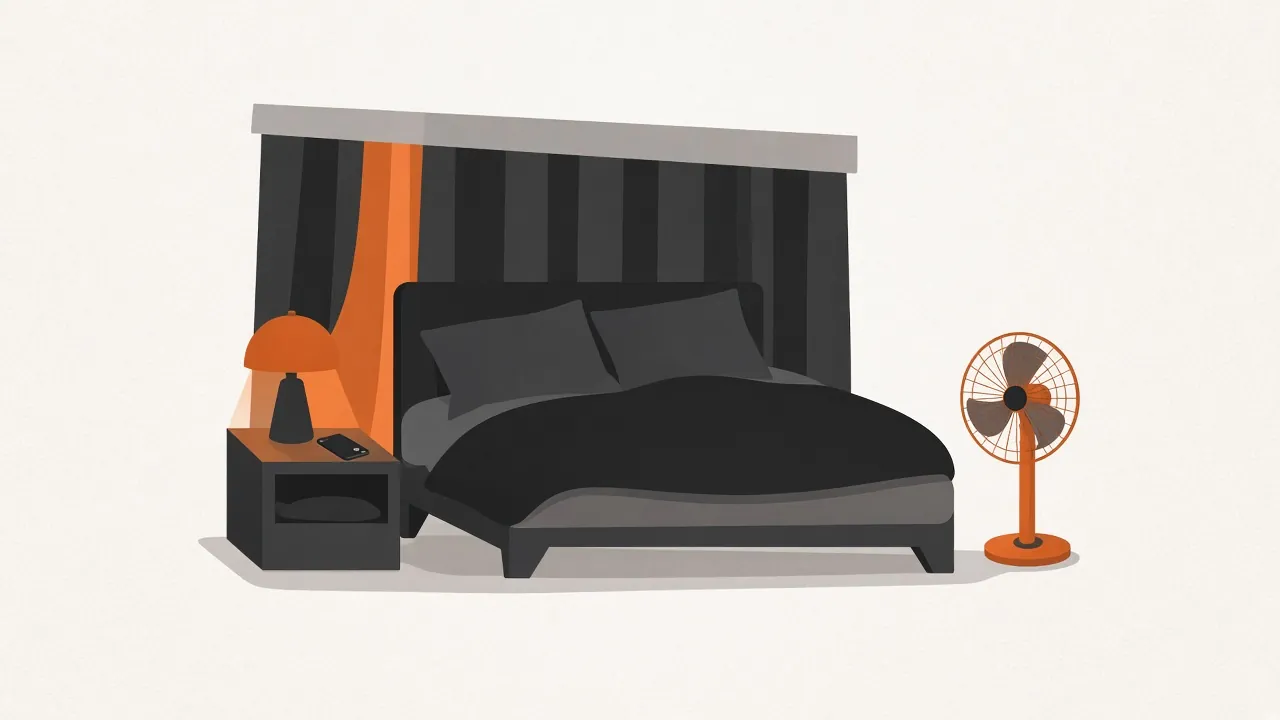
Key takeaways
- The core sleep habits are a fixed wake time 7 days a week, 10–30 minutes of morning daylight and a dark, quiet bedroom at 16–19 °C.
- Stop caffeine about 8 hours before bed, because its half-life is 4–6 hours, and finish large meals 2–3 hours before sleep.
- If you can't sleep, get up after about 20 minutes, do something calm in dim light and return when sleepy.
- Persistent insomnia, 3 or more nights a week for 3 or more months, deserves help, and CBT-I is the first-line treatment.
- Change one habit for 1–2 weeks and compare average sleep duration, efficiency, HRV and resting heart rate.
The fundamentals
| Habit | Why it works |
|---|---|
| Fixed wake time, 7 days a week | Anchors your circadian rhythm — see sleep consistency |
| Morning daylight (10–30 min) | Strongest signal to set your body clock |
| Dark, quiet, cool bedroom (16–19 °C) | Core temperature must fall to fall asleep |
| No caffeine within ~8 h of bed | Caffeine's half-life is 4–6 h — see caffeine timing |
| Limit alcohol, especially late | Fragments sleep, suppresses REM — see alcohol, HRV and sleep |
| Finish large meals 2–3 h before bed | Digestion raises heart rate and temperature |
| Wind-down routine, dim lights | Allows melatonin to rise |
| Bed only for sleep (and sex) | Strengthens the bed–sleep association |
Exercise and sleep
Regular exercise improves sleep quality. Very hard sessions late in the evening can delay sleep for some people — check your own data: compare resting heart rate and HRV after evening vs morning sessions.
Screens and light
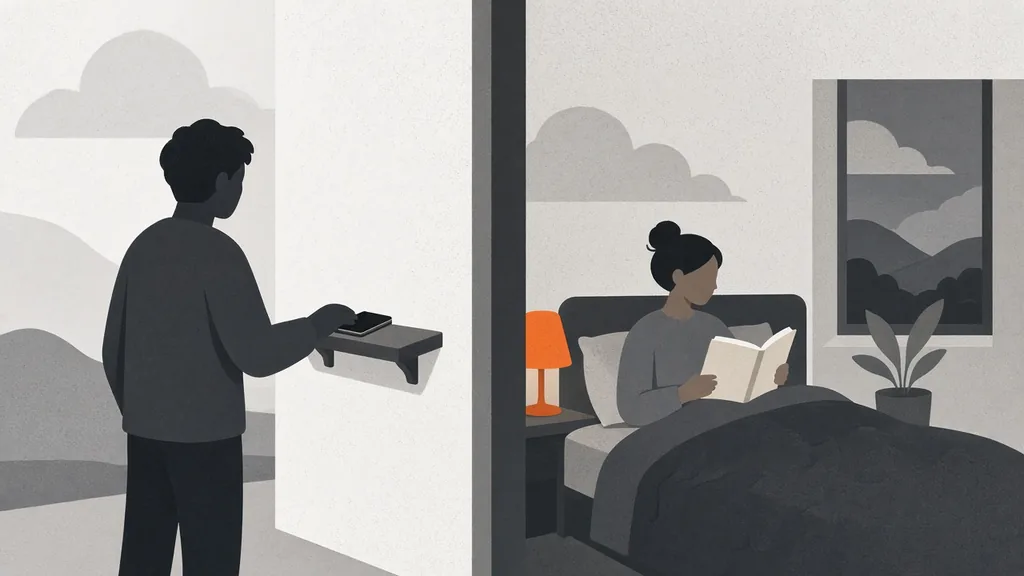
Bright light in the evening delays melatonin. Dim the lights, use night modes, and keep phones out of bed when possible. The content (stressful email, exciting games) matters as much as the light.
If you can't sleep
- Don't lie awake for long — get up after ~20 minutes, do something calm in dim light, return when sleepy.
- Avoid checking the clock.
- Persistent insomnia (3+ nights a week for 3+ months) deserves help; CBT-I is the first-line treatment.
Using data to experiment
Change one habit for 1–2 weeks and compare averages: sleep duration, efficiency, HRV and resting heart rate. MoveVitals lets you chart these side by side from any device.
Worked example
Illustrative scenario. Jo drinks a 200 mg coffee at 16:00, scrolls her phone in bed until midnight and keeps her bedroom at 24 °C. She runs a four-week experiment, changing one thing at a time: week 1, last caffeine before 13:00; week 2, phone charged outside the bedroom; week 3, bedroom cooled to about 18–19 °C with blackout curtains; week 4, a consistent 23:00 lights-out. She logs time to fall asleep and sleep duration. Her average sleep onset drops from about 35 to 15 minutes, with the biggest change after moving caffeine earlier. Results like these are personal and illustrative — the value is in testing one habit at a time.
Action steps
- Stop caffeine at least 6 hours before bed; earlier if you're sensitive.
- Keep the bedroom cool, dark and quiet — around 18–20 °C suits many people.
- Get morning daylight and dim lights in the last hour before bed.
- Finish hard exercise and large meals 2–3 hours before sleep where possible.
- Change one habit per week and compare 7-day averages in your data.
Related guides
- Caffeine: performance benefits and how timing affects sleep
- Alcohol, HRV and sleep: what your wearable shows the night after
- Sleep consistency: why a regular schedule beats a long lie-in
- Using health data without obsession (orthosomnia and data anxiety)
- How to increase deep sleep: what the evidence says (and what your tracker can’t prove)
FAQ
Do sleep supplements help? Melatonin can help with jet lag and shift work; most others have weak evidence.
Is a sleep tracker making my sleep worse? For some people, yes — see using health data without obsession.
Is alcohol a good sleep aid? It may help you fall asleep but tends to fragment sleep and raise heart rate later in the night.
Does exercise in the evening ruin sleep? For most people moderate evening exercise is fine; very hard sessions close to bedtime may delay sleep in some.
References
- Irish et al. (2015). The role of sleep hygiene in promoting public health: A review of empirical evidence. Sleep Medicine Reviews. https://doi.org/10.1016/j.smrv.2014.10.001
- Drake et al. (2013). Caffeine Effects on Sleep Taken 0, 3, or 6 Hours before Going to Bed. Journal of Clinical Sleep Medicine. https://doi.org/10.5664/jcsm.3170
- Watson et al. (2015). Recommended Amount of Sleep for a Healthy Adult: A Joint Consensus Statement of the American Academy of Sleep Medicine and Sleep Research Society. Journal of Clinical Sleep Medicine. https://doi.org/10.5664/jcsm.4758
For general information only. This is not medical advice — talk to a qualified professional about your health.
Keep reading
Devices & setup
How MoveVitals handles multiple devices: provenance, duplicates and conflicts
5 min read
Recovery & sleep
Alcohol, HRV and sleep: what your wearable shows the night after
3 min read
Metrics explained
Normal heart rate variability (HRV) by age: RMSSD vs SDNN
6 min read
Devices & setup
WHOOP and MoveVitals: what syncs and how to get the most from it
3 min read
Metrics explained
Resting heart rate: normal ranges and what changes it
4 min read
Devices & setup
Oura Ring and MoveVitals: sleep, readiness and temperature in one place
3 min read