

Sports
Pickleball and your health data: heart rate zones, calories and joint load
Pickleball is real exercise: for most recreational players it sits in the moderate-intensity range, and your watch can show how much time you actually spend there. Here is how to read pickleball heart rate, calories and joint load from a wearable.
Written by MoveVitals Editorial Collective
Community-authored educational content. Individual clinical review is identified only when a named review is actually recorded.
Editorial standards & corrections
Key takeaways
- Social doubles pickleball averages about 55–70 % of max heart rate and 250–350 kcal an hour for a 70 kg adult, while singles averages about 70–85 % and 450–550 kcal.
- The CDC puts moderate intensity at about 64–76 % of maximum heart rate and vigorous at about 77–93 %, so judge a session by minutes in the moderate zone rather than clock time.
- GPS distance means little on a court of about 6.1 × 13.4 m, and steps undercount lateral shuffling and arm work.
- Wear court shoes with lateral support, warm up for five to ten minutes and avoid backpedalling.
- With heart disease, uncontrolled high blood pressure or new symptoms, check with a clinician before increasing intensity, and stop for chest pain, fainting or palpitations with dizziness.
Pickleball is played on a small court (about 6.1 × 13.4 m) with a solid paddle and a perforated plastic ball. Rallies are short and there is standing time between points, so whether it counts as good cardio depends on the format, the level of play and how you measure it.
Is pickleball good cardio?
For many people, yes. Recreational doubles usually lands in the moderate range; singles and competitive games go higher. These are rule-of-thumb ranges, not measurements: fitness, age, court and opponents change them a lot.
| Format | Typical effort | Average heart rate (% of max) | Estimated energy, 70 kg adult |
|---|---|---|---|
| Social doubles | Light to moderate | ~55–70 % | ~250–350 kcal/h |
| Competitive doubles | Moderate to vigorous | ~65–80 % | ~350–450 kcal/h |
| Singles | Moderate to vigorous | ~70–85 % | ~450–550 kcal/h |
The CDC puts moderate intensity at about 64–76 % of maximum heart rate and vigorous at about 77–93 %. The WHO recommends 150–300 minutes of moderate activity a week for adults. Two or three 75–90 minute sessions can cover much of that, if you count minutes in zone rather than minutes at the court. Standing between points means time in zone is usually well below clock time.
What your wearable can and cannot measure
- Heart rate. Wrist optical sensors can lag behind a stop-start sport and are disturbed by tight grip, wrist flexion and paddle vibration. A chest strap is generally more accurate for this kind of activity; see wearable heart rate accuracy. Wear the watch snug on the non-paddle wrist.
- Sport profile. Garmin and Polar offer pickleball profiles on many models, and Apple Watch has a Pickleball workout type. If yours does not, a tennis or other racket-sport profile is the usual substitute; calorie estimates differ by profile.
- GPS and steps. On a small court, GPS distance and pace mean little, and steps undercount lateral shuffling and arm work. Use duration, heart rate and active energy instead (daily steps).
- Calories. Energy is roughly MET × body weight (kg) × hours. Watches report active energy, which excludes resting energy and so reads lower than MET tables. Treat either as an estimate that can be off by a wide margin; see calories burned and calories burned by activity.
Joint load and injury notes
The court is small but the demands are sudden: split steps, lunges, quick stops and reaching overhead. Commonly reported problems are ankle sprains, calf and Achilles strains, sore shoulders and elbow pain from repeated swings. Falls when moving backwards for a lob are a recurring risk, especially for older players.
Sensible habits: wear court shoes with lateral support rather than running shoes, spend five to ten minutes on a warm-up, keep ankle mobility in good shape, turn and shuffle instead of backpedalling, and take rest days between hard sessions. Pain that persists or worsens is worth a clinician's opinion.
Pickleball for seniors: setting zones and knowing when to stop
Many older adults reach moderate intensity in doubles, and the social format helps people keep playing. Two cautions apply to the numbers. Maximum heart rate declines with age, and the 220 − age formula can be off by 10 bpm or more (maximum heart rate). And some heart medicines, such as beta-blockers, lower heart rate, which makes percent-of-max zones misleading; ask your clinician how to gauge effort if you take them. The talk test and perceived effort are good companions to any watch.
If you have known heart disease, uncontrolled high blood pressure (blood pressure) or new symptoms, check with a clinician before increasing intensity. Stop and seek medical care for chest pain or pressure, fainting, unusual breathlessness, or palpitations with dizziness. A watch cannot rule a cardiac problem in or out.
Common mistakes
- Equating clock time with exercise time. Look at minutes in zone, not minutes on court.
- Reading peaks as the workout. Short spikes at the net are normal; look at the session average and the minutes in the moderate range, using zones set from your own maximum (heart rate zones).
- Trusting an age-based maximum. It is a starting point, not a measurement.
- Playing through ankle or Achilles pain. Small niggles become long layoffs.
- Making pickleball your only cardio. Add some continuous easy aerobic work if you want steady fitness gains.
In MoveVitals
Pickleball sessions arrive as ordinary workouts from whichever source recorded them: Garmin, Polar, COROS, Suunto or WHOOP through their direct connections, or Apple Watch sessions that reach your Strava account. Duration, heart rate and calories are what the device supplied, and the sport label depends on what the source sends. Time in heart rate zone is calculated from the heart rate stream when the source provides one. If a watch and a chest strap both recorded the match, MoveVitals groups them as one session; see how MoveVitals handles multiple devices. Direct Apple Health sync is planned, not available.
Worked example
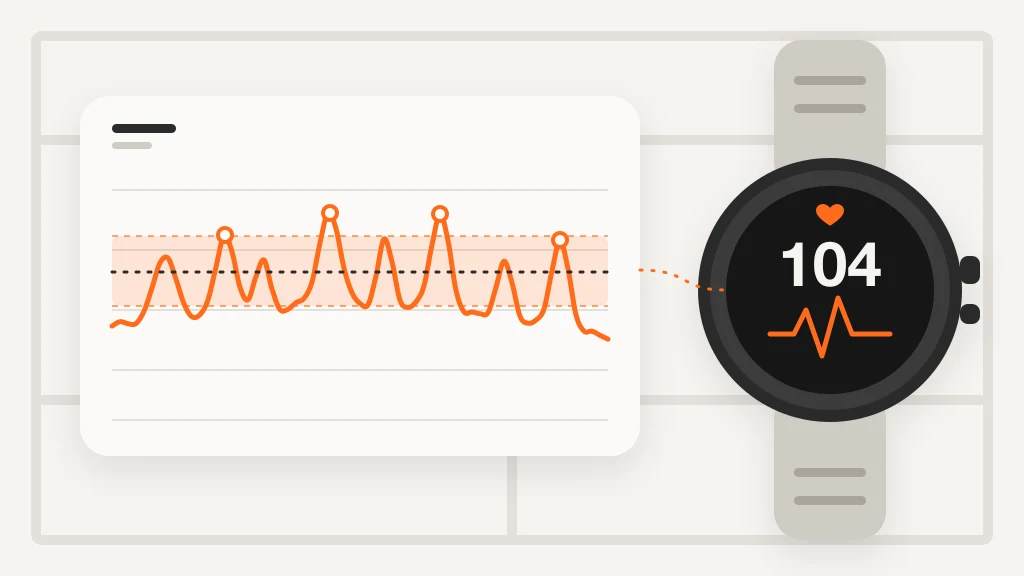
Illustrative scenario. Harold, 67, plays doubles three mornings a week. He uses an estimated maximum of 153 bpm (220 − 67), knowing it may be 10 bpm or more off, which puts moderate effort at about 98–116 bpm. In a 75-minute session his watch shows an average of 104 bpm (68 %) with peaks of 128 during fast hand exchanges at the net, about 330 active kcal, and roughly 45 minutes in or above the moderate range. Three sessions give about 135 minutes a week, just short of 150, so he adds a 30-minute brisk walk. He wears court shoes and warms up his ankles for five minutes first. Numbers are illustrative.
Action steps
- Set zones from a maximum heart rate you trust, or use the talk test if you are unsure (heart rate zones).
- Choose the pickleball profile on your watch, or tennis if there is none, and wear it snug on the non-paddle wrist.
- Judge each session by minutes in the moderate zone, not by clock time or calories alone.
- Warm up for five to ten minutes, wear court shoes and avoid backpedalling.
- Aim for 150 minutes of moderate activity a week across pickleball and other activity, and rest after hard days.
Related guides
- Heart rate zones explained: how to set and use them
- Maximum heart rate: formulas, field tests and why age-based estimates fail
- Calories burned: active, resting and total energy expenditure
- Ankle mobility: the knee-to-wall test and exercises that work
- Blood pressure: categories, home measurement and what moves it
FAQ
Is pickleball good cardio? For many people, yes: recreational doubles is typically moderate intensity and singles is harder. How much you get depends on minutes in zone, not clock time. For padel, a faster cousin, see padel with a wearable.
What is a normal pickleball heart rate? Roughly 55–80 % of maximum in recreational doubles, higher in singles and competitive play. Individual variation is large, so use your own zones.
How many calories does pickleball burn? About 250–550 kcal per hour for a 70 kg adult depending on format. Pickleball calories burned shown by a watch are estimates, usually reported as active energy.
Can I use my Apple Watch for pickleball? Yes. Apple Watch has a Pickleball workout type. Wear it snug on the non-paddle wrist and expect wrist heart rate to be less steady than a chest strap during hard swings.
Is pickleball safe for older adults? It is a popular choice, but check with a clinician if you have heart disease, high blood pressure or new symptoms, and stop for chest pain, fainting or palpitations with dizziness.
References
- CDC (2025). How to Measure Physical Activity Intensity. https://www.cdc.gov/physical-activity-basics/measuring/
- Bull et al. (2020). World Health Organization 2020 guidelines on physical activity and sedentary behaviour. British Journal of Sports Medicine. https://doi.org/10.1136/bjsports-2020-102955
For general information only. This is not medical advice — talk to a qualified professional about your health.
Keep reading
Sports
Walking for fitness and weight loss: pace, heart rate zones and how much is enough
9 min read
Metrics explained
Resting heart rate: normal ranges and what changes it
4 min read
Metrics explained
VO2 max: what it means and how to improve it
4 min read
Metrics explained
Heart rate zones explained: how to set and use them
4 min read
Devices & setup
How MoveVitals handles multiple devices: provenance, duplicates and conflicts
5 min read
Metrics explained
Normal heart rate variability (HRV) by age: RMSSD vs SDNN
6 min read