

Sports
Padel with a wearable: heart rate, calories and recovery between matches
Padel is a stop-start racket sport: short, intense rallies separated by quiet moments. A wearable shows that pattern in your heart rate, so you can judge padel heart rate, calories per hour and recovery after a match realistically.
Written by MoveVitals Editorial Collective
Community-authored educational content. Individual clinical review is identified only when a named review is actually recorded.
Editorial standards & corrections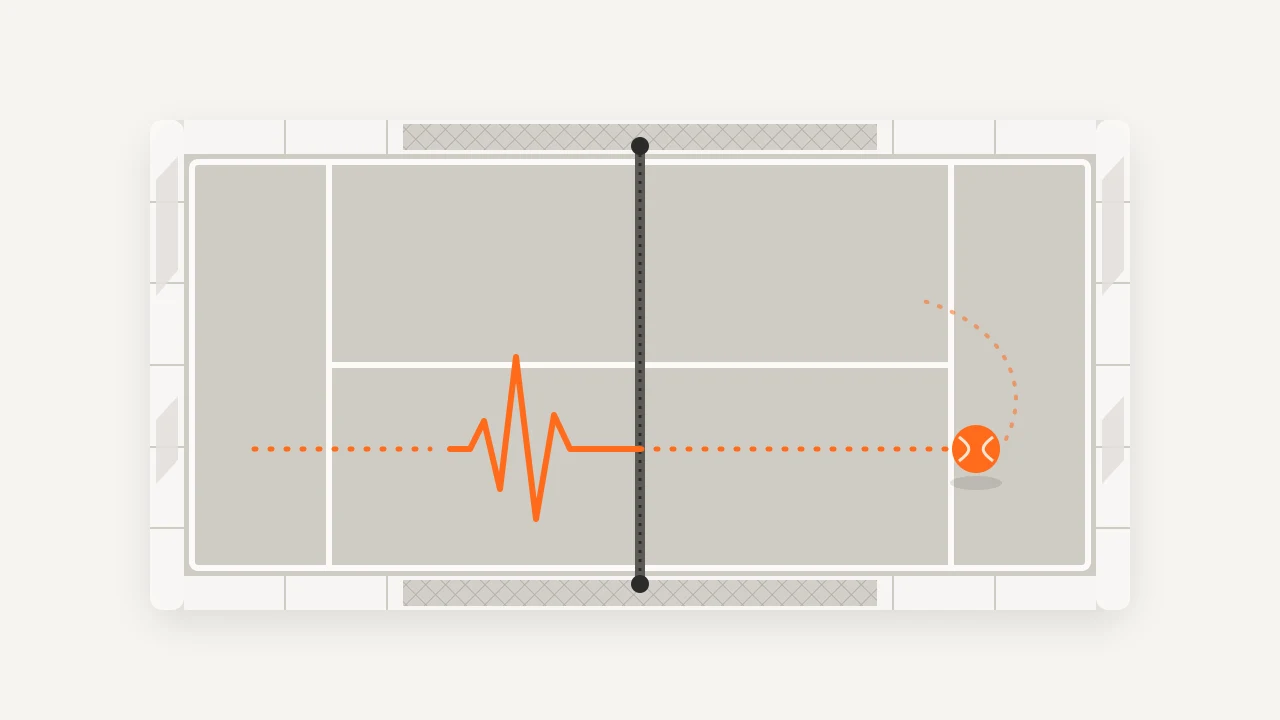
Key takeaways
- Average padel heart rate runs from about 55–70 % of max for beginners to 70–85 % in competitive play, with energy use of about 300–400 kcal an hour at social level and 500–600 at competitive level for a 70 kg adult.
- Long rallies push heart rate into the upper zones for 10–30 seconds, while gaps between points and changeovers let it fall back.
- Tennis singles usually demands more from the legs and heart, while doubles effort is similar to padel.
- Older players should set zones from a maximum heart rate they trust, because 220 − age can be off by 10 bpm or more.
Padel is played almost always in doubles on a 10 × 20 m court with glass back walls, side walls partly of glass and partly of mesh, and a solid, perforated racket. The ball stays in play off the walls, serves are underarm, and matches usually run 60–90 minutes. That makes the heart rate trace jagged rather than smooth.
What a padel match looks like on a heart rate trace
Long rallies push heart rate into the upper zones for 10–30 seconds; the gaps between points, changeovers and ball collecting let it fall back. Studies of padel players generally find that a large share of match time sits in low-to-moderate zones, with shorter peaks in zones 4–5 of a five-zone model (heart rate zones). The average therefore looks moderate even when the rallies feel hard. These are rule-of-thumb ranges, not measurements; level, age and opponents change them a lot.
| Level | Typical effort | Average heart rate (% of max) | Estimated energy, 70 kg adult |
|---|---|---|---|
| Beginner or social | Light to moderate | ~55–70 % | ~300–400 kcal/h |
| Regular club player | Moderate | ~65–80 % | ~400–500 kcal/h |
| Competitive | Moderate to vigorous | ~70–85 % | ~500–600 kcal/h |
Energy is roughly MET × body weight (kg) × hours. Watches report active energy, which excludes resting energy and reads lower than MET tables; either way it is an estimate that can be off by a wide margin. See calories burned and calories burned by activity.
Padel vs tennis: which is the harder workout?
A match is a natural form of interval work (rallies as effort, changeovers as rest), but unlike interval training the intensity is not controlled.
| Padel | Tennis | Pickleball | |
|---|---|---|---|
| Court | 10 × 20 m, glass walls, ball playable off walls | About 23.8 × 8.2 m (singles) or 11 m wide (doubles), no walls | About 6.1 × 13.4 m |
| Players | Almost always doubles | Singles or doubles | Singles or doubles |
| Rallies | Longer: the walls keep the ball in play | Often shorter at beginner level | Short, with a lot of play near the net |
| Typical average effort | Moderate, brief peaks | Singles usually higher; doubles similar to padel | Social doubles lower |
Tennis singles usually demands more from the legs and heart. Padel asks for fewer long sprints but more lunges, quick lateral steps and overhead work, and it is generally busier than casual pickleball, where the court is about 40 % of the size.
Padel watch: wearing a wearable on court
- Heart rate. Gripping the handle, sudden stops and wall impacts create motion that optical wrist sensors can misread, and readings may lag behind the rally. A chest strap is generally more accurate for this kind of activity (wearable heart rate accuracy). If you wear a watch, keep it snug on the non-racket wrist and protect it from the glass.
- Sport profile. Garmin, Polar and COROS have added padel profiles on recent models. If your watch has none, check its sport list; tennis is the usual substitute, and calorie estimates differ by profile.
- GPS and pace. A small enclosed court gives little useful distance or pace, and indoor clubs give no GPS at all. Rely on duration, heart rate and active energy.
Padel recovery: the night after an evening match
Most club matches are played in the evening. Heart rate and body temperature stay elevated for hours afterwards, and adrenaline and bright lights can push sleep later. Wearables often show a higher overnight heart rate and lower HRV the night after a hard match, usually back to normal within a day or two; compare with your own baseline, not with other people (personal baseline).
Practical steps: finish with a 5–10 minute cool-down walk, drink and eat something, dim the lights and aim to be in bed with enough time for your usual sleep duration. If you play twice in a week, spread hard sessions out, and treat repeated high resting heart rate or poor sleep as a reason to ease off (training load).
Beginners and older players
Start with 45–60 minute sessions, one or two a week, and let rallies be short. A conversational effort between points is a sensible target. Padel is social and doubles shares the court, but starts, stops and wall play load the knees, ankles and calves; a proper warm-up and court shoes help, and a loose, relaxed grip eases the forearm and elbow.
Older players should set zones from a maximum heart rate they trust (220 − age can be off by 10 bpm or more), stay hydrated in warm courts and rest more between games. Some heart medicines, such as beta-blockers, lower heart rate and make percent-of-max zones misleading; ask your clinician how to gauge effort if you take them. If you have heart disease or uncontrolled high blood pressure, check with a clinician before increasing intensity. Stop and seek medical care for chest pain or pressure, fainting, unusual breathlessness, or palpitations with dizziness. A watch cannot rule a cardiac problem in or out.
In MoveVitals
Padel sessions arrive as ordinary workouts from whichever source recorded them: Garmin, Polar, COROS, Suunto or WHOOP through their direct connections, or Apple Watch sessions that reach your Strava account. Duration, heart rate and calories are what the device supplied, and the sport label depends on what the source sends. If a watch and a chest strap both recorded the match, MoveVitals groups them as one session (how MoveVitals handles multiple devices). Overnight heart rate and HRV from your ring or watch arrive through its own connection, so you can see the night after a late match next to the workout. Direct Apple Health sync is planned, not available.
Worked example
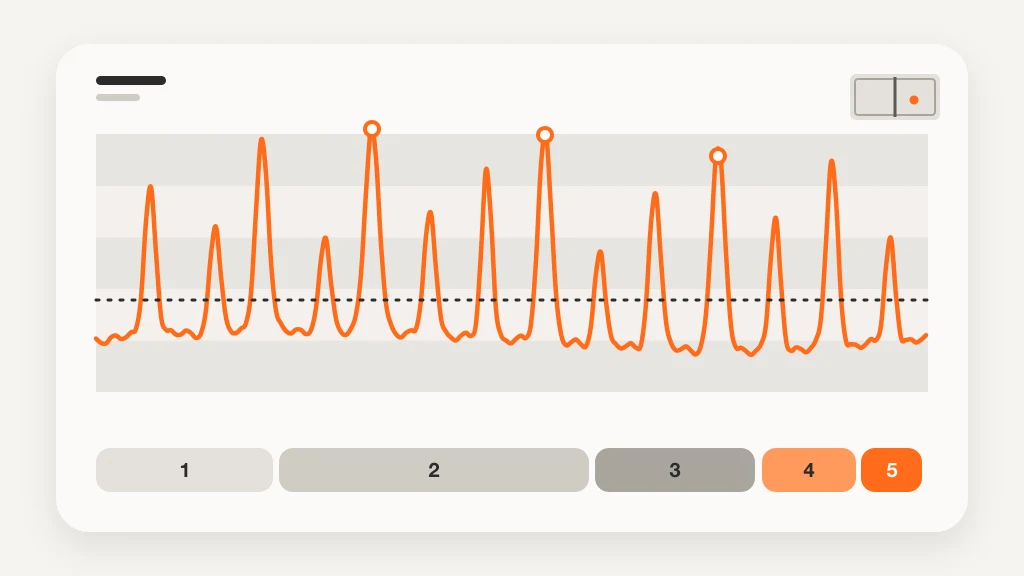
Illustrative scenario. Lucía, 34, plays a 90-minute padel match at 8:30 pm. Her measured maximum is about 188 bpm. Her watch shows an average of 126 bpm (67 %), peaks of 171 during long wall rallies, roughly 60 % of the time below 132 bpm (70 % of max) and about 8 % above 160 bpm (85 %), and around 450 active kcal. That night her overnight heart rate is 56 bpm against her usual 52, her HRV is lower than normal, and she falls asleep about 40 minutes later than usual. She moves the match to 7 pm and adds a 10-minute cool-down walk; the next week her overnight heart rate is 53. Numbers are illustrative.
Action steps
- Choose the padel profile on your watch (or tennis if there is none) and wear it snug on the non-racket wrist, or use a chest strap.
- Judge a match by average heart rate and time per zone, not by peaks, calories or clock time alone.
- Warm up for 5–10 minutes and finish with a cool-down walk.
- Play earlier in the evening when you can, and compare the next night's heart rate and sleep with your own baseline.
- Space hard matches a day or two apart, and ease off if resting heart rate stays high or sleep suffers.
Related guides
- Heart rate zones explained: how to set and use them
- Heart rate recovery: how fast your heart rate drops after exercise
- How much sleep do you need? Sleep duration and sleep debt
- Training load explained: TRIMP, TSS, strain and relative effort
- Interval training and HIIT: designing sessions that work
- Tennis with a wearable: heart rate between points, load and recovery
FAQ
How many calories does padel burn per hour? Roughly 300–600 kcal per hour for a 70 kg adult depending on level. Padel calories per hour from a watch are estimates, usually reported as active energy.
What is a normal padel heart rate? Averages of about 55–85 % of maximum depending on level, with brief peaks higher. Individual variation is large, so use your own zones.
Which watch is best for padel? One with a padel or racket-sport profile and good battery life, worn snug on the non-racket wrist. A chest strap gives steadier heart rate during rallies. See pickleball for a similar sport.
How long does padel recovery take? After a moderate match most people feel normal the next day; after a very hard late match, overnight heart rate and sleep may take a day or two to settle.
References
- Polar. Heart Rate Zones: five-zone percentages of maximum heart rate. https://www.polar.com/en/guide/heart-rate-zones
- Buchheit et al. (2013). High-Intensity Interval Training, Solutions to the Programming Puzzle. Sports Medicine. https://doi.org/10.1007/s40279-013-0029-x
For general information only. This is not medical advice — talk to a qualified professional about your health.
Keep reading
Metrics explained
VO2 max: what it means and how to improve it
4 min read
Metrics explained
Heart rate zones explained: how to set and use them
4 min read
Sports
Pickleball and your health data: heart rate zones, calories and joint load
6 min read
Metrics explained
Resting heart rate: normal ranges and what changes it
4 min read
Sports
Hiking and trekking: heart rate on climbs, pacing and how to train for it
8 min read
Sports
Trail running with a watch: heart rate, climbs and pacing by effort
7 min read