

Metrics explained
Muscle mass: what smart scales report and why it matters
Muscle mass supports strength, metabolism, blood-sugar control and healthy ageing. Scales estimate it indirectly, so watch the trend and pair it with strength numbers.
Written by MoveVitals Editorial Collective
Community-authored educational content. Individual clinical review is identified only when a named review is actually recorded.
Editorial standards & corrections
Key takeaways
- Adults lose roughly 3–8 % of muscle per decade after 30 without resistance training, which is sarcopenia when strength is low too.
- Hydration alone moves scale muscle mass by ±0.5 kg from day to day, so compare monthly averages from the same scale and confirm with lifting numbers.
- A realistic muscle gain for a beginner is about 0.5–1 kg per month, less with experience.
- Build muscle with resistance training 2–4 times per week, around 1.6 g of protein per kg of body weight a day and 7–9 hours of sleep.
Smart scales such as Withings and Garmin report muscle mass in kilograms. It is usually estimated as lean mass (everything that isn't fat) minus bone, and includes water inside muscle. It is not a direct measurement of muscle tissue.
Why muscle matters
- Strength and function — the ability to climb stairs and carry things in later life.
- Metabolism — muscle is the largest site of glucose disposal, helping blood glucose control.
- Healthy ageing — adults lose roughly 3–8 % of muscle per decade after 30 without resistance training (sarcopenia).
- Injury resilience — stronger muscles protect joints and tendons.
Reading the numbers
- Expect day-to-day changes of ±0.5 kg from hydration alone.
- Realistic muscle gain for a beginner is about 0.5–1 kg per month, less with experience.
- A drop in muscle mass during a diet often reflects lost glycogen and water, not just tissue.
Compare monthly averages from the same scale and confirm with real-world markers: lifting numbers, tape measurements, photos.
How to build and keep muscle
- Resistance training 2–4 times per week, progressing the load — see progressive overload.
- Protein: around 1.6 g/kg body weight per day, spread across meals.
- Sleep 7–9 hours; growth and repair happen during sleep.
- Avoid large calorie deficits for long periods.
In MoveVitals
Muscle mass, body fat and bone mass from each scale are stored separately with their source.
Worked example
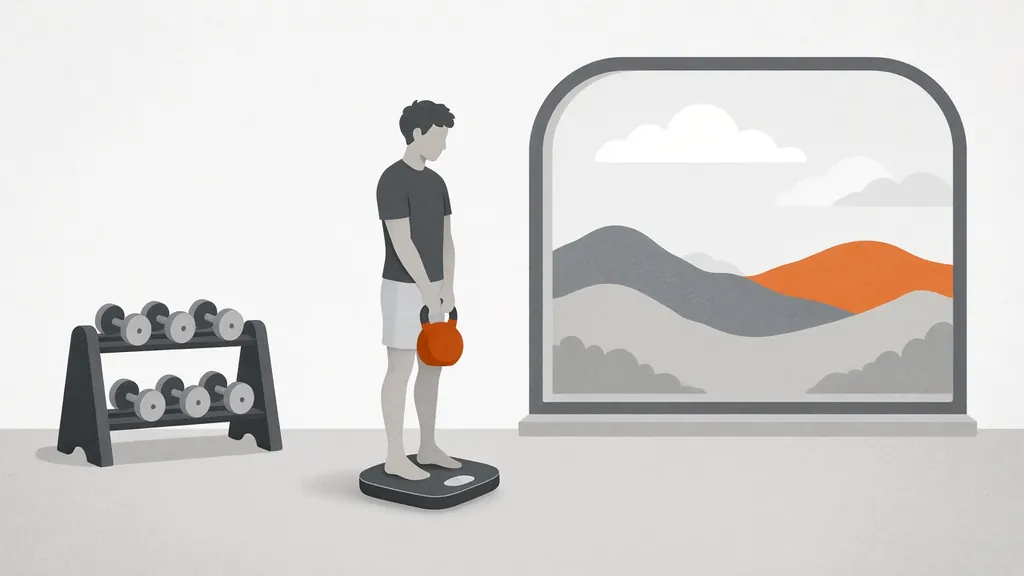
Illustrative scenario. Chen, 52, starts strength training twice a week. His bioimpedance scale reads 31.2 kg skeletal muscle mass at the start. Over 12 weeks, the daily readings swing by up to 1 kg depending on hydration, but the weekly average (always measured on waking, after the toilet, before drinking) rises to about 32.0 kg while his waist shrinks 3 cm and his leg-press load climbs 30%. He trusts the combined trend more than any single scale reading, and a later DEXA scan confirms a smaller but real gain.
Action steps
- Weigh at the same time daily (morning, after the toilet) and use weekly averages.
- Strength-train each major muscle group at least twice a week.
- Eat about 1.6 g protein per kg body weight per day while building muscle.
- Track strength and girth measurements alongside the scale.
- Consider DEXA once or twice a year if precise numbers matter.
Related guides
- Body fat percentage: healthy ranges and how smart scales measure it
- DEXA scans: the most accurate way to measure body fat — and calibrate your scale
- Protein for recovery: how much, when and from what
- Progressive overload: the principle behind every improvement
- Exercise for older adults: heart rate, strength, balance and fall prevention
- Recovery after strength training: rest days, DOMS and what HRV and resting heart rate show
FAQ
Why do two scales give very different muscle mass? Different algorithms and electrode setups. Stick with one.
Does "skeletal muscle mass" differ from "muscle mass"? Yes. Skeletal muscle is a subset; some scales report one, some the other.
Why does my muscle mass jump after a workout? Bioimpedance reads water; fluid shifts after exercise or meals change the estimate without real muscle change.
How fast can I build muscle? Beginners may gain roughly 0.5–1 kg of lean mass a month at first; the rate slows with experience.
Is low muscle mass a health concern? Yes, especially with age: low muscle mass with low strength defines sarcopenia, linked to falls and frailty.
References
- Cruz-Jentoft et al. (2019). Sarcopenia: revised European consensus on definition and diagnosis. Age and Ageing. https://doi.org/10.1093/ageing/afy169
- Schoenfeld et al. (2017). Dose-response relationship between weekly resistance training volume and increases in muscle mass: A systematic review and meta-analysis. Journal of Sports Sciences. https://doi.org/10.1080/02640414.2016.1210197
- Morton et al. (2018). A systematic review, meta-analysis and meta-regression of the effect of protein supplementation on resistance training-induced gains in muscle mass and strength in healthy adults. British Journal of Sports Medicine. https://doi.org/10.1136/bjsports-2017-097608
For general information only. This is not medical advice — talk to a qualified professional about your health.
Keep reading
Devices & setup
Withings and MoveVitals: scales, blood pressure and sleep
3 min read
Devices & setup
How MoveVitals handles multiple devices: provenance, duplicates and conflicts
5 min read
Metrics explained
Resting heart rate: normal ranges and what changes it
4 min read
Devices & setup
Garmin Connect and MoveVitals: activities, health and Body Battery
3 min read
Metrics explained
Sleep stages: light, deep and REM sleep explained
4 min read
Metrics explained
Normal heart rate variability (HRV) by age: RMSSD vs SDNN
6 min read