

Metrics explained
Visceral fat: the fat you can't see and why it matters most
Visceral fat surrounds your abdominal organs. It is more metabolically active and more closely linked to heart disease and diabetes than fat under the skin.
Written by MoveVitals Editorial Collective
Community-authored educational content. Individual clinical review is identified only when a named review is actually recorded.
Editorial standards & corrections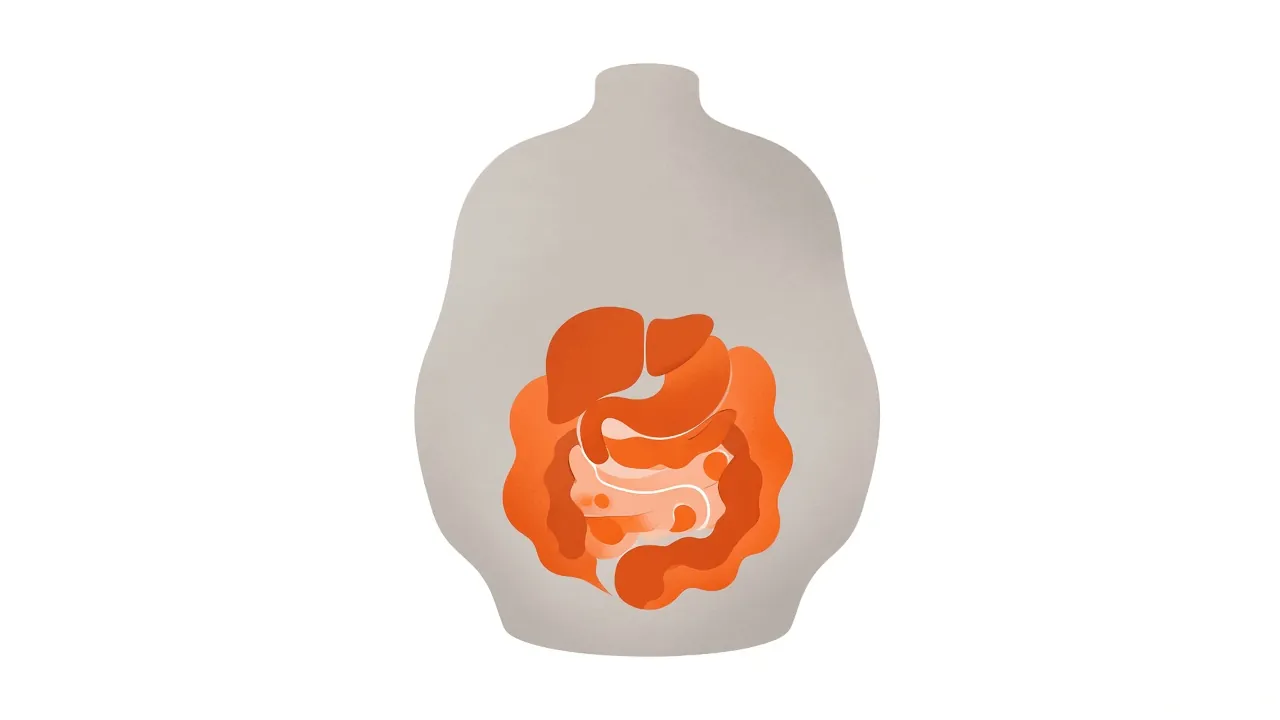
Key takeaways
- Risk rises at a waist of 94 cm for European men and 80 cm for European women, and at 85 cm for men and 80 cm for women under the China thresholds.
- MRI and CT are the reference methods and DEXA gives a good estimate, while smart-scale visceral fat indexes (often 1–59) are estimated from impedance and your profile.
- Regular aerobic exercise reduces visceral fat even without weight loss, and strength training twice a week helps preserve muscle.
- Crunches do not burn belly fat, because spot reduction does not work.
- Thin people can still carry high visceral fat, so ask your doctor about blood pressure, lipids and glucose if your waist is high.
Body fat comes in two main forms. Subcutaneous fat sits under the skin. Visceral fat sits deep in the abdomen around the liver, intestines and other organs. Visceral fat releases inflammatory substances and fatty acids directly to the liver, which is why it is strongly linked with insulin resistance, type 2 diabetes, fatty liver and cardiovascular disease.
How it is measured
- MRI or CT: the reference methods.
- DEXA: gives a good estimate of visceral adipose tissue.
- Smart scales: some Withings and Garmin models report a visceral fat index (often 1–59) estimated from impedance and your profile. It's useful for trends only.
- Waist circumference: a simple, practical proxy.
| Waist circumference | Increased risk | High risk |
|---|---|---|
| Men (Europe) | ≥ 94 cm | ≥ 102 cm |
| Women (Europe) | ≥ 80 cm | ≥ 88 cm |
| Men (China) | ≥ 85 cm | ≥ 90 cm |
| Women (China) | ≥ 80 cm | ≥ 85 cm |
What reduces visceral fat
Visceral fat responds relatively quickly to lifestyle changes:
- Regular aerobic exercise — even without weight loss, it reduces visceral fat.
- Strength training to preserve muscle and improve insulin sensitivity.
- A moderate calorie deficit with fewer ultra-processed foods and sugary drinks.
- Less alcohol.
- Enough sleep and stress management; short sleep and chronic stress promote abdominal fat.
In MoveVitals
When a scale provides a visceral fat estimate, MoveVitals stores it with its source; pair it with body fat, weight and your waist measurement.
Worked example
Illustrative scenario. Wei, 45, has a smart-scale visceral fat rating of 13 and a waist of 98 cm at a height of 175 cm (waist-to-height ratio about 0.56). Over six months he adds 150 minutes of brisk walking and cycling a week, two strength sessions, cuts sugary drinks and keeps alcohol to a few drinks a week. His weight drops 5 kg, his waist falls to 90 cm (ratio ~0.51), and the scale's rating moves to 10. Because bioimpedance scales only estimate visceral fat, he treats waist measurement as his main marker and discusses cardiometabolic risk with his doctor. Figures are illustrative.
Action steps
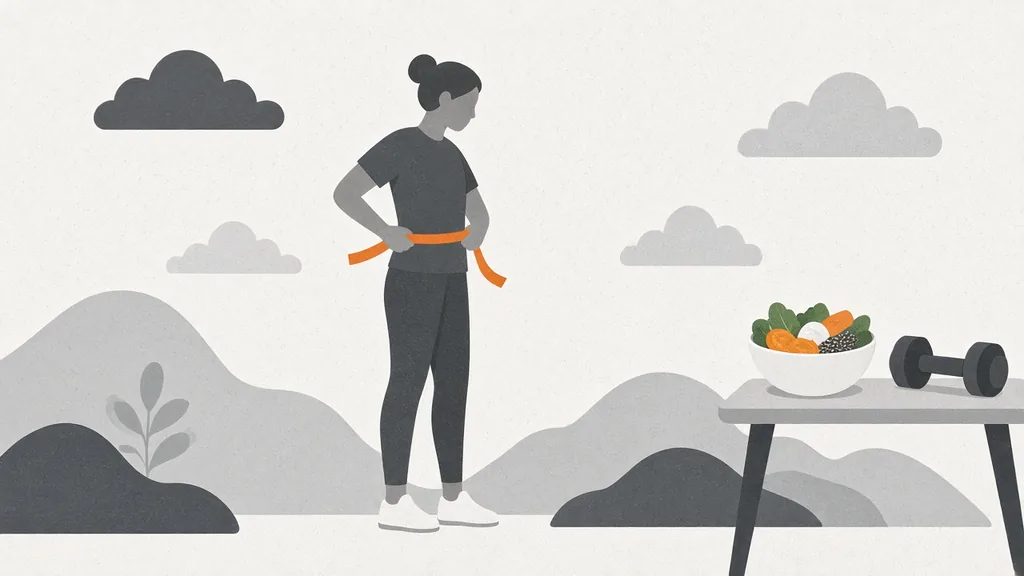
- Measure waist at the navel monthly, same time of day; aim for under half your height.
- Accumulate around 150–300 minutes of moderate activity a week.
- Add strength training twice a week to preserve muscle.
- Reduce sugary drinks, refined carbs and alcohol; prioritise fibre and protein.
- Ask your doctor about blood pressure, lipids and glucose if waist is high.
Related guides
- Body fat percentage: healthy ranges and how smart scales measure it
- BMI: how it's calculated, what it means and where it fails
- DEXA scans: the most accurate way to measure body fat — and calibrate your scale
- Muscle mass: what smart scales report and why it matters
FAQ
Can you be thin and still have high visceral fat? Yes ("TOFI" — thin outside, fat inside). Waist size and activity level matter.
Do crunches burn belly fat? No — spot reduction doesn't work; overall activity and diet do.
Can you spot-reduce belly fat with sit-ups? No. Visceral fat falls with overall energy balance and activity, not targeted ab exercises.
Is visceral fat dangerous even at normal BMI? It can be; people with normal BMI but high waist measurements may still have elevated cardiometabolic risk.
References
- Neeland et al. (2019). Visceral and ectopic fat, atherosclerosis, and cardiometabolic disease: a position statement. The Lancet Diabetes & Endocrinology. https://doi.org/10.1016/s2213-8587%2819%2930084-1
- Ross et al. (2020). Waist circumference as a vital sign in clinical practice: a Consensus Statement from the IAS and ICCR Working Group on Visceral Obesity. Nature Reviews Endocrinology. https://doi.org/10.1038/s41574-019-0310-7
- Bull et al. (2020). World Health Organization 2020 guidelines on physical activity and sedentary behaviour. British Journal of Sports Medicine. https://doi.org/10.1136/bjsports-2020-102955
For general information only. This is not medical advice — talk to a qualified professional about your health.
Keep reading
Devices & setup
Withings and MoveVitals: scales, blood pressure and sleep
3 min read
Devices & setup
How MoveVitals handles multiple devices: provenance, duplicates and conflicts
5 min read
Metrics explained
Resting heart rate: normal ranges and what changes it
4 min read
Devices & setup
Garmin Connect and MoveVitals: activities, health and Body Battery
3 min read
Metrics explained
Sleep stages: light, deep and REM sleep explained
4 min read
Metrics explained
Normal heart rate variability (HRV) by age: RMSSD vs SDNN
6 min read