

Metrics explained
Bone mass on smart scales: what it means (and what it doesn't)
Smart scales estimate the weight of your skeleton. It changes very slowly and is not a substitute for a bone density scan.
Written by MoveVitals Editorial Collective
Community-authored educational content. Individual clinical review is identified only when a named review is actually recorded.
Editorial standards & corrections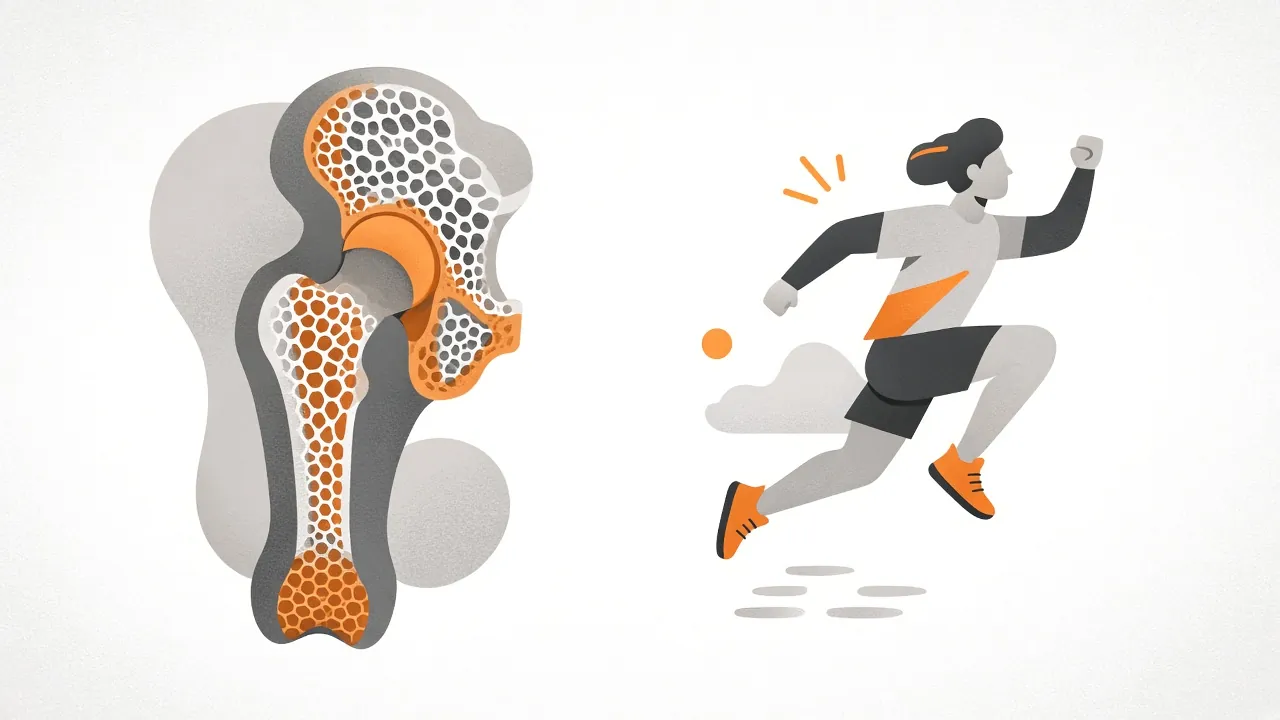
Key takeaways
- Scale bone mass is an estimate of skeleton mineral weight, typically 2.5–4 kg for adults, and it depends on your size.
- Only a DEXA scan, which measures mineral per area at the hip and spine, can diagnose osteoporosis.
- Do resistance training at least 2 days a week with progressively heavier loads and add impact such as hopping or skipping if your joints allow; swimming and cycling provide little bone loading.
- Ask a doctor about a DEXA scan if you have risk factors such as stress fractures, low energy availability or early menopause.
Withings and Garmin scales report bone mass in kilograms — an estimate of the mineral weight of your skeleton, typically 2.5–4 kg for adults. It is derived from impedance, weight and your profile, so it mostly follows your body size.
Bone mass vs bone density
| Bone mass (scale) | Bone mineral density (DEXA) | |
|---|---|---|
| What | Estimated skeleton weight | Mineral per area at hip and spine |
| Purpose | General trend | Diagnose osteopenia/osteoporosis |
| Precision | Low | High |
Only a DEXA scan can diagnose osteoporosis. If you are at risk — women after menopause, long-term steroid use, low body weight, family history, or previous fractures — ask your doctor about a scan.
What builds strong bones
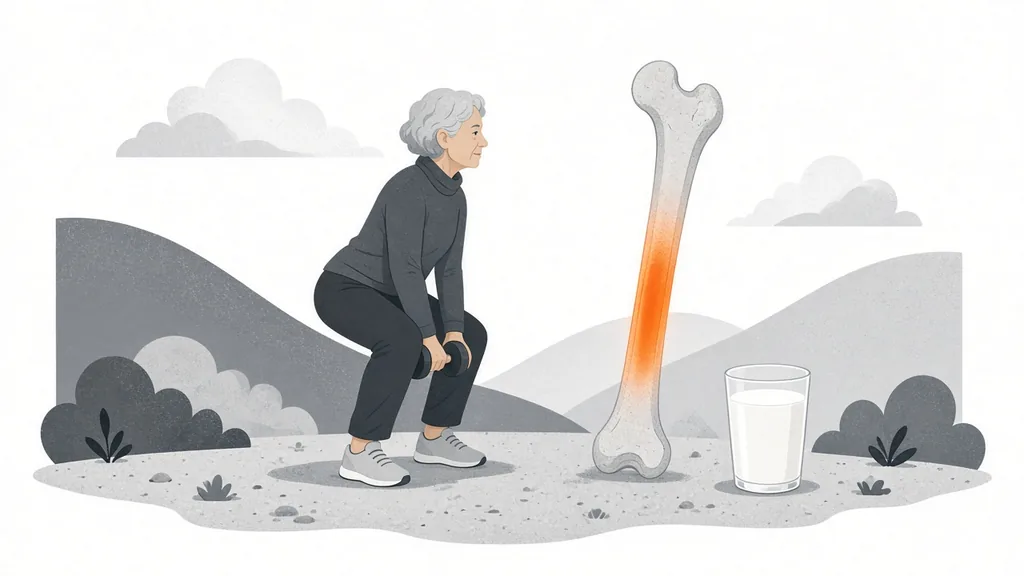
- Impact and resistance training: running, jumping, stair climbing and heavy lifting load bones and stimulate them. Cycling and swimming, though great for fitness, provide little bone loading — add strength training.
- Calcium and vitamin D: from food (dairy, leafy greens, fortified foods) and sunlight or supplements if deficient.
- Enough energy and protein: chronic under-fuelling (RED-S) weakens bones, especially in endurance athletes.
- Avoid smoking and heavy drinking.
How to read your scale data
Expect it to stay almost flat. Small daily changes are measurement noise. A sustained drop together with weight loss usually reflects the algorithm, not real bone loss.
Worked example
Illustrative scenario. Mei, 29, is a 60 kg distance runner whose scale shows a bone mass of 2.4 kg, unchanged for a year. The scale number is a prediction from her weight and impedance, so it cannot detect a change in bone density. After a stress fracture and irregular periods, her doctor orders a DEXA scan that shows a below-expected Z-score at the lumbar spine. Together with a sports dietitian she increases energy intake, adds two weekly sessions of heavy lifting and hopping drills, and plans a repeat DEXA in 12–24 months — the scale's bone mass value stays at 2.4 kg throughout, which is exactly why it isn't the tool for this question.
Action steps
- Treat scale bone mass as a rough estimate; don't react to small changes.
- Do resistance training at least 2 days a week with progressively heavier loads.
- Add impact such as hopping, skipping or jumping if your joints allow.
- Get enough calcium, vitamin D, protein and total energy, especially if you train a lot.
- Ask a doctor about a DEXA scan if you have risk factors such as stress fractures, low energy availability or early menopause.
Related guides
- DEXA scans: the most accurate way to measure body fat — and calibrate your scale
- Strength training for endurance athletes
- Vitamin D and B12: two common deficiencies worth testing
- Muscle mass: what smart scales report and why it matters
- Exercise for older adults: heart rate, strength, balance and fall prevention
- Perimenopause and menopause: training, sleep and what your wearable data shows
FAQ
My bone mass is 2.9 kg — is that low? Not necessarily; it depends on your size. Use DEXA for real assessment.
Can endurance athletes have weak bones? Yes, particularly with low energy availability. Strength work and adequate fuelling help.
Does swimming or cycling build bone? They are excellent for fitness but provide little bone loading, so add strength and impact work.
Can bone density improve in adults? Modestly. Resistance and impact training can maintain or slightly increase bone density, and they reduce fall risk.
References
- Kohrt et al. (2004). Physical Activity and Bone Health. Medicine & Science in Sports & Exercise. https://doi.org/10.1249/01.MSS.0000142662.21767.58
- Kyle et al. (2004). Bioelectrical impedance analysis—part I: review of principles and methods. Clinical Nutrition. https://doi.org/10.1016/j.clnu.2004.06.004
- Holick et al. (2011). Evaluation, Treatment, and Prevention of Vitamin D Deficiency: an Endocrine Society Clinical Practice Guideline. The Journal of Clinical Endocrinology & Metabolism. https://doi.org/10.1210/jc.2011-0385
For general information only. This is not medical advice — talk to a qualified professional about your health.
Keep reading
Devices & setup
Withings and MoveVitals: scales, blood pressure and sleep
3 min read
Devices & setup
How MoveVitals handles multiple devices: provenance, duplicates and conflicts
5 min read
Metrics explained
Resting heart rate: normal ranges and what changes it
4 min read
Devices & setup
Garmin Connect and MoveVitals: activities, health and Body Battery
3 min read
Metrics explained
Sleep stages: light, deep and REM sleep explained
4 min read
Metrics explained
Normal heart rate variability (HRV) by age: RMSSD vs SDNN
6 min read