

Recovery & sleep
Perimenopause and menopause: training, sleep and what your wearable data shows
Perimenopause exercise works best when it rests on strength training, steady aerobic work and protected sleep, because wearable data becomes noisier and less cyclical during the transition. Here is what changes, what the numbers can and cannot tell you, and when to talk to a doctor.
Written by MoveVitals Editorial Collective
Community-authored educational content. Individual clinical review is identified only when a named review is actually recorded.
Editorial standards & corrections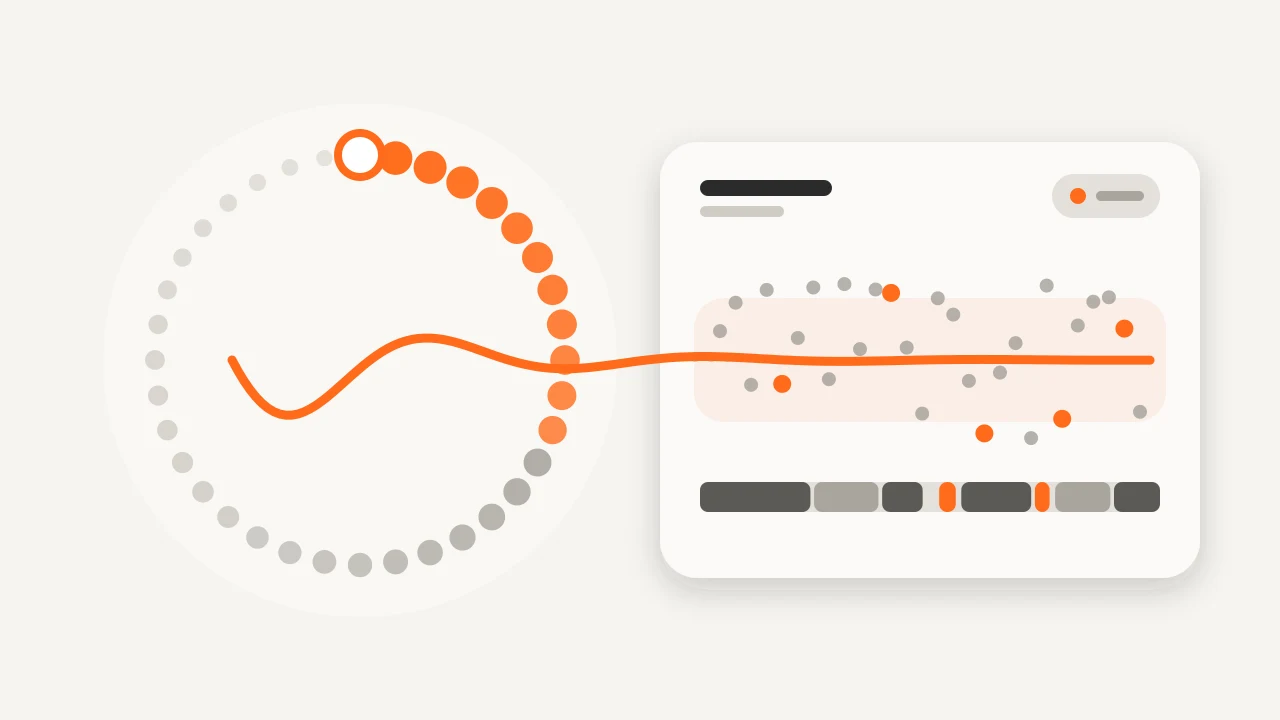
Key takeaways
- Menopause means 12 months with no period, at an average age of about 51, and perimenopause often starts in the 40s and lasts several years.
- A week of perimenopause training is strength on 2–3 days, with 6–8 compound moves of 2–4 sets of 6–12 reps near RPE 7–8, plus 150 or more minutes of mostly easy aerobic work.
- Read resting heart rate, HRV, temperature and sleep as 2–4 week averages, because composite scores swing more than your actual fitness does.
- A watch cannot tell you whether you are perimenopausal or what your hormone levels are, and temperature tracking is not contraception.
- See a doctor for very heavy bleeding, periods closer than 21 days apart or any bleeding after 12 months without a period, and get prompt help for chest pain, fainting, or palpitations with dizziness.
What changes in perimenopause
Perimenopause is the transition before the final period. Oestrogen and progesterone do not fall smoothly; they swing, so cycles become irregular and symptoms can come and go. Not everyone gets every symptom, and experiences vary widely.
| Stage | What it means | Typical timing |
|---|---|---|
| Perimenopause | Irregular cycles and fluctuating hormones; symptoms may begin | Often starts in the 40s and lasts several years |
| Menopause | 12 months with no period | Average age about 51 |
| Postmenopause | The years after menopause | Hormone levels stay low; bone, muscle and heart health matter more |
Common symptoms include hot flashes and night sweats, sleep problems, mood changes, joint aches and changes in body shape. Body composition shifts too: in a large US cohort, the rate of fat gain roughly doubled and lean mass began to fall around the start of the transition (Greendale et al., 2019). That is the main reason strength training gets priority here.
What your wearable may show
Research on consumer wearable data in perimenopause is still limited, and individual patterns differ. Perimenopause resting heart rate, for example, can swing several beats from one night to the next. These are changes many people notice and that fit the physiology, not guaranteed findings:
| Signal | What you may see | How to read it |
|---|---|---|
| Skin temperature | The monthly post-ovulation rise fades or becomes irregular; spikes on nights with sweats | Not a reliable marker of cycle phase or menopause |
| Resting heart rate | More night-to-night variation; higher after poor sleep | Look at 2–4 week averages |
| HRV | Lower and more erratic on nights with wakings or sweats | Compare with your own baseline, not other people |
| Sleep | More awakenings, lower efficiency | Trends are useful; stage splits are estimates |
| Readiness or recovery scores | Bigger swings without a training reason | One input, not an instruction |
Because several inputs get noisier at once, composite scores swing more than your actual fitness does. Treat menopause HRV and sleep readings like any noisy signal: average them, look for shifts that last two weeks or more, and compare with your personal baseline.
What your device cannot tell you
- It cannot tell you whether you are perimenopausal or postmenopausal, or what your hormone levels are. Symptoms, history and, when needed, a clinician's assessment do.
- Temperature-based cycle predictions become unreliable when cycles are irregular, and temperature tracking is not contraception. The menstrual cycle guide describes the regular pattern that is fading here.
- Hot-flash or "temperature spike" flags can miss or mislabel events; a short symptom diary is just as informative.
- Heart rhythm and high-heart-rate alerts are prompts, not diagnoses; see AFib and ECG on a smartwatch.
Training: strength first
Strength training in perimenopause is the anchor of the week. The WHO adult guidelines, which still apply through this transition, ask for 150–300 minutes of moderate aerobic activity a week and muscle strengthening on 2 or more days (Bull et al., 2020). A practical weekly shape:
| Component | Dose | Notes |
|---|---|---|
| Strength | 2–3 days; 6–8 compound moves; 2–4 sets of 6–12 reps near RPE 7–8 | Add small loads or reps over weeks: progressive overload |
| Aerobic | 150+ minutes, mostly easy | Walking counts; one harder session is optional |
| Impact and power | Short bursts of skipping, step-ups or brisk hills, if joints allow | Bone benefits are modest; build up slowly |
| Mobility and balance | 5–10 minutes | Joint aches are common, so warm up well |
Resistance and impact work also help maintain bone, which loses density faster in the years around the final period; Cochrane reviews find modest benefits of exercise for bone density in postmenopausal women (Howe et al., 2011). Exercise is not proven to stop hot flashes themselves: the evidence is limited and mixed (Daley et al., 2014). Its better-supported benefits are fitness, mood, sleep, body composition, and bone and heart health.
Sleep, recovery and protein
Sleep problems are common during the transition (Baker et al., 2018). The basics from sleep hygiene still matter: a regular schedule, a cool bedroom and an earlier caffeine cut-off. For some people alcohol worsens hot flashes and sleep (see alcohol, HRV and sleep). After several short nights, keep the session but trim a set or two, or swap intervals for easy aerobic work; see deload weeks. For food, most active adults do well with about 1.2–1.6 g of protein per kg of body weight a day, spread over meals (protein for recovery). The bone mass figure on a smart scale is not a bone-density test.
When to see a doctor
This guide is educational. It does not cover hormone therapy, other medicines or supplements; those decisions are for you and your clinician. See a doctor if you have:
- very heavy bleeding (soaking a pad or tampon every hour or two), periods closer than 21 days apart, bleeding between periods, or any bleeding after 12 months without a period;
- symptoms that disrupt sleep, work, mood or daily life, including persistent low mood or anxiety;
- periods that stop before age 45, or stop in a young or very active woman;
- drenching night sweats with fever, unexplained weight loss or other new symptoms;
- a fracture from a minor fall, or concern about osteoporosis.
Get prompt medical help for chest pain or pressure, fainting, or palpitations with dizziness or breathlessness, and call emergency services if chest pain does not settle.
In MoveVitals
Sleep, resting heart rate, HRV and, from devices that record it (such as Oura), skin temperature arrive from Oura, WHOOP, Garmin, Apple Health, Polar or Withings, with duplicates removed so one night counts once. Compare each metric with your own baseline over weeks rather than with population averages. MoveVitals does not diagnose or stage menopause; treat trends as notes to bring to a clinician.
Worked example
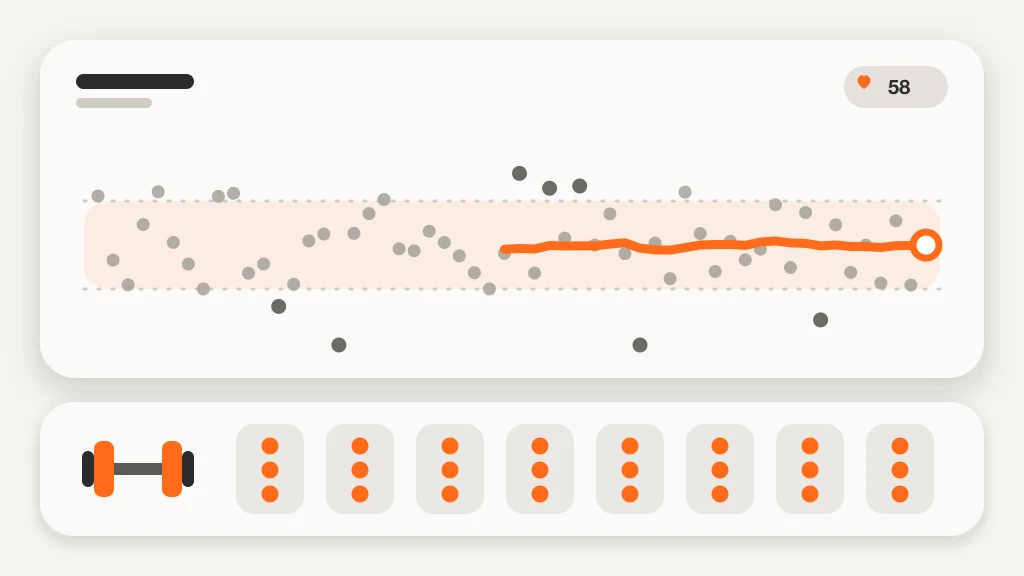
Illustrative scenario. Claire, 49, has had irregular periods for a year. Her ring shows nightly resting heart rate anywhere from 54 to 64 bpm, temperature deviation with no clear monthly pattern, and readiness scores from the mid-50s to the high-80s. She used to skip workouts after a low score and then push hard after a high one. Now she lifts three days a week (her squat goes from 40 to 47.5 kg for 3 × 8 over ten weeks), walks about 150 minutes a week and checks her 28-day average resting heart rate: 58 bpm at the start and 57 after eight weeks, so no real change despite the daily noise. A short diary shows her lowest HRV follows nights with sweats or evening alcohol, so she skips alcohol on training days. After two short nights in a row she keeps the session but drops a set. She also books the appointment about heavy bleeding she had been putting off, because a watch cannot assess that. Figures are illustrative.
Action steps
- If you have heavy or unpredictable bleeding, symptoms that disrupt daily life, or questions about treatment, book a visit and bring a simple symptom and sleep diary; watch trends are a useful extra, not a diagnosis.
- Lift 2–3 days a week with whole-body moves, adding small amounts of load or reps every 1–2 weeks, and keep walking or easy aerobic work near 150 minutes a week.
- Read resting heart rate, HRV, temperature and sleep as 2–4 week averages against your personal baseline; do not cancel or add sessions because of one readiness score.
- Protect sleep with a regular schedule, a cool bedroom and an earlier caffeine cut-off; after several short nights, trim volume instead of stopping.
- Stop and get medical advice for chest pain, fainting, or palpitations with dizziness.
Related guides
- The menstrual cycle and your training data
- Skin temperature and temperature deviation: how to read them
- Progressive overload: the principle behind every improvement
- Sleep hygiene: evidence-based habits for better sleep
- Your personal baseline: why "normal for you" beats population averages
FAQ
Can my watch or ring tell me I am in perimenopause? No. Devices can show noisier temperature, heart rate and sleep, but those changes have many causes, including stress, illness, alcohol and training. Diagnosis relies on symptoms, age and, when needed, a clinician's assessment.
Is a higher resting heart rate or lower HRV normal in perimenopause? Both can fluctuate more, especially after nights with sweats or poor sleep, so a few beats up or down on one night is usually noise. A sustained rise you cannot explain by illness, training, stress or alcohol, or any palpitations, is worth raising with a clinician.
Should I stop high-intensity training? There is no rule that you must. Many people keep one or two harder sessions a week; the question is whether you recover. If sleep is poor and scores stay low for weeks, swap an interval day for easy aerobic work or reduce volume.
Does exercise for menopause symptoms, such as hot flashes, work? The evidence is limited and mixed, and some people find hot workouts trigger them. Exercise is still worthwhile for fitness, mood, sleep, bone and heart health, and layers and a cooler room help comfort.
Is strength training safe with joint aches or low bone density? It is generally recommended, but start light with good form and progress gradually. If you have osteoporosis, a recent fracture or painful joints, ask your doctor or a physiotherapist which exercises suit you.
References
- Harlow et al. (2012). Executive summary of the Stages of Reproductive Aging Workshop + 10. Menopause. https://doi.org/10.1097/gme.0b013e31824d8f40
- Greendale et al. (2019). Changes in body composition and weight during the menopause transition. JCI Insight. https://doi.org/10.1172/jci.insight.124865
- Bull et al. (2020). World Health Organization 2020 guidelines on physical activity and sedentary behaviour. British Journal of Sports Medicine. https://doi.org/10.1136/bjsports-2020-102955
- Daley et al. (2014). Exercise for vasomotor menopausal symptoms. Cochrane Database of Systematic Reviews. https://doi.org/10.1002/14651858.CD006108.pub4
- Howe et al. (2011). Exercise for preventing and treating osteoporosis in postmenopausal women. Cochrane Database of Systematic Reviews. https://doi.org/10.1002/14651858.CD000333.pub2
- Baker et al. (2018). Sleep problems during the menopausal transition: prevalence, impact, and management challenges. Nature and Science of Sleep. https://doi.org/10.2147/NSS.S125807
For general information only. This is not medical advice — talk to a qualified professional about your health.
Keep reading
Devices & setup
Oura Ring and MoveVitals: sleep, readiness and temperature in one place
3 min read
Devices & setup
How MoveVitals handles multiple devices: provenance, duplicates and conflicts
5 min read
Recovery & sleep
Your personal baseline: why "normal for you" beats population averages
4 min read
Devices & setup
WHOOP and MoveVitals: what syncs and how to get the most from it
3 min read
Metrics explained
Normal heart rate variability (HRV) by age: RMSSD vs SDNN
6 min read
Metrics explained
Resting heart rate: normal ranges and what changes it
4 min read