

Recovery & sleep
Protein for recovery: how much, when and from what
Protein provides the building blocks to repair and adapt muscle after training. Most active people benefit from more than the basic recommendation, spread across the day.
Written by MoveVitals Editorial Collective
Community-authored educational content. Individual clinical review is identified only when a named review is actually recorded.
Editorial standards & corrections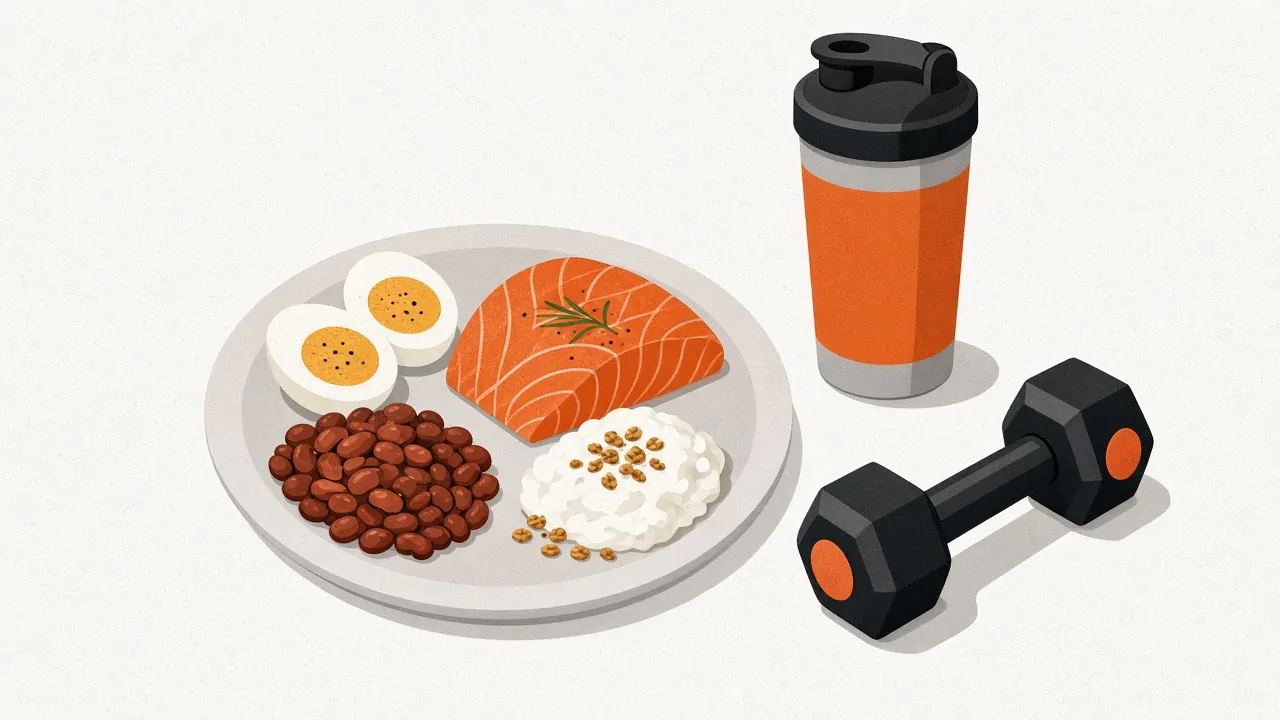
Key takeaways
- Daily protein targets are 0.8 g/kg for sedentary adults, 1.2–1.6 g/kg for endurance athletes, 1.6–2.2 g/kg for strength athletes and 1.8–2.4 g/kg during fat loss.
- Spread intake over 3–5 meals of about 0.3–0.4 g/kg (20–40 g) each; a 70 kg endurance athlete needs about 85–110 g a day.
- The total for the day matters more than a narrow window after training, and eating within a few hours is sufficient.
- In healthy people, intakes up to about 2.2 g/kg are considered safe, while people with kidney disease should follow medical advice.
How much?
| Group | Daily protein |
|---|---|
| Sedentary adults (minimum) | 0.8 g/kg |
| Endurance athletes | 1.2–1.6 g/kg |
| Strength / hybrid athletes | 1.6–2.2 g/kg |
| Fat loss while preserving muscle | 1.8–2.4 g/kg |
| Older adults (to limit muscle loss) | 1.2–1.6 g/kg |
Example: a 70 kg endurance athlete needs about 85–110 g a day.
When?
- Spread intake over 3–5 meals, about 0.3–0.4 g/kg (20–40 g) per meal.
- A protein-rich meal or snack within a couple of hours after training is sensible, but the total for the day matters more than a narrow "window".
- A pre-sleep serving (e.g. 30–40 g of casein, yoghurt or quark) supports overnight repair.
Good sources
| Food | Protein |
|---|---|
| Chicken breast (100 g) | ~31 g |
| Greek yoghurt (200 g) | ~20 g |
| Eggs (2 large) | ~13 g |
| Tofu (150 g) | ~18 g |
| Lentils, cooked (200 g) | ~18 g |
| Whey protein (30 g scoop) | ~24 g |
| Salmon (120 g) | ~25 g |
Leucine-rich sources (dairy, meat, eggs, soy) are particularly effective for muscle protein synthesis. Plant-based athletes can meet needs by combining sources and eating slightly more total protein.
Protein and carbs together
After endurance sessions, pair protein with carbohydrate to restore glycogen — see carbohydrate fuelling.
Worked example
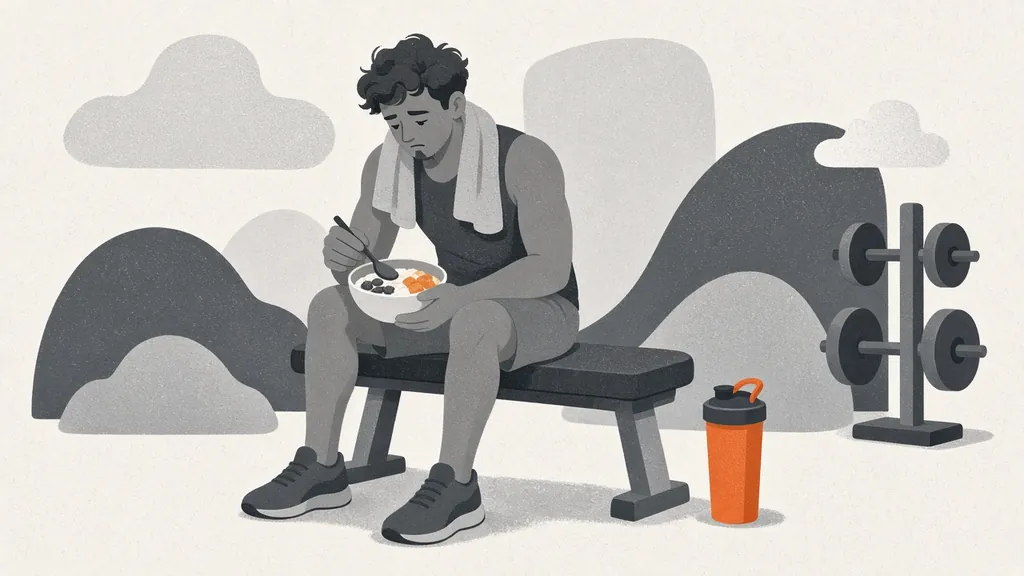
Worked calculation. A 70 kg runner who also lifts twice a week targets about 1.6 g/kg/day — the level beyond which Morton et al. (2018) found little additional gain in lean mass — which is 112 g/day. Split over four meals that is roughly 28 g each, close to the 0.3–0.4 g/kg per meal often suggested. A sample day: Greek yogurt with oats (25 g), chicken and rice lunch (35 g), a post-run glass of milk with a banana (10 g) plus tofu-and-bean dinner (30 g), and a pre-bed snack of cottage cheese (12 g). Total ≈112 g without supplements.
Action steps
- Aim for about 1.2–2.0 g protein per kg body weight per day.
- Spread it across 3–5 meals of roughly 0.3–0.4 g/kg each.
- Include a protein-containing meal or snack within a few hours after training.
- Pair protein with carbohydrate after endurance sessions.
- Prefer whole foods; use powders for convenience, not necessity.
Related guides
- Muscle mass: what smart scales report and why it matters
- Carbohydrate fuelling for training and racing
- Strength training for endurance athletes
- Basal metabolic rate (BMR): how many calories you burn at rest
FAQ
Is high protein bad for kidneys? In healthy people, intakes up to ~2.2 g/kg are considered safe. People with kidney disease should follow medical advice.
Do I need supplements? No; they're convenient but food works just as well.
Is there an anabolic window right after training? The window is wider than once thought; total daily protein matters most, and eating within a few hours is sufficient.
Can plant protein work as well? Yes, with slightly larger servings or combined sources to cover essential amino acids such as leucine.
Is high protein bad for the kidneys? In healthy people intakes around 2 g/kg appear safe; people with kidney disease should follow medical advice.
References
- Morton et al. (2018). A systematic review, meta-analysis and meta-regression of the effect of protein supplementation on resistance training-induced gains in muscle mass and strength in healthy adults. British Journal of Sports Medicine. https://doi.org/10.1136/bjsports-2017-097608
- Jäger et al. (2017). International Society of Sports Nutrition Position Stand: protein and exercise. Journal of the International Society of Sports Nutrition. https://doi.org/10.1186/s12970-017-0177-8
- Kerksick et al. (2017). International society of sports nutrition position stand: nutrient timing. Journal of the International Society of Sports Nutrition. https://doi.org/10.1186/s12970-017-0189-4
For general information only. This is not medical advice — talk to a qualified professional about your health.
Keep reading
Devices & setup
Withings and MoveVitals: scales, blood pressure and sleep
3 min read
Devices & setup
How MoveVitals handles multiple devices: provenance, duplicates and conflicts
5 min read
Training science
Zone 2 training: the science and how to do it right
4 min read
Mobility & stretching
Mobility vs flexibility: what's the difference and what do you need?
3 min read
Sports
Japanese interval walking: the 3-minute fast / 3-minute slow method, step by step
8 min read
Training science
Polarized training (80/20): easy most of the time, hard some of the time
4 min read