

Recovery & sleep
Carbohydrate fuelling for training and racing
Carbohydrate is the main fuel for hard and long exercise. Getting enough — before, during and after — supports performance, recovery and long-term health.
Written by MoveVitals Editorial Collective
Community-authored educational content. Individual clinical review is identified only when a named review is actually recorded.
Editorial standards & corrections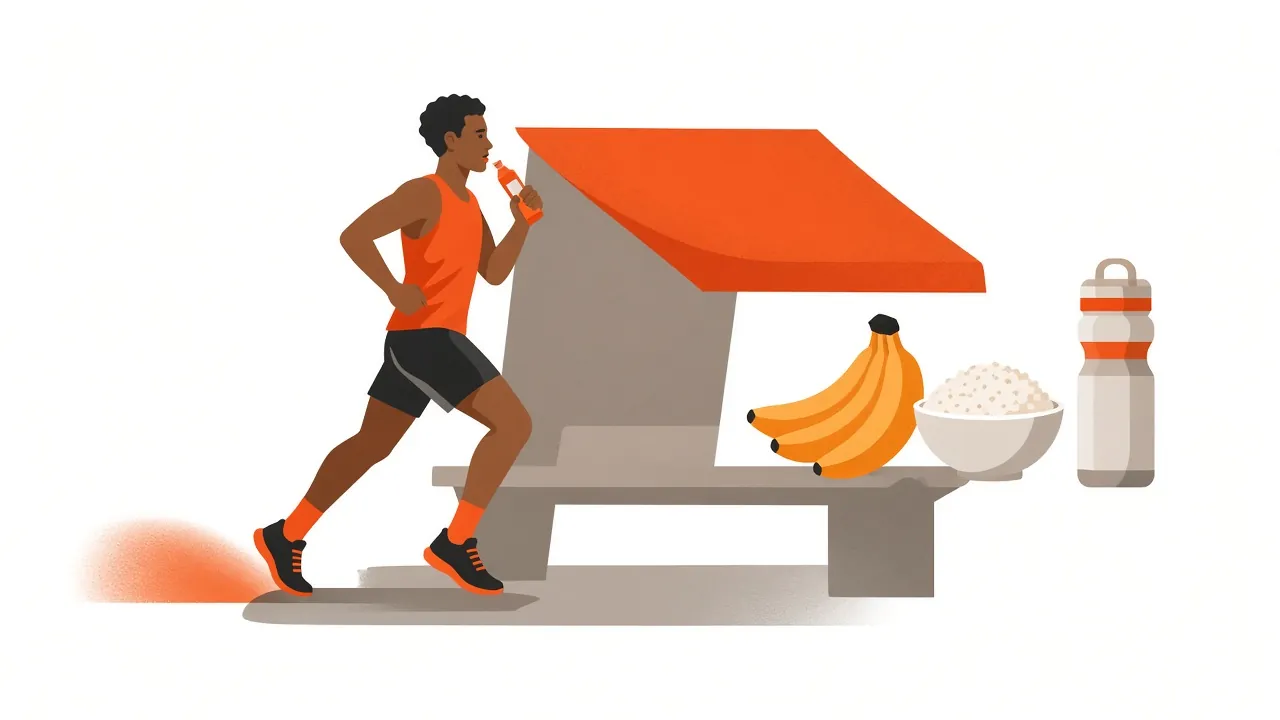
Key takeaways
- Daily carbohydrate needs run from 3–5 g/kg on light training days to 6–10 g/kg with 1–3 hours a day of moderate to high intensity and 8–12 g/kg at more than 4–5 hours a day.
- During exercise, aim for 30–60 g of carbohydrate per hour for 1–2.5 hours and 60–90 g per hour beyond 2.5 hours; under 45 minutes none is needed.
- Above about 60 g per hour, use glucose and fructose mixes, which use different gut transporters, and practise them in training.
- When the next session is within 24 hours, take about 1–1.2 g/kg per hour for the first 3–4 hours after exercise, with 20–40 g of protein.
Daily needs by training load
| Training load | Carbohydrate per day |
|---|---|
| Light (low intensity or skill-based) | 3–5 g/kg |
| Moderate (~1 h/day) | 5–7 g/kg |
| High (1–3 h/day moderate–high intensity) | 6–10 g/kg |
| Very high (> 4–5 h/day) | 8–12 g/kg |
Match intake to the day: more on hard and long days, less on rest days.
Before exercise
- 1–4 hours before: 1–4 g/kg of easily digested carbohydrate.
- For races over ~90 minutes: carb-load with 8–12 g/kg for 24–48 hours.
During exercise
| Duration | Carbohydrate per hour |
|---|---|
| < 45 min | Not needed |
| 45–75 min | Small amounts or mouth rinse |
| 1–2.5 h | 30–60 g |
| > 2.5 h | 60–90 g (up to 120 g in trained guts) |
Above ~60 g/hour use glucose + fructose mixes (gels, drinks, chews), which use different gut transporters. Train your gut: practise race fuelling in long sessions.
After exercise
When the next session is within 24 hours, aim for ~1–1.2 g/kg per hour for the first 3–4 hours, with 20–40 g of protein — see protein for recovery.
Low energy availability
Chronic under-fuelling (RED-S) reduces performance and harms bones, hormones and immunity. Warning signs: persistent fatigue, frequent illness or injury, disrupted menstrual cycles, falling HRV.
In MoveVitals
If you wear a Dexcom CGM, you can see how fuelling changes your blood glucose during long sessions — but interpret it with care during exercise.
Worked example
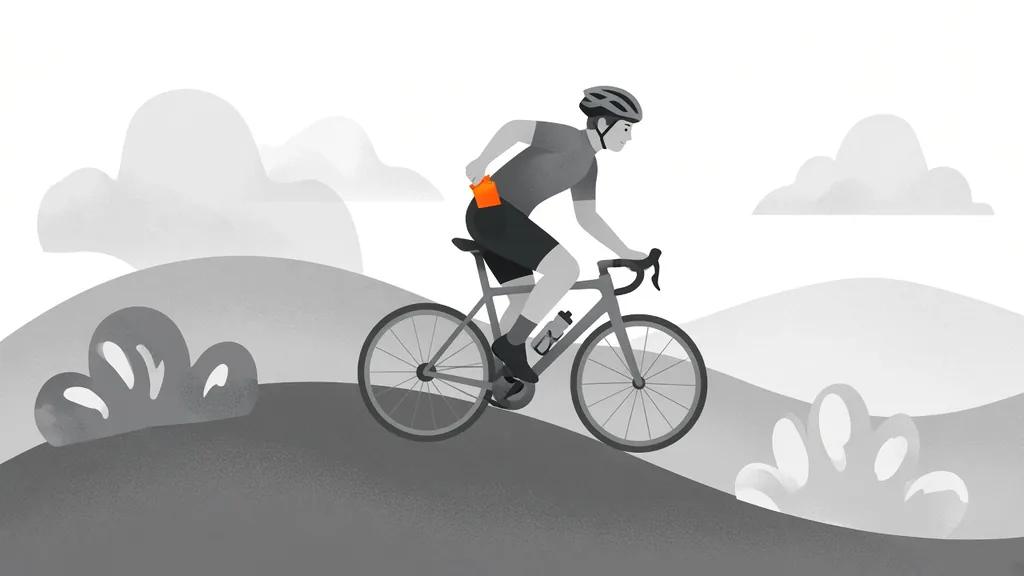
Illustrative scenario. Tomás, 70 kg, is preparing for a 4-hour gran fondo. In training he used to take one gel per hour (about 25 g carbohydrate) and often faded after 2.5 hours. Based on the guidelines reviewed by Jeukendrup, he aims for 60 g per hour from the start, then trials 80–90 g per hour of glucose–fructose mixes on long rides, increasing gradually to train his gut. For the two days before the event he eats about 7–8 g/kg/day (roughly 500–560 g). On the day he sets a 20-minute reminder on his bike computer. He finishes stronger, with no stomach problems — after several practice rides, not on the first attempt.
Action steps
- Match daily carbohydrate to training load, from about 3–5 g/kg on light days to 8–12 g/kg on very heavy days.
- Eat a carbohydrate-rich meal 2–4 hours before key sessions.
- During sessions over 60–90 minutes, start with 30–60 g per hour and build up.
- For events over 2.5 hours, practise 60–90 g per hour using glucose–fructose products.
- Recover with carbohydrate and protein soon after hard sessions, especially if you train again within 24 hours.
Related guides
- Protein for recovery: how much, when and from what
- Glucose time in range (TIR): the CGM metric that matters most
- Marathon training: building a plan that gets you to the finish
- The long run: building endurance safely
- Race-day nutrition for the half and full marathon: what to eat, when, and how many gels
- Hitting the wall: why marathoners bonk and how to avoid it
FAQ
Can I train "low carb" for fat adaptation? Occasional low-glycogen easy sessions are a tool for advanced athletes; hard sessions and races should be fuelled.
Gels upset my stomach. Try drinks or chews, smaller doses more often, and practise in training.
What is gut training? Gradually practising higher carbohydrate intake during training so your stomach and intestines tolerate race-day amounts with fewer problems.
Do I need carbs for a 45-minute easy run? Usually not, if your normal meals contain enough carbohydrate; water is enough for most people.
References
- Jeukendrup (2014). A Step Towards Personalized Sports Nutrition: Carbohydrate Intake During Exercise. Sports Medicine. https://doi.org/10.1007/s40279-014-0148-z
- Burke et al. (2011). Carbohydrates for training and competition. Journal of Sports Sciences. https://doi.org/10.1080/02640414.2011.585473
- Thomas et al. (2016). Position of the Academy of Nutrition and Dietetics, Dietitians of Canada, and the American College of Sports Medicine: Nutrition and Athletic Performance. Journal of the Academy of Nutrition and Dietetics. https://doi.org/10.1016/j.jand.2015.12.006
For general information only. This is not medical advice — talk to a qualified professional about your health.
Keep reading
Mobility & stretching
Mobility vs flexibility: what's the difference and what do you need?
3 min read
Training science
Zone 2 training: the science and how to do it right
4 min read
Training science
Polarized training (80/20): easy most of the time, hard some of the time
4 min read
Training science
Interval training and HIIT: designing sessions that work
4 min read
Mobility & stretching
The ideal warm-up: raise, activate, mobilise, potentiate
3 min read
Mobility & stretching
Hip mobility for runners and cyclists: a 10-minute routine
3 min read