

Training science
Race-day nutrition for the half and full marathon: what to eat, when, and how many gels
Race-day nutrition for a marathon comes down to a timeline: carbohydrate in the last 24–48 hours, a familiar breakfast 2–4 hours before the start, then 30–90 g of carbohydrate an hour that you have already rehearsed on long runs.
Written by MoveVitals Editorial Collective
Community-authored educational content. Individual clinical review is identified only when a named review is actually recorded.
Editorial standards & corrections
Key takeaways
- A 4-hour marathon needs about 240–360 g of carbohydrate in total, which is 10–14 gels of 25 g if nothing else is eaten; a 5K or 10K needs no food during the race.
- In a marathon, take a first gel at 20–30 minutes and then one every 25–30 minutes, each with a few mouthfuls of water rather than sports drink.
- Stored glycogen holds water, so a gain of 1–2 kg on the scale before the race is normal.
- Rehearse breakfast, gels, drink and caffeine on two or three long runs at goal pace, because bloating, cramps or nausea call for a smaller dose or a different product.
This guide turns the numbers in carbohydrate fuelling into a race-morning checklist. It is general sports nutrition, not medical advice: if you have diabetes, a digestive condition or take medication, plan your race with your clinician or a sports dietitian.
How many gels for a marathon? Start with grams per hour
You do not need to eat during a 5K or 10K. From about 75–90 minutes, carbohydrate starts to matter. The table converts the usual ranges into gels of about 25 g carbohydrate (read the label: products range from roughly 20 to 40 g).
| Race | Finish time | Carbohydrate per hour | Total during the race | Gels of 25 g if all from gels |
|---|---|---|---|---|
| Half marathon | 1:45 | 30–60 g | about 50–105 g | 2–4 |
| Half marathon | 2:15 | 30–60 g | about 70–135 g | 3–5 |
| Marathon | 3:30 | 60–90 g | 210–315 g | 8–13 |
| Marathon | 4:30 | 60–90 g | 270–405 g | 11–16 |
Sports drink at aid stations, chews, a banana or dates all count towards the total, so few runners need every gram from gels. Above about 60 g an hour, choose products that combine glucose and fructose, which use different gut transporters. The 90 g end of the range is for runners who have trained their gut over weeks, not for a first marathon: start at 40–60 g an hour and build up.
Marathon breakfast and carb loading: the timeline
| When | What to do | Rough amount |
|---|---|---|
| 48–24 h before (marathon) | Carb-load: more rice, pasta, potatoes, bread and juice in place of fat and extra vegetables; keep fibre low and foods familiar | 8–12 g/kg per day |
| Day before (half marathon) | A normal carbohydrate-rich day; no special loading needed | About 6–8 g/kg |
| Evening before | Familiar dinner, moderate in fat and fibre, nothing adventurous | One normal-sized meal |
| 2–4 h before the start | Breakfast: oats with banana and honey, white toast with jam, rice | 1–4 g/kg (many runners are comfortable at 1–2 g/kg) |
| 15–30 min before | Optional gel or sips of sports drink with water; caffeine if you have tested it | 20–30 g |
| During | Gels, drinks and chews on a schedule (next section) | 30–90 g per hour |
| First hour after | Carbohydrate plus protein, then a normal meal | 1–1.2 g/kg per hour if you train again within 24 h |
Stored glycogen holds water, so a gain of 1–2 kg on the scale before the race is normal. You are changing what you eat, not eating far more: for a 65 kg runner, 8 g/kg is about 520 g of carbohydrate a day. If nerves make solid food impossible, a liquid breakfast such as a sports drink or smoothie is a reasonable fallback.
What to eat during a half marathon or marathon: a gel and fluid schedule
- Half marathon (1:30–2:30): one gel at about 30–40 minutes and another at 70–80 minutes is enough for most runners; add a third if you are still running after roughly two hours. Water at aid stations.
- Marathon: first gel at 20–30 minutes, then one every 25–30 minutes (about 50–60 g an hour with 25 g gels), topped up with sports drink towards 60–90 g.
- Take gels with a few mouthfuls of water, not with sports drink at the same time; many runners find the double dose of sugar upsets the stomach.
- Drink to thirst, commonly 400–800 mL an hour, more in heat. Drinking more than you sweat can cause hyponatraemia, and gaining weight during a long race signals overdrinking (hydration and electrolytes, running in the heat).
- Use a repeating timer or alert on your watch (most sports watches have one) so you do not depend on feeling hungry.
Caffeine
About 3–6 mg/kg taken around an hour before the start improves endurance performance in many studies, and smaller doses (roughly 1–3 mg/kg) later in the race are also used. For a 65 kg runner, 3 mg/kg is about 195 mg: a strong coffee plus a caffeinated gel (25–100 mg). Test the dose in training, because caffeine can upset the stomach and raise heart rate, and an early start makes sleep the night before more important; see caffeine and timing.
Rehearse it: gut training and what your data shows
- Do two or three long runs at goal pace with the same breakfast, gels and drink as race day. Raise intake step by step over several weeks, for example 30, then 45, then 60 g an hour; the gut adapts with practice.
- Bloating, cramps, nausea or a side stitch call for a smaller dose, a different product or wider spacing, not for giving up on fuelling.
- Heart rate rising at constant pace and a fading pace in the last third are the usual signs of running short of fuel, fluid or both (cardiac drift, hitting the wall). Heat and pacing cause the same pattern, so change one variable at a time.
- Your watch's calorie estimate (very roughly 1 kcal per kg per km, about 2,600 kcal for a 62 kg runner) is far more than you can eat on the run. The aim is to top up, not to replace it; see calories burned by activity.
- If you wear a Dexcom CGM, review the trace after a rehearsal run. Glucose often holds steady or rises during hard running, and some people see a dip after a pre-race meal or gel. Sensor values lag blood glucose by roughly 5–15 minutes and reach MoveVitals with a delay, so use them afterwards, never for live decisions (blood glucose and CGMs). People with diabetes should plan fuelling and insulin with their care team.
Common mistakes
- Trying something new, such as a gel brand, a different breakfast or an expo sample, on race morning.
- Carb-loading on one huge, fatty or high-fibre dinner instead of familiar starchy food over two days.
- Waiting until you feel hungry or weak; by then you are already behind.
- Drinking lots of plain water out of fear of dehydration.
- Starting a new product late in the race, or taking gel and sports drink together.
In MoveVitals
Long runs from Strava, Garmin, COROS, Polar and Suunto, plus Apple Watch workouts you share to Strava, arrive in one weekly view with pace and heart rate streams, so you can compare the last third of a rehearsal run with the first. Dexcom readings appear next to the same workout, typically 1–3 hours late, which suits review rather than alerts. MoveVitals does not log what you eat, so keep a short note of your fuelling plan beside each rehearsal run.
Worked example
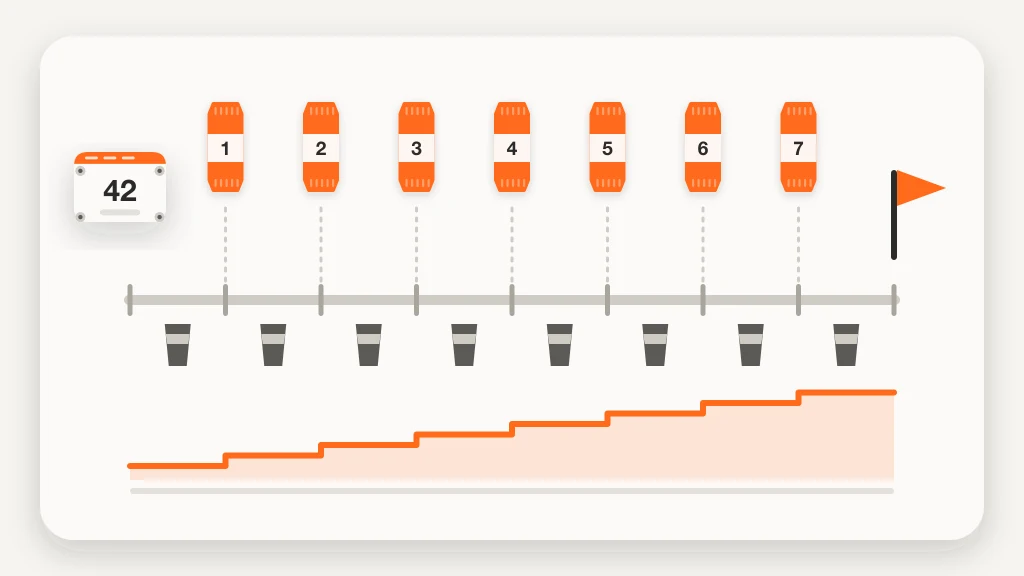
Illustrative scenario. Carla, 62 kg, targets a 4:00 marathon (5:41/km). The day before she eats about 8 g/kg, roughly 500 g of carbohydrate. For an 8:00 start she has breakfast at 5:00: oats, a banana and honey, about 95 g (1.5 g/kg), with a coffee and 400 mL of water. Her race plan is 60 g an hour, 240 g in total: seven 25 g gels at 0:30, 1:00 and every 30 minutes to 3:30 (175 g), plus about 150 mL of sports drink at eight aid stations (roughly 70 g), so about 245 g. Gels go down with water, and the 3:00 gel contains 50 mg of caffeine; with her coffee that is about 150 mg, or 2.4 mg/kg. Over six weeks she builds from 40 to 50 to 60 g an hour on long runs of 28, 30 and 32 km. On the first she takes gel with sports drink and gets a side stitch, so she switches to water. On the last her heart rate rises 3 % from first to last third at the same pace, against 7 % on an earlier run with water only; she reads that as a hint, not proof. On race day she runs even splits to 35 km and finishes in 3:58. Figures are illustrative.
Action steps
- Work out your total: finish time in hours × 30–60 g (half marathon) or 60–90 g (marathon), then divide by the grams per gel on the label.
- Plan the 24–48 hours before: for a marathon 8–12 g/kg a day from familiar, low-fibre foods; for a half marathon a carbohydrate-rich day is enough.
- Rehearse breakfast, gels, drink and caffeine on two or three long runs at goal pace, building the dose gradually.
- Write the schedule: first carbohydrate at 20–45 minutes, then every 20–30 minutes, water with gels, sips of drink at aid stations; set a repeating alert on your watch.
- After each rehearsal check drift, pace fade and stomach comfort, and adjust one thing at a time.
Related guides
- Carbohydrate fuelling for training and racing
- Hydration and electrolytes: drinking smart for training and racing
- Caffeine: performance benefits and how timing affects sleep
- Marathon training: building a plan that gets you to the finish
- Hitting the wall: why marathoners bonk and how to avoid it
FAQ
How many energy gels do I need for a marathon? Work from grams: roughly 60–90 g of carbohydrate an hour, so a 4-hour marathon needs about 240–360 g in total, which is 10–14 gels of 25 g if nothing else is eaten. Sports drink and chews replace some of them, and a first marathon is better started at 40–60 g an hour.
What should I eat the morning of a marathon? A familiar, low-fibre, carbohydrate-rich breakfast 2–4 hours before the start: oats with banana and honey, toast with jam, or rice, with some fluid. Aim for 1–2 g/kg if you are nervous, up to 4 g/kg if you tolerate it, and eat only what you have already eaten before long runs.
Do I need to carb-load for a half marathon? Usually not. A normal carbohydrate-rich day before is enough; full carb-loading is mainly for marathons and other efforts of more than about 90 minutes.
What should I eat during a half marathon? Many runners take one or two gels, around 30–40 and 70–80 minutes, with water at aid stations. For a finishing time under about 75 minutes you may need nothing but water.
When should I take the first gel? Early, usually 20–45 minutes in, rather than when you feel tired. Then repeat every 20–30 minutes.
References
- Burke et al. (2011). Carbohydrates for training and competition. Journal of Sports Sciences. https://doi.org/10.1080/02640414.2011.585473
- Jeukendrup (2014). A Step Towards Personalized Sports Nutrition: Carbohydrate Intake During Exercise. Sports Medicine. https://doi.org/10.1007/s40279-014-0148-z
- Thomas et al. (2016). Position of the Academy of Nutrition and Dietetics, Dietitians of Canada, and the American College of Sports Medicine: Nutrition and Athletic Performance. Medicine & Science in Sports & Exercise. https://doi.org/10.1249/MSS.0000000000000852
- Hew-Butler et al. (2015). Statement of the Third International Exercise-Associated Hyponatremia Consensus Development Conference, Carlsbad, California, 2015. Clinical Journal of Sport Medicine. https://doi.org/10.1097/JSM.0000000000000221
- Guest et al. (2021). International society of sports nutrition position stand: caffeine and exercise performance. Journal of the International Society of Sports Nutrition. https://doi.org/10.1186/s12970-020-00383-4
For general information only. This is not medical advice — talk to a qualified professional about your health.
Keep reading
Training science
Zone 2 training: the science and how to do it right
4 min read
Mobility & stretching
Mobility vs flexibility: what's the difference and what do you need?
3 min read
Mobility & stretching
Hip mobility for runners and cyclists: a 10-minute routine
3 min read
Devices & setup
Strava and MoveVitals: workouts, streams and devices that arrive via Strava
3 min read
Training science
Polarized training (80/20): easy most of the time, hard some of the time
4 min read
Metrics explained
VO2 max: what it means and how to improve it
4 min read