

Recovery & sleep
Cold water immersion and ice baths: what the evidence says
Cold water can reduce soreness and help you feel fresher for the next session. Used right after strength training, though, it may blunt muscle gains.
Written by MoveVitals Editorial Collective
Community-authored educational content. Individual clinical review is identified only when a named review is actually recorded.
Editorial standards & corrections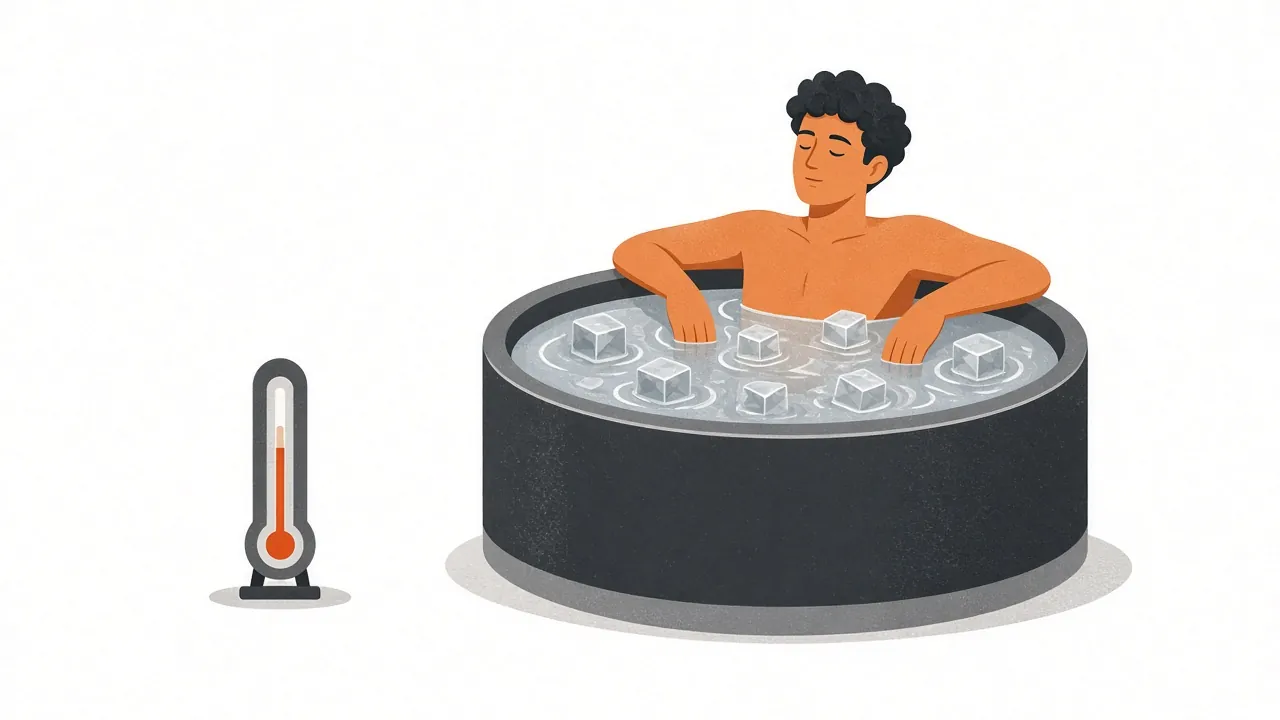
Key takeaways
- A typical cold water protocol is 10–15 °C for a cumulative 5–15 minutes, up to the neck or waist.
- Cold water reduces perceived soreness in the 24–72 hours after hard exercise, which makes it most useful in tournaments and multi-day races, when recovery matters more than adaptation.
- Regular immersion right after strength training can reduce gains in muscle size and strength, so avoid it in a building phase or wait 4 or more hours.
- Enter gradually because the initial cold shock raises breathing and heart rate sharply, never go alone in open water, and seek medical advice first with heart disease, Raynaud's or uncontrolled blood pressure.
Short-term benefits
- Less perceived soreness in the 24–72 hours after hard exercise
- Faster recovery of perceived fatigue between closely spaced sessions (tournaments, stage races)
- Lowers body temperature after training in heat
The trade-off
Regular cold water immersion immediately after strength training can reduce gains in muscle size and strength, probably by dampening the inflammatory signals that drive adaptation. Effects on endurance adaptations appear smaller but are not zero.
| Situation | Cold water? |
|---|---|
| Tournament or multi-day race | Yes — recovery matters more than adaptation |
| After hot-weather training | Yes — helps cool down |
| After routine endurance training | Optional |
| Right after strength sessions in a building phase | Avoid, or wait 4+ hours |
A typical protocol
- Temperature: 10–15 °C
- Duration: 5–15 minutes (cumulative), up to the neck or waist
- Contrast (alternating hot and cold) is an alternative with similar effects on soreness.
Physiology and your data
Cold exposure sharply activates the sympathetic nervous system at first, then many people feel calm afterwards. Some see slightly higher HRV that night; effects vary.
Safety
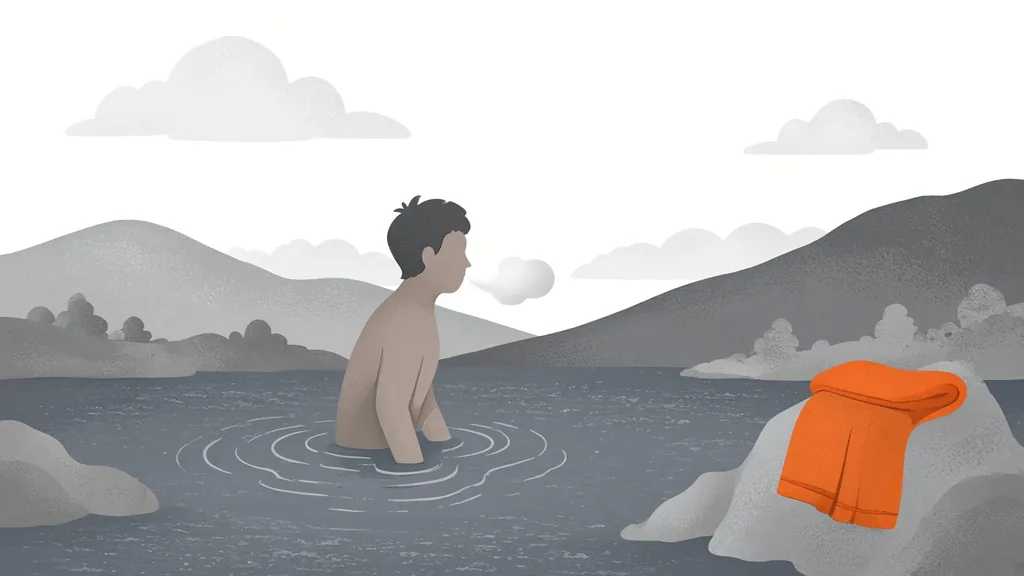
- Enter gradually; the initial "cold shock" raises breathing and heart rate sharply.
- Never alone in open water.
- People with heart disease, Raynaud's or uncontrolled blood pressure should seek medical advice first.
Worked example
Illustrative scenario. Wen plays in a weekend football tournament with three matches in two days. After each match she does 10 minutes in water at about 12 °C, which may help her feel less sore for the next game. In her off-season, when her goal is to build muscle, she stops ice baths right after lifting, because Roberts and colleagues found regular post-strength cold water immersion blunted long-term gains in muscle mass and strength. She notices her heart rate and HRV look different on cold-bath evenings, so she reads her recovery score alongside how she feels, not alone.
Action steps
- Use cold water mainly when you need to recover quickly between events or hard sessions.
- Avoid cold immersion within a few hours after strength training if muscle growth is the goal.
- Start mild: about 10–15 °C for 5–10 minutes, and never alone in open water.
- Enter gradually and control breathing to manage the cold shock response.
- Check with a doctor first if you have heart disease, high blood pressure or Raynaud's.
Related guides
- Heat training and sauna: acclimatisation, recovery and safety
- WHOOP Recovery score: what drives it and how to act on it
- Normal heart rate variability (HRV) by age: RMSSD vs SDNN
- Strength training for endurance athletes
FAQ
Are cold showers enough? They're milder but may help alertness and mood.
Does cold boost metabolism or immunity? Effects are small and inconsistent in research.
Is colder water better? Not necessarily. Very cold water raises the risk of cold shock without clear extra benefit; moderate temperatures are usually enough.
Should I do cold or heat after a run? Both can help you feel recovered; choose cold for soreness between events and heat or sauna for relaxation and heat adaptation.
References
- Roberts et al. (2015). Post‐exercise cold water immersion attenuates acute anabolic signalling and long‐term adaptations in muscle to strength training. The Journal of Physiology. https://doi.org/10.1113/jp270570
- Tipton et al. (2017). Cold water immersion: kill or cure?. Experimental Physiology. https://doi.org/10.1113/ep086283
- Dupuy et al. (2018). An Evidence-Based Approach for Choosing Post-exercise Recovery Techniques to Reduce Markers of Muscle Damage, Soreness, Fatigue, and Inflammation: A Systematic Review With Meta-Analysis. Frontiers in Physiology. https://doi.org/10.3389/fphys.2018.00403
For general information only. This is not medical advice — talk to a qualified professional about your health.
Keep reading
Training science
Zone 2 training: the science and how to do it right
4 min read
Metrics explained
Resting heart rate: normal ranges and what changes it
4 min read
Training science
Polarized training (80/20): easy most of the time, hard some of the time
4 min read
Sports
Japanese interval walking: the 3-minute fast / 3-minute slow method, step by step
8 min read
Recovery & sleep
Overreaching and overtraining: warning signs and what to do
4 min read
Training science
Interval training and HIIT: designing sessions that work
4 min read