

Metrics explained
Vitamin D and B12: two common deficiencies worth testing
Vitamin D deficiency affects a large share of people in winter, and B12 deficiency is common on plant-based diets and with age. Both cause fatigue, both are cheap to test, and both are easy to fix.
Written by MoveVitals Editorial Collective
Community-authored educational content. Individual clinical review is identified only when a named review is actually recorded.
Editorial standards & corrections
Key takeaways
- By Endocrine Society ranges, 25-OH vitamin D below 20 ng/mL is deficient, 20–29 ng/mL insufficient and 30–100 ng/mL sufficient, and testing is best at the end of winter, when levels are lowest.
- Vitamin B12 below 200 pg/mL is low, 200–300 pg/mL is borderline and 300–900 pg/mL is normal; vegans, adults over 50 and people on metformin are most at risk.
- Supplements commonly provide 1,000–2,000 IU of vitamin D a day, and toxicity becomes possible above about 100–150 ng/mL, almost always from high-dose supplements.
- Supplement only as advised, retest after about 3 months and avoid very high vitamin D doses without medical supervision.
Vitamin D (25-hydroxyvitamin D)
| 25-OH vitamin D | Interpretation (Endocrine Society) |
|---|---|
| < 20 ng/mL (< 50 nmol/L) | Deficient |
| 20–29 ng/mL (50–74 nmol/L) | Insufficient |
| 30–100 ng/mL (75–250 nmol/L) | Sufficient |
Some bodies (e.g. the US Institute of Medicine) consider 20 ng/mL adequate for bone health; most sports-medicine practitioners aim for 30–50 ng/mL.
Who's at risk: little sun exposure, darker skin at high latitudes, indoor athletes, higher body fat, winter months.
Testing: best at the end of winter, when levels are lowest. Retest about 3 months after starting a supplement.
Vitamin B12
| B12 | Interpretation |
|---|---|
| < 200 pg/mL (< 148 pmol/L) | Low |
| 200–300 pg/mL | Borderline — methylmalonic acid can clarify |
| 300–900 pg/mL | Normal |
Who's at risk: vegans and vegetarians, adults over 50, people taking metformin or acid-reducing medication.
Symptoms: tiredness, poor concentration, tingling in hands and feet, anaemia with large red cells.
Correcting low levels
Vitamin D: safe sun exposure and supplements (commonly 1,000–2,000 IU/day; higher doses only with medical supervision). B12: fortified foods or supplements; injections in some cases. Get advice from your doctor on dose.
In MoveVitals
Both sit under Micronutrients in Body Lab. Vitamin D in nmol/L and B12 in pmol/L are converted automatically. The Lab suggests a yearly retest for vitamin D.
Worked example
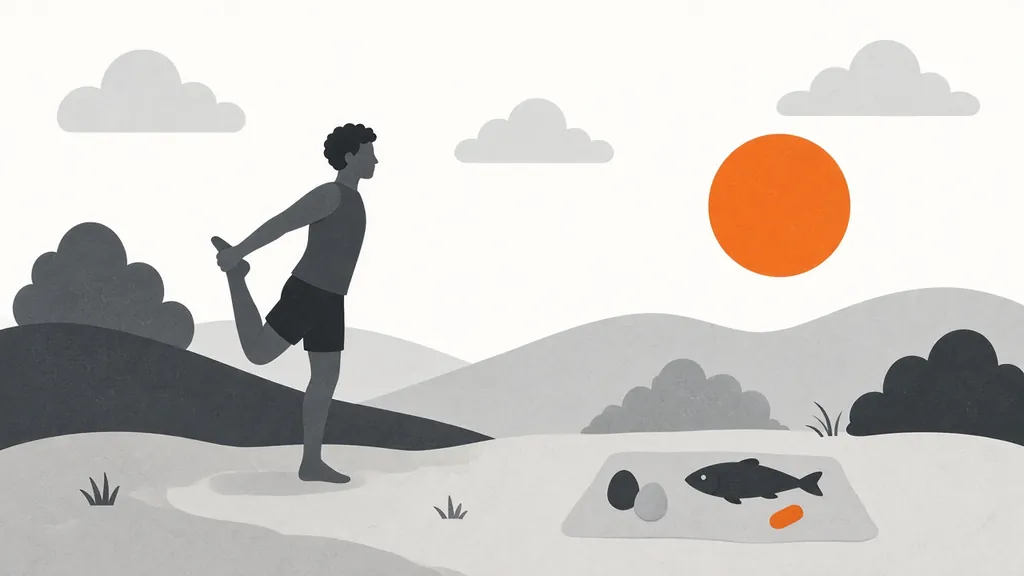
Illustrative scenario. Lin trains indoors all winter in a northern city and follows a mostly plant-based diet. In February her 25-hydroxyvitamin D is 42 nmol/L (≈17 ng/mL) — below the 50 nmol/L (20 ng/mL) level the Endocrine Society guideline treats as deficiency — and her vitamin B12 is at the low end of normal. Her doctor suggests a daily vitamin D3 supplement and a B12 supplement or fortified foods. She retests after three months: vitamin D 78 nmol/L, B12 comfortably within range. She keeps a lower maintenance dose through winter and gets outdoor daylight when she can.
Action steps
- Test 25-hydroxyvitamin D (not 1,25-D) and B12, ideally at the end of winter.
- Plant-based eaters and older adults should check B12 regularly.
- Supplement only as advised and retest after about 3 months.
- Avoid very high doses of vitamin D without medical supervision.
- Combine safe daylight exposure with dietary sources (oily fish, eggs, fortified foods).
Related guides
- Which blood tests are worth doing — a practical panel for active adults
- Ferritin, iron and haemoglobin: the endurance athlete's blind spot
- Protein for recovery: how much, when and from what
- Training when you're sick: the neck check and your wearable data
FAQ
Can I get too much vitamin D? Yes — above about 100–150 ng/mL toxicity becomes possible, almost always from high-dose supplements.
Does a multivitamin cover B12? Usually enough for prevention, not for treating a deficiency.
Can I get enough vitamin D from sunlight in winter? At higher latitudes winter sunlight is often too weak to make much vitamin D, which is why levels commonly dip.
Why is B12 a concern for plant-based athletes? B12 occurs naturally almost only in animal foods, so vegans need fortified foods or supplements.
Is more vitamin D always better? No. Very high intakes can raise calcium to unsafe levels; stay within doses your doctor recommends.
References
- Holick et al. (2011). Evaluation, Treatment, and Prevention of Vitamin D Deficiency: an Endocrine Society Clinical Practice Guideline. The Journal of Clinical Endocrinology & Metabolism. https://doi.org/10.1210/jc.2011-0385
- Thomas et al. (2016). Position of the Academy of Nutrition and Dietetics, Dietitians of Canada, and the American College of Sports Medicine: Nutrition and Athletic Performance. Journal of the Academy of Nutrition and Dietetics. https://doi.org/10.1016/j.jand.2015.12.006
For general information only. This is not medical advice — talk to a qualified professional about your health.
Keep reading
Metrics explained
Which blood tests are worth doing — a practical panel for active adults
4 min read
Recovery & sleep
Your personal baseline: why "normal for you" beats population averages
4 min read
Metrics explained
ApoB and Lp(a): the two lipid tests that matter most
3 min read
Metrics explained
The lipid panel: LDL, HDL, triglycerides and total cholesterol explained
3 min read
Metrics explained
HbA1c, fasting glucose and fasting insulin: reading your metabolic health
3 min read
Metrics explained
hs-CRP: measuring low-grade inflammation
3 min read