

Training science
Training when you're sick: the neck check and your wearable data
Mild head-cold symptoms may allow light exercise; fever or symptoms below the neck mean rest. Wearable data can warn you a day or two early.
Written by MoveVitals Editorial Collective
Community-authored educational content. Individual clinical review is identified only when a named review is actually recorded.
Editorial standards & corrections
Key takeaways
- Never train with a fever, because hard exercise with a viral infection carries a small but serious risk of heart muscle inflammation (myocarditis).
- Resting heart rate up 5 or more bpm, HRV clearly below baseline and respiratory rate up 1–2 breaths/min can appear before symptoms, and together they make it a rest or very easy day.
- Return only after at least 24–48 hours free of symptoms and fever, without medication.
- Allow roughly one to two days of gradual return for each day of illness, starting at about 50 % volume and low intensity.
- Hard exercise does not shorten a cold, and chest pain, breathlessness or palpitations on return call for medical advice.
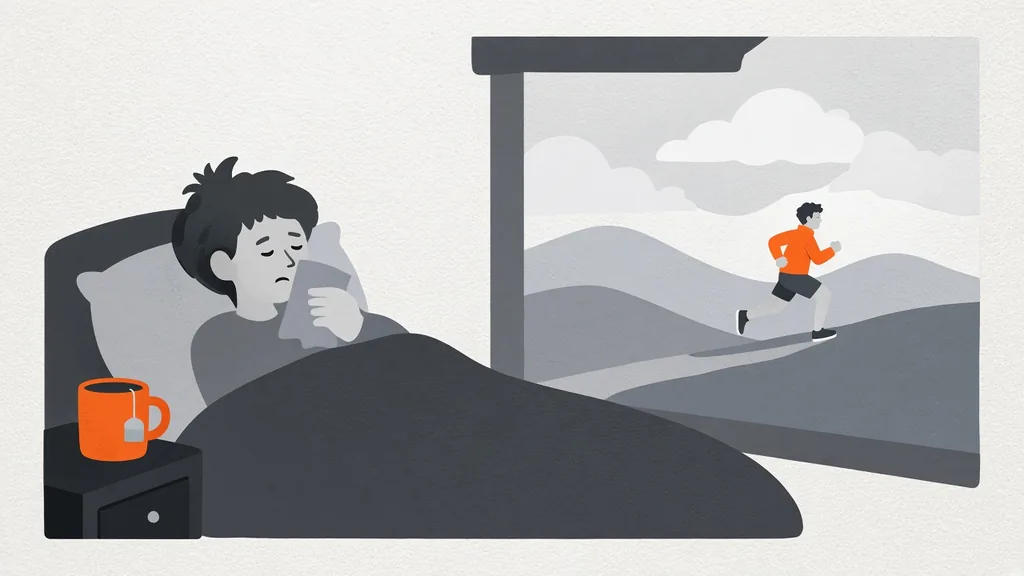
The "neck check"
| Symptoms | Guidance |
|---|---|
| Above the neck only: runny nose, mild sore throat, sneezing | Light activity may be OK; reduce intensity and duration. Stop if you feel worse |
| Below the neck: chest congestion, cough, body aches, stomach upset | Rest |
| Fever, chills, significant fatigue | Rest — never train with a fever |
Exercising hard with a viral infection, especially with fever, carries a small but serious risk of heart muscle inflammation (myocarditis).
Early warning in your data
Many people see changes before symptoms appear:
- Resting heart rate up 5+ bpm
- HRV clearly below baseline
- Respiratory rate up 1–2 breaths/min
- Skin temperature elevated
- Unusually high heart rate for an easy pace
If several of these appear together, treat the day as a rest or very easy day.
Returning to training
- Wait until you've been symptom-free and fever-free for at least 24–48 hours.
- Start with short, easy sessions; heart rate may be higher than usual.
- For each day of illness, allow roughly one to two days of gradual return.
- After significant infections (e.g. COVID-19, flu with fever), follow a graded return and seek medical advice if you notice chest pain, palpitations or unusual breathlessness.
Worked example
Illustrative scenario. Ben wakes with a runny nose and mild sore throat, no fever. Following the 'neck check' rule of thumb, he swaps his interval session for 30 minutes of easy walking. Two days later he has a temperature of 38.2 °C and body aches, so he rests completely. Once he has been fever-free for 24–48 hours without medication, he returns with a few easy sessions at about half his usual volume, building back over a week. His resting heart rate, up 8 bpm during illness, settles back first. This is illustrative — fever, chest symptoms or palpitations warrant medical advice.
Action steps
- Use the neck check: symptoms only above the neck may allow light activity.
- Rest fully with fever, body aches, chest symptoms or stomach illness.
- Return only after 24–48 hours fever-free without medication.
- Start at about 50% volume and low intensity, building over 1–2 weeks.
- Seek medical advice for chest pain, breathlessness or palpitations on return.
Related guides
- Resting heart rate: normal ranges and what changes it
- Skin temperature and temperature deviation: how to read them
- Normal heart rate variability (HRV) by age: RMSSD vs SDNN
- WHOOP Recovery score: what drives it and how to act on it
FAQ
Can I "sweat it out"? No — hard exercise doesn't shorten a cold and can make it worse.
Should I make up missed sessions? No. Pick up the plan where it makes sense and skip what you missed.
Can wearables warn me I'm getting sick? Rising resting heart rate, falling HRV or higher skin temperature may precede symptoms, but they're not diagnostic.
Should I sweat out a cold? There's no good evidence that hard exercise shortens a cold, and it may worsen how you feel.
References
- Schwellnus et al. (2016). How much is too much? (Part 2) International Olympic Committee consensus statement on load in sport and risk of illness. British Journal of Sports Medicine. https://doi.org/10.1136/bjsports-2016-096572
- Halson (2014). Monitoring Training Load to Understand Fatigue in Athletes. Sports Medicine. https://doi.org/10.1007/s40279-014-0253-z
For general information only. This is not medical advice — talk to a qualified professional about your health.
Keep reading
Recovery & sleep
Your personal baseline: why "normal for you" beats population averages
4 min read
Devices & setup
WHOOP and MoveVitals: what syncs and how to get the most from it
3 min read
Recovery & sleep
Overreaching and overtraining: warning signs and what to do
4 min read
Recovery & sleep
Deload weeks: why planned easy weeks make you fitter
3 min read
Devices & setup
Oura Ring and MoveVitals: sleep, readiness and temperature in one place
3 min read
Devices & setup
How MoveVitals handles multiple devices: provenance, duplicates and conflicts
5 min read