

Training science
Brick workouts: training the bike-to-run transition
A brick is a bike session followed immediately by a run. It trains the heavy-legged feeling triathletes and duathletes face off the bike.
Written by MoveVitals Editorial Collective
Community-authored educational content. Individual clinical review is identified only when a named review is actually recorded.
Editorial standards & corrections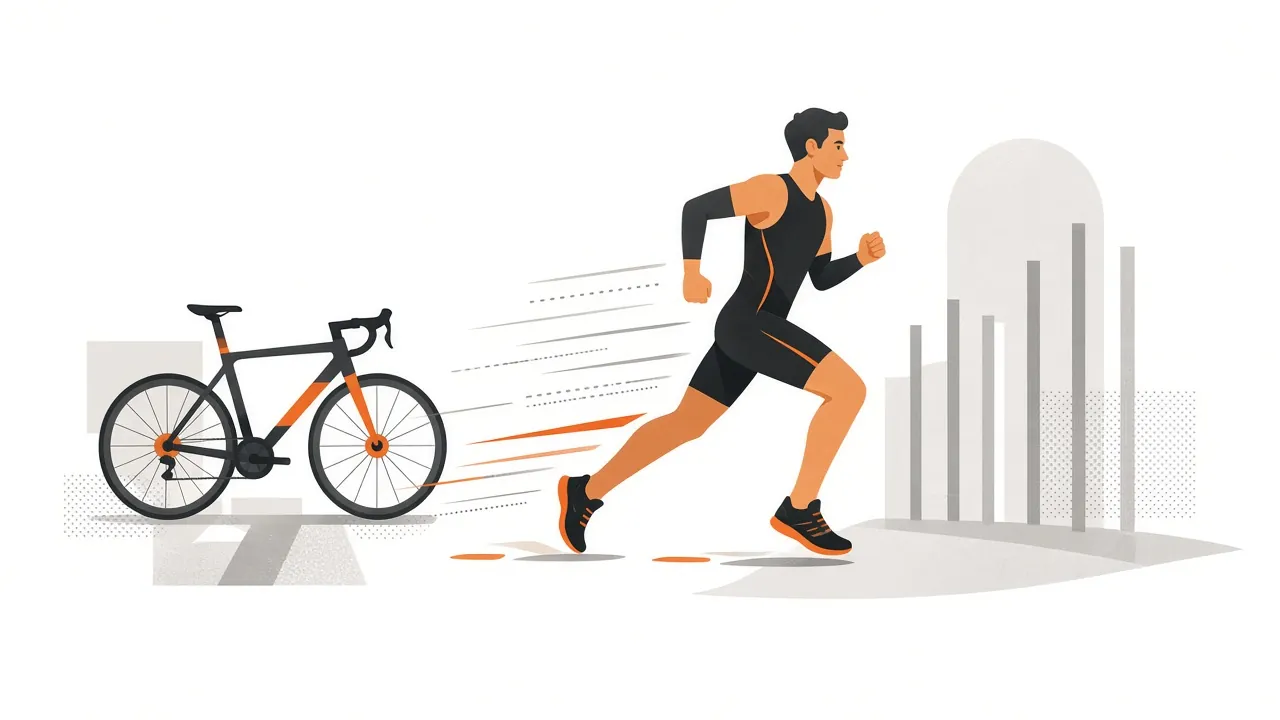
Key takeaways
- A beginner brick can be as simple as a 45-minute easy bike followed by a 10-minute easy run; even a 10-minute run off the bike is valuable.
- A 70.3 brick is 2–2.5 hours on the bike at race power followed by a 30–45 minute run at race pace.
- Heavy legs after cycling come from different muscle recruitment, changed blood flow and bike fatigue, and usually ease within 5–10 minutes of running.
- Hold back on the first kilometre of a brick run and judge it by heart rate or effort, because pace often feels slow when it is actually fast.
Why bricks matter
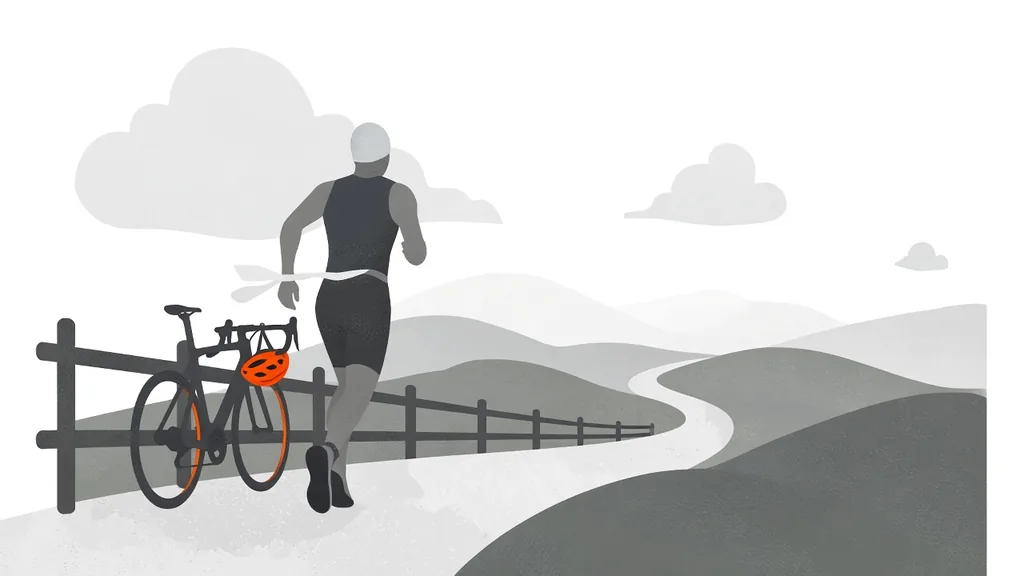
After cycling, blood flow, muscle recruitment and stride all need to adapt to running. The first kilometres often feel awkward and pace is easy to misjudge. Practising the transition makes it familiar and teaches pacing control.
Sample bricks
| Level | Session |
|---|---|
| Beginner | 45 min easy bike + 10 min easy run |
| Olympic distance | 60 min bike with 3 × 8 min at race effort + 20 min run, first 10 min at race pace |
| 70.3 | 2–2.5 h bike at race power + 30–45 min run at race pace |
| Multi-brick | 3 × (15 min bike at race effort + 5 min run), minimal transition |
Tips
- Set up transition like race day: shoes ready, gels at hand.
- Start the run controlled. Pace often feels slow but is actually fast — trust the watch, or better, heart rate.
- Raise cadence in the last minutes on the bike to prepare legs for running.
- Fuel on the bike — the run depends on it. See carbohydrate fuelling.
- Frequency: once every 1–2 weeks in build phases is plenty.
In MoveVitals
Multisport files from Garmin, COROS and Wahoo are split into their legs (bike, transition, run) with sport-specific metrics, while total load counts the session once.
Worked example
Illustrative scenario. Chloe is training for an Olympic-distance triathlon. Her open 10 km pace is 5:00/km, but in her first race she ran the first kilometre off the bike at 4:40/km, felt awful, and faded to 5:40/km. In the next block she does one weekly brick: 60 minutes on the bike including 3 × 8 minutes at race power, then a 15-minute run aiming to hold 5:10/km for the first kilometre with a cadence near her normal one (around 172 spm). After six weeks her first-kilometre pace off the bike is controlled and her heart rate settles within about 3 minutes. In the race she runs 5:12/km evenly.
Action steps
- Start with a short run (10–15 minutes) straight after an easy or moderate ride.
- Practise the transition itself: shoes, helmet and race belt in under 2 minutes.
- Hold back on the first kilometre; run by effort or heart rate, not by feel.
- Keep cadence close to your normal running cadence to cope with heavy legs.
- Do one brick a week in the last 8–12 weeks before a race, and count it as a hard session.
Related guides
- Race pacing: why even splits usually win
- Cadence in running and cycling: is there an ideal number?
- Training load explained: TRIMP, TSS, strain and relative effort
- The long run: building endurance safely
- Triathlon training plan: sprint to 70.3, balancing swim, bike and run load
FAQ
Do bricks need to be long? No — even a 10-minute run off the bike is valuable.
Should I do a brick indoors? Yes, a smart trainer plus treadmill works well and lets you control intensity precisely.
Why do my legs feel heavy after cycling? Different muscle recruitment, changed blood flow and fatigue from the bike make the first minutes of running feel awkward; it usually eases within 5–10 minutes.
Can I do a run-to-bike brick? Yes. Duathletes and some triathletes do it, but bike-to-run is the most race-specific for triathlon.
References
- Millet & Vleck (2000). Physiological and biomechanical adaptations to the cycle to run transition in Olympic triathlon: review and practical recommendations for training. British Journal of Sports Medicine. https://doi.org/10.1136/bjsm.34.5.384
- Soligard et al. (2016). How much is too much? (Part 1) International Olympic Committee consensus statement on load in sport and risk of injury. British Journal of Sports Medicine. https://doi.org/10.1136/bjsports-2016-096581
- Seiler (2010). What is Best Practice for Training Intensity and Duration Distribution in Endurance Athletes?. International Journal of Sports Physiology and Performance. https://doi.org/10.1123/ijspp.5.3.276
For general information only. This is not medical advice — talk to a qualified professional about your health.
Keep reading
Metrics explained
VO2 max: what it means and how to improve it
4 min read
Sports
Trail running with a watch: heart rate, climbs and pacing by effort
7 min read
Metrics explained
Heart rate zones explained: how to set and use them
4 min read
Training science
Zone 2 training: the science and how to do it right
4 min read
Mobility & stretching
Mobility vs flexibility: what's the difference and what do you need?
3 min read
Training science
Polarized training (80/20): easy most of the time, hard some of the time
4 min read