

Metrics explained
Which blood tests are worth doing — a practical panel for active adults
Wearables see your heart, sleep and training. A yearly blood panel sees what they can't: lipids, blood sugar, inflammation, hormones and nutrients. Here is a short, evidence-based list and how often to repeat it.
Written by MoveVitals Editorial Collective
Community-authored educational content. Individual clinical review is identified only when a named review is actually recorded.
Editorial standards & corrections
Key takeaways
- A yearly core panel covers ApoB with a lipid panel, HbA1c and fasting glucose, hs-CRP, a complete blood count with ferritin, vitamin D and a liver and kidney panel.
- Lp(a) is genetically set, so one test in a lifetime tells you whether you carry this extra heart risk.
- For reliable results, fast 9–12 hours, avoid hard training for 48 hours, test in the morning and do not test while ill, because infection inflates CRP and ferritin.
- A result outside the range is not a diagnosis, so retest abnormal values within the timeframe your doctor suggests.
Your watch can tell you that your resting heart rate crept up. It cannot tell you that your ferritin is empty or your ApoB is high. A once-a-year blood panel fills the gap, and most of it costs little or is already part of a routine check-up.
The core panel (yearly)
| Test | Why it matters | Guide |
|---|---|---|
| ApoB (with a standard lipid panel) | The best single lipid marker of cardiovascular risk | ApoB and Lp(a) |
| HbA1c and fasting glucose | 3-month blood sugar average; catches prediabetes early | HbA1c |
| hs-CRP | Low-grade inflammation | hs-CRP |
| Complete blood count + ferritin | Oxygen transport and iron stores | Ferritin |
| Vitamin D (25-OH) | Very common deficiency | Vitamin D |
| Liver and kidney panel (ALT, AST, creatinine, eGFR) | Organ health; also affected by training | Liver and kidneys |
Once in a lifetime
- Lp(a) — genetically set; one test tells you whether you carry this extra heart risk.
Every one to two years, or when symptoms suggest it
- TSH and free T4 — fatigue, weight change, feeling cold: thyroid guide.
- Total testosterone — persistent fatigue, low libido, poor recovery: testosterone guide.
- Vitamin B12 — plant-based diets and over-50s.
- Omega-3 index — if you want to know whether your fish or supplement intake is enough: omega-3 index.
- DEXA scan — body fat, muscle and visceral fat, and a calibration point for your smart scale: DEXA.
Getting reliable results
- Fast 9–12 hours for glucose, insulin and triglycerides; water is fine.
- No hard training for 48 hours beforehand — it raises CK, AST, ALT and CRP and can lower ferritin readings' usefulness.
- Test in the morning (testosterone and cortisol peak early).
- Not while ill — infection inflates CRP and ferritin.
- Same lab when possible — methods and ranges differ between labs.
Keep the results next to your wearable data
Results on paper are hard to follow over years. In MoveVitals' Body Lab you can upload the PDF or photo, let your own AI model read the values, confirm each one, and see them converted to a standard unit, against the range on your report and next to your sleep, HRV and training. The Lab also shows which of the ten body domains you haven't measured yet and how to get each test.
Worked example
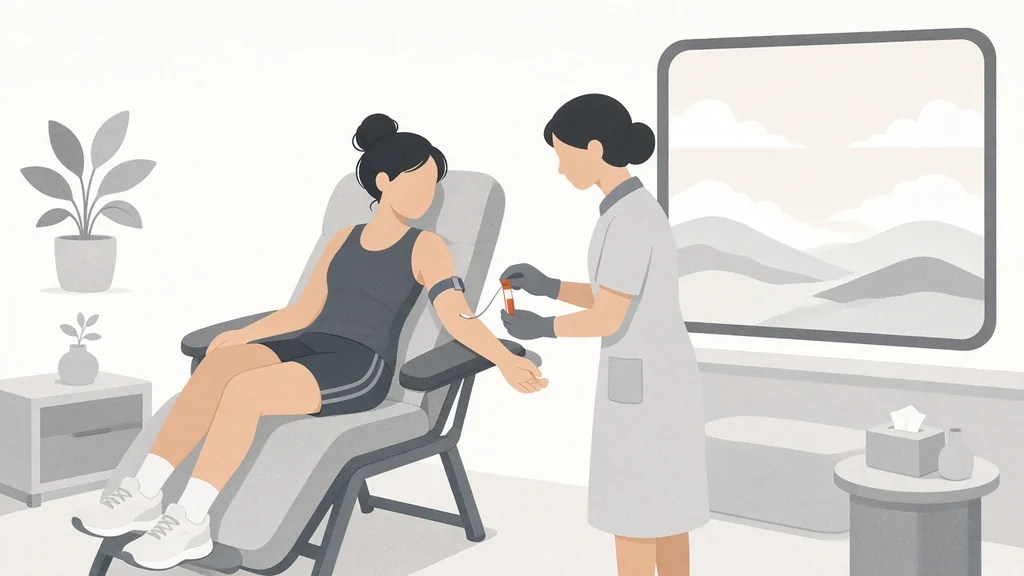
Illustrative scenario. Priya, 38, runs 40 km a week and plans a yearly check. With her doctor she chooses a lipid panel with ApoB, HbA1c, ferritin with a full blood count, vitamin D, TSH and kidney and liver markers. She books a morning appointment after a rest day, since hard exercise within 24–48 hours can temporarily raise markers such as CK and liver enzymes. Her ferritin comes back at 18 µg/L — low for an endurance athlete — and they agree on a plan and retest in 3 months.
Action steps
- Agree on a core panel with your doctor based on age, history and training.
- Test after a rest or easy day, at a similar time of day.
- Follow fasting instructions where required.
- Keep results in one place to track trends over years.
- Retest abnormal values within the timeframe your doctor suggests.
Related guides
- Ferritin, iron and haemoglobin: the endurance athlete's blind spot
- The lipid panel: LDL, HDL, triglycerides and total cholesterol explained
- HbA1c, fasting glucose and fasting insulin: reading your metabolic health
- ALT, AST, creatinine and eGFR: liver and kidney markers for active people
FAQ
Do I need a doctor's order? In many countries yes; in others (e.g. parts of the US and Europe) direct-to-consumer labs sell these tests. Your annual check-up often covers half the list already.
How much does it cost? The core panel is typically inexpensive at public labs; ApoB, Lp(a) and the omega-3 index are the add-ons people most often pay for separately.
Is a result outside the range a diagnosis? No. Ranges are statistical; discuss anything out of range with a doctor, who will look at the full picture.
Can hard training skew blood results? Yes; intense or long exercise can temporarily raise CK, liver enzymes, creatinine and inflammatory markers.
How often should I get blood tests? Many healthy adults test every 1–2 years; athletes with past low iron or other issues may test more often, as advised.
References
- Sim et al. (2019). Iron considerations for the athlete: a narrative review. European Journal of Applied Physiology. https://doi.org/10.1007/s00421-019-04157-y
- Holick et al. (2011). Evaluation, Treatment, and Prevention of Vitamin D Deficiency: an Endocrine Society Clinical Practice Guideline. The Journal of Clinical Endocrinology & Metabolism. https://doi.org/10.1210/jc.2011-0385
- Jonklaas et al. (2014). Guidelines for the Treatment of Hypothyroidism: Prepared by the American Thyroid Association Task Force on Thyroid Hormone Replacement. Thyroid®. https://doi.org/10.1089/thy.2014.0028
For general information only. This is not medical advice — talk to a qualified professional about your health.
Keep reading
Metrics explained
ApoB and Lp(a): the two lipid tests that matter most
3 min read
Metrics explained
The lipid panel: LDL, HDL, triglycerides and total cholesterol explained
3 min read
Metrics explained
HbA1c, fasting glucose and fasting insulin: reading your metabolic health
3 min read
Metrics explained
hs-CRP: measuring low-grade inflammation
3 min read
Metrics explained
Ferritin, iron and haemoglobin: the endurance athlete's blind spot
3 min read
Metrics explained
TSH and free T4: checking your thyroid
3 min read