

Metrics explained
Body weight: why daily numbers jump and how to read the trend
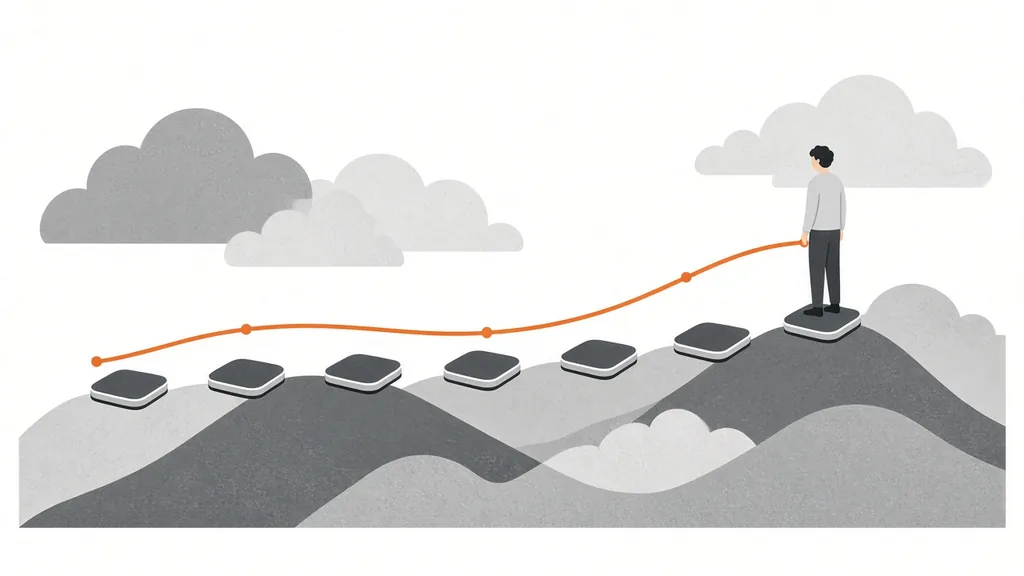
Body weight can swing 1–2 kg from one day to the next because of water, food and glycogen. The useful signal is the trend over weeks.
Written by MoveVitals Editorial Collective
Community-authored educational content. Individual clinical review is identified only when a named review is actually recorded.
Editorial standards & corrections
Key takeaways
- Salt and carbohydrate intake can add 0.5–2 kg of water stored with glycogen, and the menstrual cycle can add 0.5–2 kg before menstruation.
- Weigh in the morning, after using the toilet and before eating or drinking, on the same scale on a hard, flat floor, and compare 7-day moving averages week with week.
- A realistic fat-loss rate is about 0.5–1 % of body weight per week; faster loss tends to cost more muscle and performance.
- Change your plan only after 3–4 weeks of a consistent trend.
Body weight is easy to measure and surprisingly easy to misread. A smart scale such as Withings Body+ or Garmin Index syncs every weigh-in, so you can see the real trend instead of daily noise.
Why weight fluctuates
| Cause | Typical effect |
|---|---|
| Salt and carbohydrate intake | +0.5–2 kg of water stored with glycogen |
| Hydration and sweating | ±0.5–1.5 kg |
| Food and drink still in the gut | ±0.5–1 kg |
| Menstrual cycle | +0.5–2 kg before menstruation |
| Hard training | temporary water retention from muscle repair |
| Alcohol, travel, poor sleep | variable |
How to weigh yourself
- Weigh in the morning, after using the toilet, before eating or drinking.
- Use the same scale on a hard, flat floor.
- Wear the same (or no) clothes.
- Look at a 7-day moving average; compare week with week.
A realistic fat-loss rate is about 0.5–1 % of body weight per week. Faster loss tends to cost muscle.
Weight is not the whole story
Weight doesn't tell you what changed. Combine it with body fat, muscle mass, waist circumference and performance. Someone who starts strength training can lose fat while their weight stays flat.
In MoveVitals
Weigh-ins from Withings, Garmin, WHOOP and Apple Health are stored per source. If two scales record the same morning, your priority decides which one the chart uses. You can switch between kg and lb in your profile.
Worked example
Illustrative 2-week log. Over 14 mornings Ravi's readings range from 81.2 to 83.0 kg. After a salty restaurant dinner he jumps 1.3 kg overnight; after a long run he drops 0.9 kg. His 7-day average, however, moves smoothly from 82.4 to 82.0 kg. Dividing a 0.4 kg drop over a week by a rough 7,700 kcal per kg gives a deficit of about 440 kcal/day — but research shows the energy cost per kg changes as body composition shifts, so he treats this as a ballpark and keeps watching the trend for another 3–4 weeks before changing his intake.
Action steps
- Weigh daily or at least 3 times a week, first thing in the morning.
- Use the same scale on a hard, flat floor.
- Judge progress by the 7-day average, not one reading.
- Expect 1–2 kg swings after salty meals, carbohydrate loading or menstruation.
- Change your plan only after 3–4 weeks of a consistent trend.
Related guides
- Body fat percentage: healthy ranges and how smart scales measure it
- Basal metabolic rate (BMR): how many calories you burn at rest
- Body water and hydration: reading the numbers from your scale
- Calories burned: active, resting and total energy expenditure
FAQ
Why did I gain 1.5 kg overnight? Almost always water and food — not fat. One kilogram of fat stores about 7,700 kcal.
How often should I weigh? Daily weighing with a moving average gives the clearest picture, if it doesn't cause stress.
Why does weight go up when I start strength training? Muscles store extra glycogen and water during adaptation, so a small early increase is common and not fat gain.
How fast is a safe rate of weight loss? A common guideline is around 0.5–1% of body weight per week; faster loss tends to cost more muscle and performance.
References
- Hall (2008). What is the required energy deficit per unit weight loss?. International Journal of Obesity. https://doi.org/10.1038/sj.ijo.0803720
- Thomas et al. (2016). Position of the Academy of Nutrition and Dietetics, Dietitians of Canada, and the American College of Sports Medicine: Nutrition and Athletic Performance. Journal of the Academy of Nutrition and Dietetics. https://doi.org/10.1016/j.jand.2015.12.006
- Mifflin et al. (1990). A new predictive equation for resting energy expenditure in healthy individuals. The American Journal of Clinical Nutrition. https://doi.org/10.1093/ajcn/51.2.241
For general information only. This is not medical advice — talk to a qualified professional about your health.
Keep reading
Devices & setup
Withings and MoveVitals: scales, blood pressure and sleep
3 min read
Devices & setup
How MoveVitals handles multiple devices: provenance, duplicates and conflicts
5 min read
Metrics explained
Resting heart rate: normal ranges and what changes it
4 min read
Metrics explained
Normal heart rate variability (HRV) by age: RMSSD vs SDNN
6 min read
Metrics explained
Blood oxygen (SpO2): what wearables measure and when to worry
4 min read
Metrics explained
Respiratory rate during sleep: a quiet early-warning signal
3 min read