

Sports
Table tennis: heart rate, calories and reaction training
Table tennis is a skill sport with a modest cardio load: rallies last only a few seconds, so heart rate rises and falls in small waves and an hour burns roughly 240–360 kcal depending on body weight. This guide covers intensity by rally length, what a watch records and how to train reaction and footwork.
Written by MoveVitals Editorial Collective
Community-authored educational content. Individual clinical review is identified only when a named review is actually recorded.
Editorial standards & corrections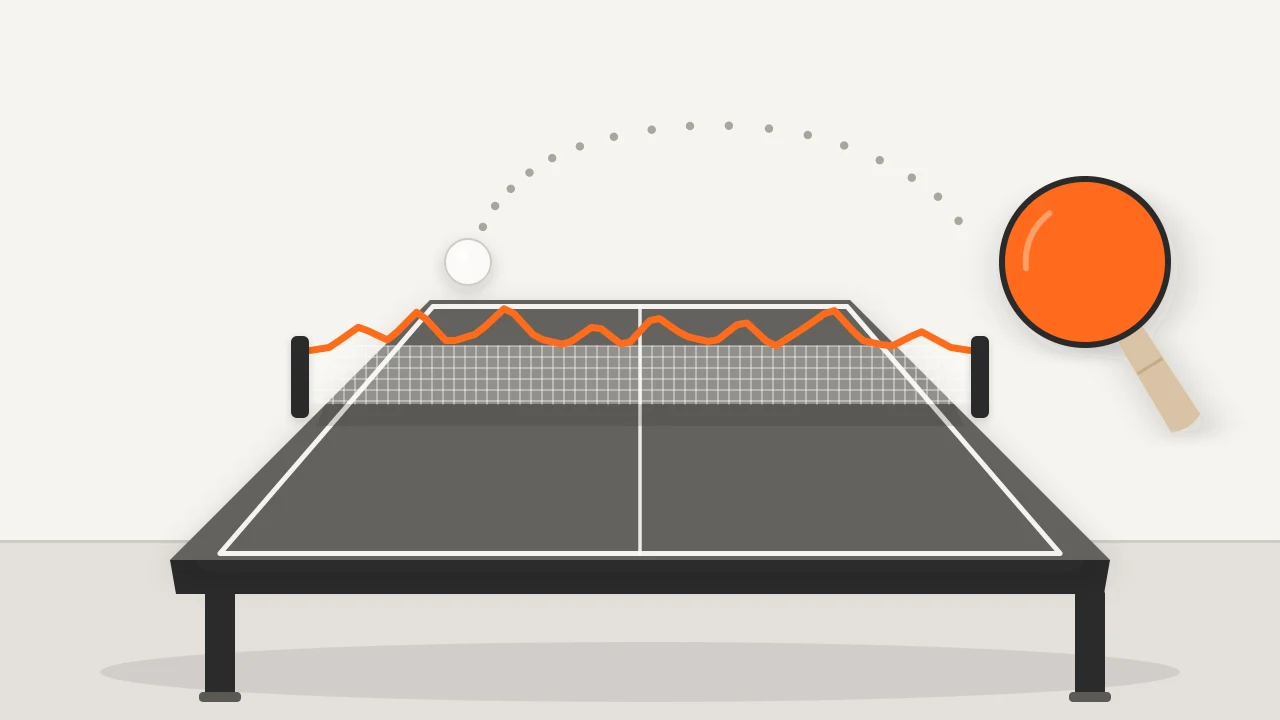
Key takeaways
- Heart rate runs about 50–60 % of maximum in casual rallying, 60–75 % in social or club matches, 75–90 % in multiball and footwork drills and 70–90 % in tournament matches.
- At about 4.0 METs, table tennis is lighter than social badminton at 5.5 METs, so estimate calories from the minutes you actually play rather than the booking length.
- Wear the watch on the non-racket wrist, and expect it to flatten single rally peaks because a wrist sensor averages over several seconds.
- Footwork sets of 6–8 × 30 seconds with 30–60 seconds rest build repeatable bursts without extra equipment.
- Ask your doctor which heart rate ceiling suits you if you are over 40–50, have been inactive, or have high blood pressure, heart disease or medication that affects heart rate.
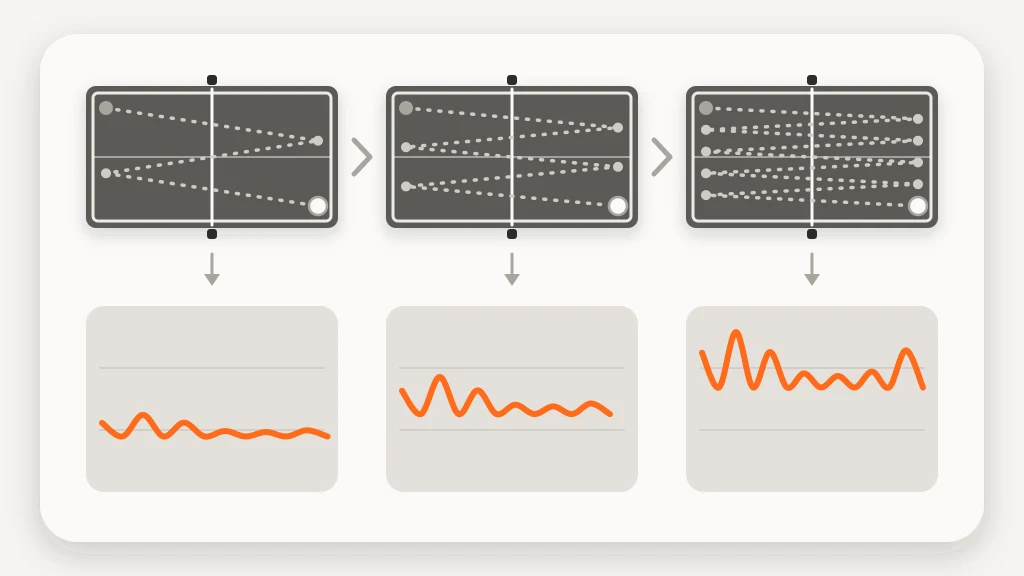
Table tennis (ping pong) is an intermittent sport in the extreme. In official matches, studies describe rallies of only about 3–4 seconds followed by roughly 8–20 seconds of rest, picking up the ball, towelling and serving. The ball is in play for well under half of the match clock.
Is table tennis aerobic exercise? Intensity by play type
Mostly yes, with short anaerobic bursts: in a study of official tournament matches, the aerobic system was the main energy source and blood lactate stayed low, while the quick phosphagen system powered each rally. Average heart rate in those competitive matches was around 80 % of predicted maximum, but recreational play is much gentler.
| Type of play | Rally pattern | Typical effort (0–10) | Rough heart rate (% of max) |
|---|---|---|---|
| Casual rallying | Slow, relaxed, lots of ball retrieval | 2–3 | 50–60 % |
| Social or club match | Mixed rallies, short breaks | 3–5 | 60–75 % |
| Multiball and footwork drills | Continuous balls, little rest | 6–8 | 75–90 % |
| Tournament match | Fast, tense, short rests | 6–8 | 70–90 % |
These are rough guides, not thresholds. The next table applies them to age, using the Tanaka estimate of maximum heart rate (208 − 0.7 × age). Individual maxima often differ from the formula by 10 bpm or more, so see maximum heart rate for field tests.
| Age | Estimated max (bpm) | Casual to club play, 60–75 % (bpm) | Hard drills or tournament, 80–90 % (bpm) |
|---|---|---|---|
| 20 | 194 | ~116–146 | ~155–175 |
| 30 | 187 | ~112–140 | ~150–168 |
| 40 | 180 | ~108–135 | ~144–162 |
| 50 | 173 | ~104–130 | ~138–156 |
| 60 | 166 | ~100–125 | ~133–149 |
| 70 | 159 | ~95–119 | ~127–143 |
If you are over 40–50, have been inactive, or have high blood pressure, heart disease or medication that affects heart rate, ask your doctor which ceiling suits you (see blood pressure). Stop and seek medical help for chest pain or pressure, fainting, palpitations with dizziness, or breathlessness out of proportion to the effort; a watch cannot diagnose any of these. See also high heart rate during exercise.
Calories: what an hour of table tennis burns
The 2011 Compendium of Physical Activities lists table tennis at about 4.0 METs. Energy use is roughly MET × body weight (kg) × hours of actual play.
| Body weight | Kcal per hour of play (4.0 MET) |
|---|---|
| 60 kg | ~240 |
| 75 kg | ~300 |
| 90 kg | ~360 |
That is lighter than social badminton at 5.5 METs (see badminton). Count the minutes you really play: at a busy table with rotations, ball chasing and breaks, an hour of booking may hold only 40–45 minutes of play. The full table for other sports is in calories burned by activity.
What a watch records and where it falls short
- Wear it on the non-racket wrist. The racket hand flicks and twists constantly, which adds noise to an optical sensor.
- Averages beat peaks. Rallies are so short that a wrist sensor, which averages over several seconds, flattens individual peaks. Judge a session by average heart rate and time in zone. A chest strap such as the Polar H10 shows the true saw-tooth; see wrist heart rate accuracy.
- No GPS indoors, few steps. Table tennis is short side steps and lunges, so the step count is low for the effort and tells you little (see daily steps).
- Calories are model estimates. Heart-rate-based models can read low in a sport where rally heart rates are modest. Use them as a ceiling, not a measurement.
Reaction, footwork and conditioning
Reaction in table tennis is mostly anticipation: reading the opponent's racket angle and the spin on the ball. It improves mainly through playing and structured practice rather than gadgets.
- Multiball and random placement. Ask a partner or coach to feed balls to unpredictable spots; start slow and speed up.
- Serve and receive. Short, varied serves train the quick read that most points start with.
- Footwork. 6–8 × 30 seconds of side-to-side or forehand-backhand footwork with 30–60 seconds rest builds repeatable bursts without extra equipment. Skipping and short sprints also help.
- Warm-up and recovery. Spend 5–10 minutes on shoulders, hips and ankles (warm-up routine). Shoulder, elbow and lower-back overuse and knee or ankle strain from lunging are the usual problems; add rest if they linger.
A sensible week: one technique or multiball session of 45–60 minutes, one or two match or league sessions, an optional 20–30 minutes of off-table conditioning and an easy aerobic session such as a brisk walk or ride in zone 2. Table tennis is also popular with older adults because it is low impact, social and demands balance, coordination and reaction; the evidence for specific health benefits is limited, so treat it as an enjoyable, sustainable way to stay active and add strength and balance work (see exercise for older adults). Continuous moderate play counts towards the 150–300 minutes of moderate activity a week that the World Health Organization recommends.
Common mistakes
- Chasing wrist-sensor peaks, or expecting a fixed number such as 180, instead of judging effort against your own maximum.
- Counting the whole booking as exercise time and trusting the watch's calorie figure.
- Only playing, with no leg, core or shoulder strength work.
In MoveVitals
Table tennis sessions from Apple Health, Garmin, COROS, Polar, Suunto, Strava and WHOOP arrive as racket-sport activities with duration, heart rate and energy. If a watch and a chest-strap app recorded the same evening, MoveVitals merges the duplicate and picks fields by your priorities, for example heart rate from the strap and energy from the watch (how conflicts are resolved). Time in zone comes from the heart-rate stream, so you can see how long a drill block really kept you above your usual play level.
Worked example
Illustrative scenario. Wei, 45, weighs 70 kg and spends a club night of 2 hours at the table. His estimated maximum is about 177 bpm (208 − 0.7 × 45). His watch shows an average of 118 bpm (about 67 %): around 120 bpm (68 %) during the matches and 138 bpm (78 %) during a 30-minute multiball and footwork block. Roughly 85 minutes of the night is real play, so 4.0 × 70 kg × 1.4 h ≈ 390 kcal, while the watch reports about 470 kcal for the full 2 hours. He treats the watch figure as an upper bound, keeps average heart rate and time in zone as his trend, and adds one 20-minute footwork session and a brisk Sunday walk to reach the weekly activity target.
Action steps
- Treat casual table tennis as light-to-moderate exercise and judge sessions by average heart rate and time in zone, not single peaks.
- Wear the watch on the non-racket wrist and try a chest strap for one session to see the real rally pattern.
- Estimate calories from the minutes you actually play (about 4 METs), not from the booking length.
- Plan 2–3 sessions a week: technique or multiball, match play and, if you like, a short off-table conditioning session.
- Practise reaction with random-placement multiball, serve and receive and varied opponents.
- Warm up shoulders, hips and ankles, add leg, core and shoulder strength, and ask your doctor first if you have a heart or blood pressure condition.
Related guides
- Badminton: heart rate spikes, calories and recovery between games
- Tennis with a wearable: heart rate between points, load and recovery
- Calories burned by activity: MET values, per-hour tables and how wearables estimate them
- Heart rate zones explained: how to set and use them
- How accurate is wrist heart rate? Optical sensors vs chest straps, by sport
FAQ
Is table tennis good exercise? Yes, as light-to-moderate activity: it is low impact, trains coordination and reaction and is easy to keep up for years. It is not a high-calorie workout, so pair it with other activity if fitness or weight is the goal.
How many calories does table tennis burn? About 4 METs, roughly 240–360 kcal per hour of actual play for a 60–90 kg player. An hour at the club usually contains less play than that.
What is a normal heart rate for table tennis? Social play often sits around 60–75 % of maximum, roughly 110–140 bpm for a 40-year-old. Hard drills and tournament matches can reach 80–90 %. Judge against your own maximum, not a fixed number.
References
- Zagatto et al. (2010). Physiological Responses and Characteristics of Table Tennis Matches Determined in Official Tournaments. Journal of Strength and Conditioning Research. https://doi.org/10.1519/jsc.0b013e3181cb7003
- Zagatto et al. (2017). Energetic demand and physical conditioning of table tennis players. A study review. Journal of Sports Sciences. https://doi.org/10.1080/02640414.2017.1335957
- Ainsworth et al. (2011). 2011 Compendium of Physical Activities: A Second Update of Codes and MET Values. Medicine & Science in Sports & Exercise. https://doi.org/10.1249/MSS.0b013e31821ece12
- Tanaka et al. (2001). Age-predicted maximal heart rate revisited. Journal of the American College of Cardiology. https://doi.org/10.1016/S0735-1097(00)01054-8
- Gillinov et al. (2017). Variable Accuracy of Wearable Heart Rate Monitors during Aerobic Exercise. Medicine & Science in Sports & Exercise. https://doi.org/10.1249/MSS.0000000000001284
- Bull et al. (2020). World Health Organization 2020 guidelines on physical activity and sedentary behaviour. British Journal of Sports Medicine. https://doi.org/10.1136/bjsports-2020-102955
For general information only. This is not medical advice — talk to a qualified professional about your health.
Keep reading
Sports
Pickleball and your health data: heart rate zones, calories and joint load
6 min read
Sports
Padel with a wearable: heart rate, calories and recovery between matches
7 min read
Sports
Walking for fitness and weight loss: pace, heart rate zones and how much is enough
9 min read
Training science
Zone 2 training: the science and how to do it right
4 min read
Sports
Japanese interval walking: the 3-minute fast / 3-minute slow method, step by step
8 min read
Devices & setup
Strava and MoveVitals: workouts, streams and devices that arrive via Strava
3 min read