

Devices & setup
Polar H10 chest strap with MoveVitals: accurate heart rate and HRV
The Polar H10 measures your heart's electrical signal for gold-standard heart rate and beat-to-beat intervals. Here's how to get that data into MoveVitals.
Written by MoveVitals Editorial Collective
Community-authored educational content. Individual clinical review is identified only when a named review is actually recorded.
Editorial standards & corrections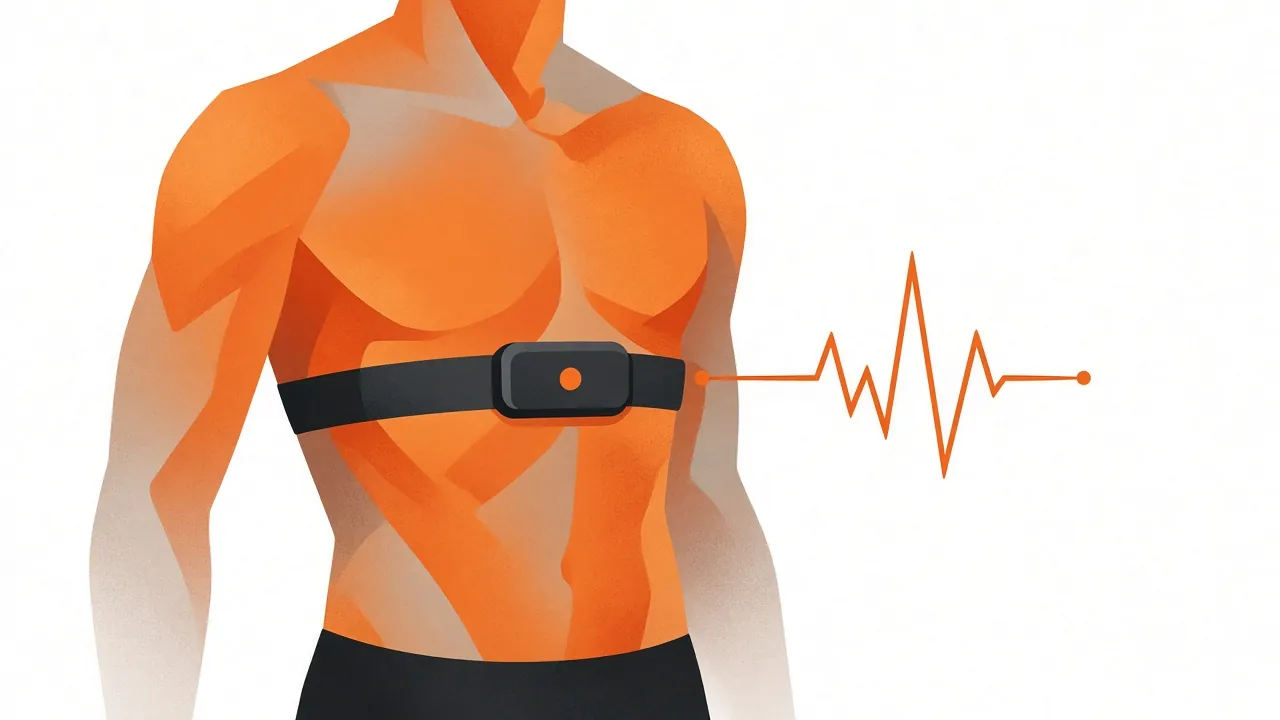
Key takeaways
- H10 data reaches MoveVitals through a paired watch or bike computer, through Zwift or a trainer app via Strava, or directly over Bluetooth with the MoveVitals iOS app, which is still in development.
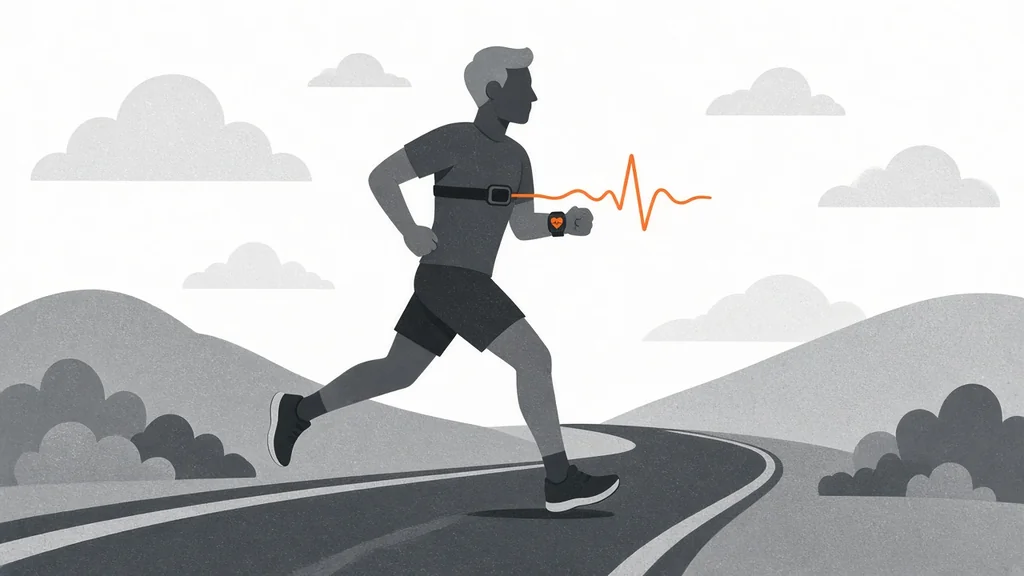
- For steady efforts wrist heart rate is often good enough, but for intervals the H10 is far more reliable.
- The H10 connects to two Bluetooth devices plus ANT+ and can store one session in internal memory without a phone.
- Moisten the electrodes and wear the strap snug just below the chest muscles, because dry electrodes or static from clothing can cause spikes at the start.
Why the H10
| Feature | Benefit |
|---|---|
| ECG-based sensing | Accurate heart rate, even in intervals and cold weather |
| R-R intervals | Precise beat-to-beat data for HRV readings |
| Bluetooth + ANT+ | Pairs with phones, watches, bike computers and trainers |
| Internal memory | Records one session without a phone |
Three ways to get H10 data into MoveVitals
- Paired with a watch or bike computer (Polar, Garmin, Wahoo, COROS…): heart rate is part of the workout and syncs through that platform — e.g. Polar Flow or Strava.
- Paired with Zwift or a trainer app: heart rate arrives with the ride via Strava.
- Directly with the MoveVitals iOS app (in development): live heart rate and R-R intervals over Bluetooth for workouts and morning HRV readings, without another device.
Tips for good data
- Moisten the electrodes before putting it on.
- Wear it snug, just below the chest muscles.
- Rinse the strap after use; replace the battery (CR2025) when readings drop out.
Using H10 data
- Set accurate heart rate zones from a field test.
- Measure heart rate recovery after hard efforts.
- In MoveVitals, chest-strap heart rate is preferred over wrist optical when both exist for the same workout.
More on the Polar H10 integration page.
Worked example
Illustrative scenario. Arjun's watch shows his heart rate hitting 190 bpm in the first minute of a run — clearly wrong, likely cadence lock from the optical sensor. He pairs a Polar H10 to the watch and wets the electrodes before each run. The spikes disappear, and his interval sessions show sharp, believable rises and drops. Gillinov and colleagues found chest-strap ECG was the most accurate monitor in their comparison, which is why he also uses it for a 3-minute morning HRV reading through an app, recorded at the same time each day.
Action steps
- Wet the electrodes or use gel before putting on the strap.
- Position it just below the chest muscles, snug but comfortable.
- Pair it to your watch, bike computer or app via Bluetooth or ANT+.
- Rinse the strap after use and unclip the sensor so the battery lasts longer.
- For HRV, measure for a few minutes at the same time each morning.
Related guides
- Normal heart rate variability (HRV) by age: RMSSD vs SDNN
- Heart rate zones explained: how to set and use them
- Polar watches and MoveVitals: Polar Flow sync explained
- Interval training and HIIT: designing sessions that work
- How accurate is wrist heart rate? Optical sensors vs chest straps, by sport
FAQ
Can I connect the H10 to two devices? Yes — two Bluetooth connections plus ANT+.
Is wrist heart rate good enough? For steady efforts often yes; for intervals the H10 is far more reliable.
Why is my H10 reading too high at the start? Dry electrodes or static from clothing can cause spikes; wet the strap well and consider a cotton layer in dry conditions.
Does the H10 store data without a phone? It can store one session in its internal memory with the Polar Beat app; otherwise it streams to a paired device.
References
- Polar. Polar H10 | Polar Global (official product page). https://www.polar.com/en/products/accessories/h10_heart_rate_sensor
- Gillinov et al. (2017). Variable Accuracy of Wearable Heart Rate Monitors during Aerobic Exercise. Medicine & Science in Sports & Exercise. https://doi.org/10.1249/MSS.0000000000001284
- Plews et al. (2013). Training Adaptation and Heart Rate Variability in Elite Endurance Athletes: Opening the Door to Effective Monitoring. Sports Medicine. https://doi.org/10.1007/s40279-013-0071-8
For general information only. This is not medical advice — talk to a qualified professional about your health.
Keep reading
Training science
Zone 2 training: the science and how to do it right
4 min read
Metrics explained
Resting heart rate: normal ranges and what changes it
4 min read
Metrics explained
Normal heart rate variability (HRV) by age: RMSSD vs SDNN
6 min read
Recovery & sleep
Overreaching and overtraining: warning signs and what to do
4 min read
Training science
Polarized training (80/20): easy most of the time, hard some of the time
4 min read
Sports
Japanese interval walking: the 3-minute fast / 3-minute slow method, step by step
8 min read