

Sports
Stand-up paddling and kayaking: stroke rate, heart rate and calories
Stand-up paddling and kayaking are arm, trunk and leg endurance work where stroke rate, wind and current matter as much as heart rate. Here is what your watch records on the water, how stroke rate links to calories, and how to train steadily or in intervals without wearing out your shoulders.
Written by MoveVitals Editorial Collective
Community-authored educational content. Individual clinical review is identified only when a named review is actually recorded.
Editorial standards & corrections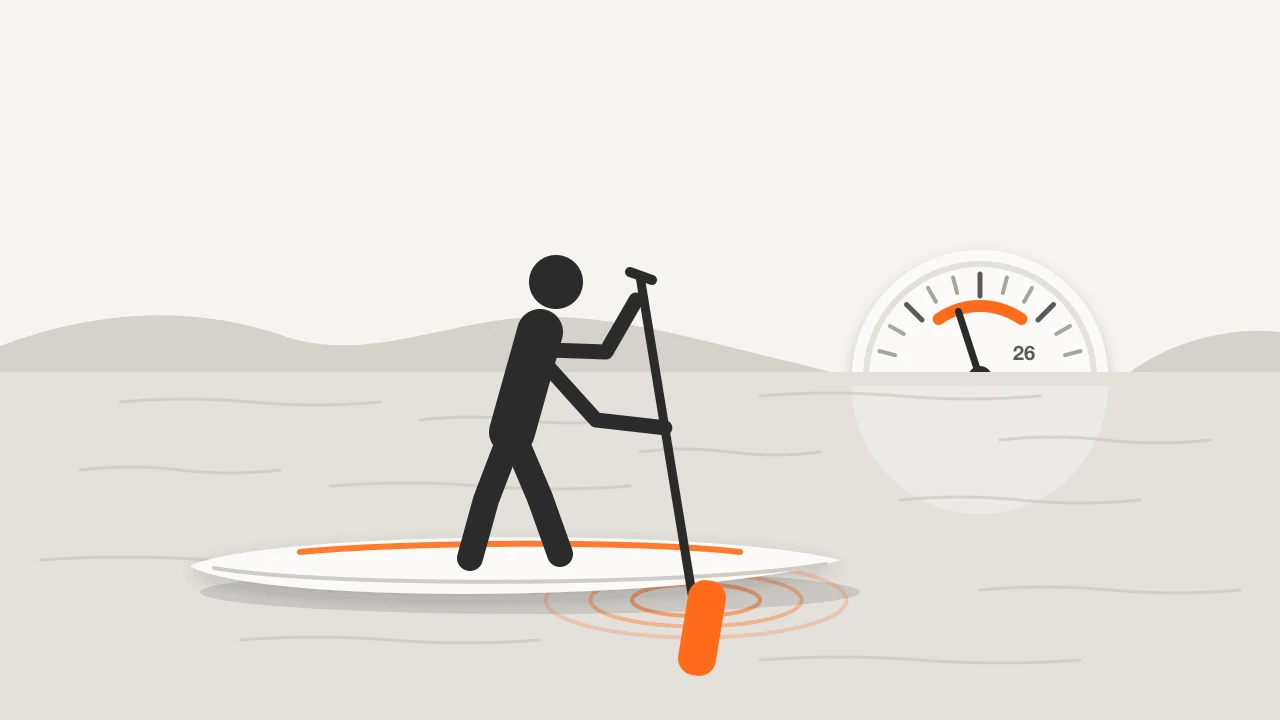
Key takeaways
- The 2024 Compendium lists stand-up paddling at 3.8 METs and about 265 kcal an hour at 20–29 strokes a minute, and 9.8 METs and about 685 kcal at 40–49.
- GPS gives speed over the ground, so wind and current change it, and paddling speed is stroke rate multiplied by distance per stroke.
- Arm-dominant paddling typically produces a lower maximum heart rate than running, so set zones from paddling effort and RPE rather than running numbers.
- Sample sessions are 45–90 minutes steady, 3 × 10 minutes tempo with 3 minutes easy, and 6–10 × 1–2 minutes hard with equal easy.
- Wear a life jacket and a leash on a SUP, tell someone your route, and dress for the water temperature, not the air.
Paddle sports cover stand-up paddling (SUP), kayaking, canoeing and rowing-type boats such as outrigger canoes, dragon boats and surf skis. Most sports watches group them under paddling or rowing profiles, and MoveVitals does too. Reviews describe SUP fitness as low-impact, whole-body work whose intensity varies widely with speed, wind and board.
What your watch records on the water
| Metric | What it tells you | Watch-outs |
|---|---|---|
| Distance and speed | Pace and progress | GPS gives speed over the ground, so wind and current change it; the same effort is slower into a headwind or tide |
| Stroke rate (strokes per minute) | Cadence; with distance per stroke it explains speed | Devices count differently: a stroke can be each blade entry or a left-right pair; it is inferred from arm motion, so compare only with the same device |
| Distance per stroke | Efficiency and technique | Derived and noisy on choppy water |
| Heart rate | Effort | Grip, wrist flexion and spray disturb wrist optical sensors; a chest strap is steadier |
| Calories | Rough energy cost | An estimate that depends on the profile and on heart rate |
Many Garmin, Polar, COROS, Suunto and Apple Watch models list SUP, kayak, canoe or rowing profiles, and some estimate stroke rate from wrist motion. Check your model; without a paddling profile, use the closest rowing or paddling one. A watch on one wrist may count every stroke or only those on its own side, and it can miss strokes when you rest the paddle or switch sides. For picking a device by sport, see which wearable for your sport.
Paddle stroke rate, speed and calories
Speed is stroke rate multiplied by distance per stroke. You can go faster by taking more strokes or by making each one longer and better, and technique is usually the cheaper gain at first. Watch how stroke rate, speed and heart rate move together on the same route rather than chasing any one of them.
The 2024 Adult Compendium of Physical Activities lists stand-up paddling by stroke rate, which shows how much the cadence matters. Values below are total energy (METs × body weight × hours) for a 70 kg adult, rounded:
| Activity | METs | About kcal per hour |
|---|---|---|
| Canoeing or rowing, for pleasure | 3.5 | 245 |
| SUP, 20–29 strokes per minute | 3.8 | 265 |
| Kayaking, moderate effort | 5.0 | 350 |
| SUP, 30–39 strokes per minute | 5.0 | 350 |
| SUP, general | 6.5 | 455 |
| SUP, 40–49 strokes per minute | 9.8 | 685 |
A watch reports active energy, which leaves out resting energy and so reads lower. Headwinds, chop and a heavy board all raise the real cost. For paddleboarding calories across other activities, see calories burned by activity. Paddling can support fat loss as part of a steady weekly routine, but there is no special "fat-burning" pace; total energy balance and consistency matter more (the fat-burning zone).
Kayaking and SUP heart rate
Arm-dominant exercise uses less muscle than running or cycling and typically produces a lower maximum heart rate, so zones taken from a running test or a "220 minus age" formula can sit too high. Standing on a board uses more legs and trunk than sitting in a kayak, so SUP sits in between. Anchor effort to the talk test and to RPE, and use a paddling-specific maximum if you have one (heart rate zones, maximum heart rate).
Wrist sensors are disturbed by grip, wrist flexion and spray (wrist vs chest strap accuracy). A chest strap under a life jacket is generally steadier, and it connects reliably while you stay dry. Heat can raise heart rate over a long paddle, much like cardiac drift, so compare sessions in similar conditions.
Steady, tempo and interval paddling: sample stand up paddle workouts
Most of your time should be easy, with a small share hard, the same idea as polarized training. Two or three paddles a week is a good start, with one longer outing and at most one harder session.
| Session | Example | How it should feel |
|---|---|---|
| Steady | 45–90 min at an even stroke rate | Conversational, roughly zone 2, relaxed shoulders |
| Tempo | 3 × 10 min with 3 min easy | Comfortably hard; short sentences only |
| Intervals | 6–10 × 1–2 min hard with equal easy | Hard but repeatable; stroke rate up, form kept (intervals) |
| Long paddle | 90 min or more, once a week | Easy; add time gradually, not pace |
Paddle with the trunk and hips rather than the arms alone, and keep a relaxed grip; this usually spares the shoulders. On windy days judge effort by heart rate and feel, not speed: gusts make any pace target meaningless.
Shoulders, back and thoracic mobility
Paddling repeats a reaching-and-pulling pattern thousands of times. In a survey of 240 stand-up paddlers, the shoulder or upper arm was the most frequently injured area (about a third of injuries), followed by the lower back and the elbow or forearm, and about half of injuries were to muscle and tendon. Build rowing-type pulls, push-ups, rotator-cuff work and trunk rotation, keep the upper back moving (thoracic spine mobility) and raise volume gradually. See a clinician for pain that persists. When water time is limited, an indoor rowing machine or other cross-training keeps fitness without extra shoulder time on the water.
On the water itself: wear a life jacket (and a leash on a SUP), tell someone your route, check wind and tide and dress for the water temperature, not the air. Cold-water immersion is dangerous even for strong swimmers. A watch does not replace any of this.
In MoveVitals
MoveVitals groups stand-up paddling, kayaking, canoeing and rowing-type activities under one rowing and paddling sport type, so a paddle sits next to your rowing-machine work. Sessions arrive as ordinary workouts from whichever source recorded them: Garmin, Polar, COROS, Suunto or WHOOP through their direct connections, Apple Watch sessions that reach your Strava account, and rowing-machine sessions from the Concept2 Logbook, which carry their average stroke rate. For watch-recorded paddles, stroke rate usually stays in the watch maker's app; MoveVitals keeps duration, distance, heart rate and calories as supplied and calculates time in heart rate zones from the heart rate stream when the source provides one. If a watch and a chest strap both recorded the paddle, MoveVitals groups them as one session (how MoveVitals handles multiple devices). Overnight HRV, resting heart rate and sleep come from your ring or watch through its own connection. Direct Apple Health sync is planned, not available.
Worked example
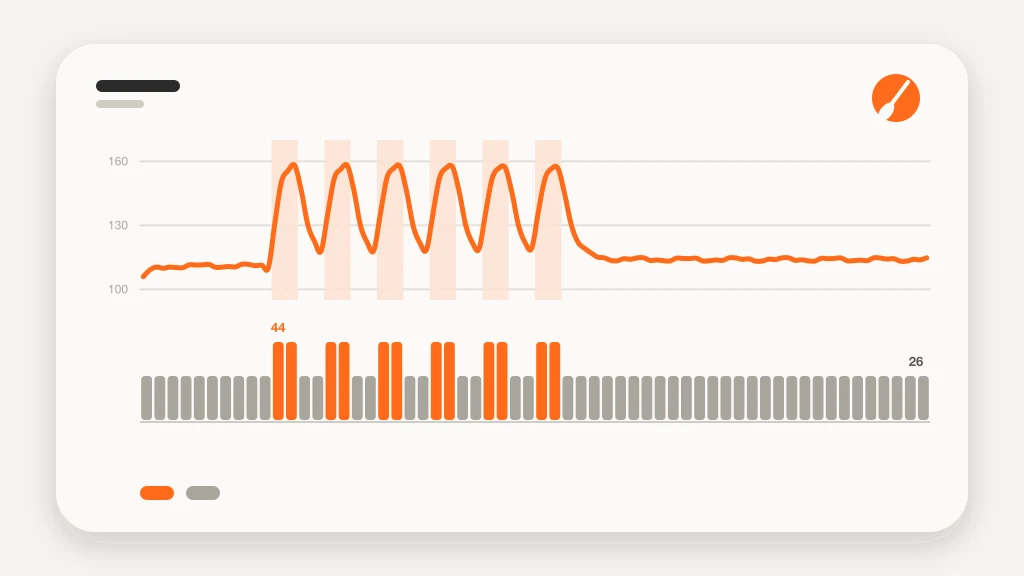
Illustrative scenario. Leila, 38 and 70 kg, paddles a 60-minute flat-water SUP loop with a chest strap. She starts with 10 minutes easy at about 26 strokes a minute (heart rate 105–115 bpm), then does 6 × 2 minutes hard at about 44 strokes a minute (150–162 bpm) with 2 minutes easy between, and cruises the rest at 26–28. Using the Compendium values (3.8 METs easy, 9.8 METs hard), the session comes to about 350 kcal of total energy, or around 5 METs on average; an easy-only hour at 3.8 METs would be about 265. Her watch shows about 280 active kcal, which reads lower because it excludes resting energy. The loop has a headwind out and a tailwind back, so GPS speed is 4.8 km/h out and 6.6 km/h back at the same stroke rate and heart rate; she compares stroke rate and heart rate between weeks, not speed. After eight weeks her heart rate at 26 strokes a minute has fallen from 112 to 105 bpm, and she adds rows twice a week and a short thoracic mobility routine after paddling. Numbers are illustrative.
Action steps
- Choose your watch's SUP, kayak or paddling profile (or the nearest rowing profile), check how it counts strokes and add a chest strap if the wrist reading drops out.
- Compare like with like: same route, similar wind and water, same wrist. Read stroke rate, heart rate and speed together, and remember wind and current change speed.
- Keep most sessions easy and conversational, and add one interval session once the easy volume feels comfortable.
- Set zones from paddling effort and RPE rather than running numbers.
- Strengthen shoulders and upper back, keep the thoracic spine mobile, raise volume gradually, wear a life jacket and tell someone your route.
Related guides
- Indoor rowing: technique, split times and the 2k test
- Thoracic spine mobility: for cyclists, rowers and desk workers
- Heart rate zones explained: how to set and use them
- Calories burned by activity: MET values, per-hour tables and how wearables estimate them
- Cross-training: building fitness while sparing your joints
FAQ
How many calories does paddleboarding burn? Roughly 200–700 kcal an hour for a 70 kg adult, depending on stroke rate and conditions: easy paddling sits near the bottom, hard racing-style cadence near the top. These are estimates, and watches can be well off.
What heart rate is normal when kayaking? Easy paddling is usually conversational, roughly zone 2. Because the work is arm-dominant, numbers are often lower than in running at the same effort, so use RPE and your own zones.
Is stand-up paddling good for weight loss? It can help as part of a regular routine, as any steady activity can. There is no special fat-burning pace; consistency and total energy balance matter most.
What is a good stroke rate? There is no single target; it depends on the craft, conditions and goal. Track your own stroke rate at a fixed heart rate or effort and see whether it creeps up as you get fitter.
References
- Herrmann et al. (2024). 2024 Adult Compendium of Physical Activities: a third update of the energy costs of human activities. Journal of Sport and Health Science. https://doi.org/10.1016/j.jshs.2023.10.010
- Schram et al. (2016). The physiological, musculoskeletal and psychological effects of stand up paddle boarding. BMC Sports Science, Medicine and Rehabilitation. https://doi.org/10.1186/s13102-016-0057-6
- Furness et al. (2017). Epidemiology of injuries in stand-up paddle boarding. Orthopaedic Journal of Sports Medicine. https://doi.org/10.1177/2325967117710759
- Gillinov et al. (2017). Variable accuracy of wearable heart rate monitors during aerobic exercise. Medicine & Science in Sports & Exercise. https://doi.org/10.1249/mss.0000000000001284
- Seiler (2010). What is best practice for training intensity and duration distribution in endurance athletes? International Journal of Sports Physiology and Performance. https://doi.org/10.1123/ijspp.5.3.276
For general information only. This is not medical advice — talk to a qualified professional about your health.
Keep reading
Sports
Walking for fitness and weight loss: pace, heart rate zones and how much is enough
9 min read
Sports
Pickleball and your health data: heart rate zones, calories and joint load
6 min read
Training science
Zone 2 training: the science and how to do it right
4 min read
Sports
Japanese interval walking: the 3-minute fast / 3-minute slow method, step by step
8 min read
Metrics explained
Resting heart rate: normal ranges and what changes it
4 min read
Training science
Polarized training (80/20): easy most of the time, hard some of the time
4 min read