

Sports
Indoor rowing: technique, split times and the 2k test
Indoor rowing works about 85 % of your muscles with low impact. Understanding split times, stroke rate and the 2,000 m test turns the erg into a precise training tool.
Written by MoveVitals Editorial Collective
Community-authored educational content. Individual clinical review is identified only when a named review is actually recorded.
Editorial standards & corrections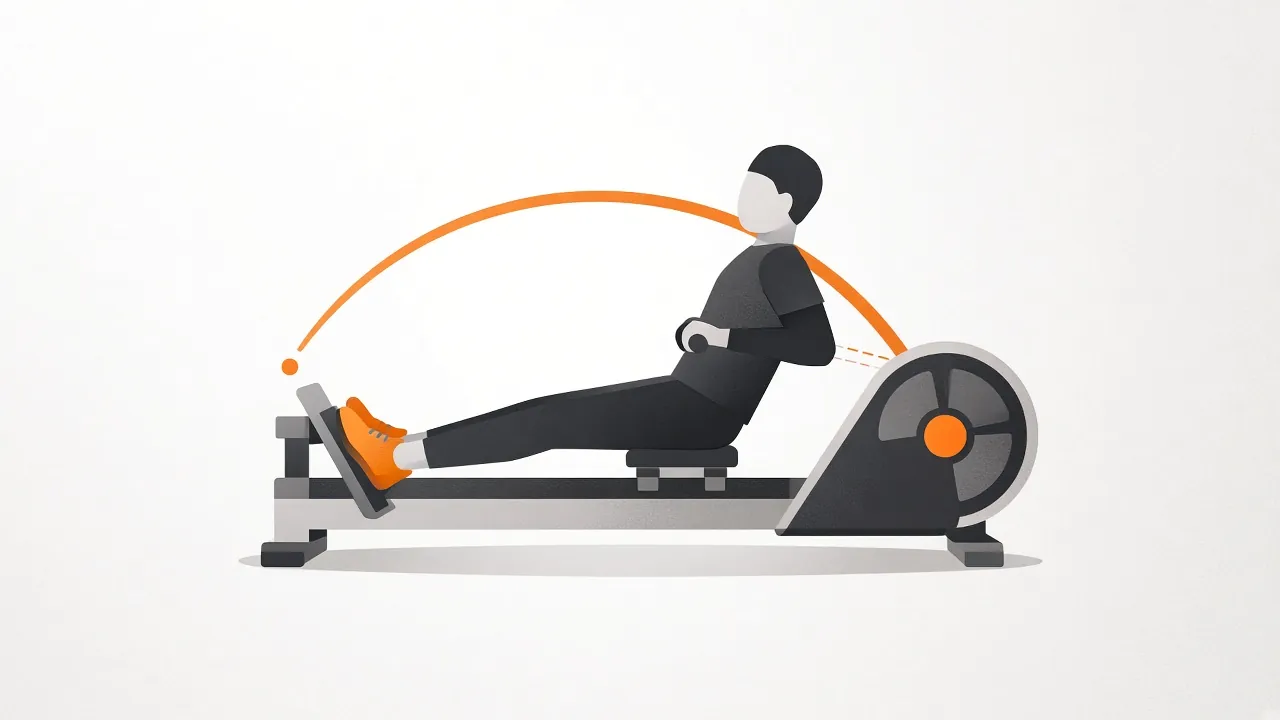
Key takeaways
- Steady rowing sits at 18–24 strokes a minute and racing at 28–36, and the split is the time per 500 m, where lower is faster.
- Power relates to split cubically, so twice the speed takes about 8 times the power.
- A 2,000 m test anchors training paces: fit recreational men row 7:00–7:30 and women 8:00–8:30, while competitive club rowers row 6:20–6:50 and 7:10–7:40.
- The drive is about 60 % legs, 20 % trunk and 20 % arms, with a damper of usually 3–5, because a very high damper feels heavier but often makes you slower and stresses the lower back.
The Concept2 RowErg is the global standard; its Performance Monitor (PM5) reports split (time per 500 m), stroke rate (strokes per minute, spm) and watts. Results sync to the Concept2 Logbook.
Key numbers
| Metric | Meaning |
|---|---|
| Split /500 m | Pace; lower is faster |
| Stroke rate (spm) | 18–24 for steady work, 28–36 for racing |
| Watts | Power; relates to split cubically (2× speed ≈ 8× power) |
| Drag factor | Feel of the flywheel; ~110–130 for most people |
Technique: the stroke sequence
- Catch: shins vertical, arms straight, slight forward lean.
- Drive: legs → body → arms (≈ 60 % legs, 20 % trunk, 20 % arms).
- Finish: handle to lower ribs, slight lean back.
- Recovery: arms → body → legs, slower than the drive (ratio ~1:2).
Common errors: bending the knees before the arms are extended on recovery, "shooting the slide" (legs push but handle doesn't move), and too high a damper setting.
The 2k test
The 2,000 m time trial is rowing's benchmark. Typical pacing: start slightly faster for 10–15 strokes, settle into target split, hold through the middle 1,000 m, and sprint the last 250–500 m.
| Level | Men 2k | Women 2k |
|---|---|---|
| Beginner | 8:00+ | 9:00+ |
| Fit recreational | 7:00–7:30 | 8:00–8:30 |
| Competitive club | 6:20–6:50 | 7:10–7:40 |
| Elite heavyweight | < 5:50 | < 6:30 |
Sample sessions
- Steady: 30–60 min at 18–22 spm, conversational (zone 2).
- Intervals: 4 × 1,000 m at 2k pace + 4–6 s/500 m, 4 min rest.
- Pyramid: 250–500–750–1,000–750–500–250 m with equal rest.
In MoveVitals
Workouts from the Concept2 Logbook sync automatically, including splits and heart rate when recorded with a strap.
Worked example
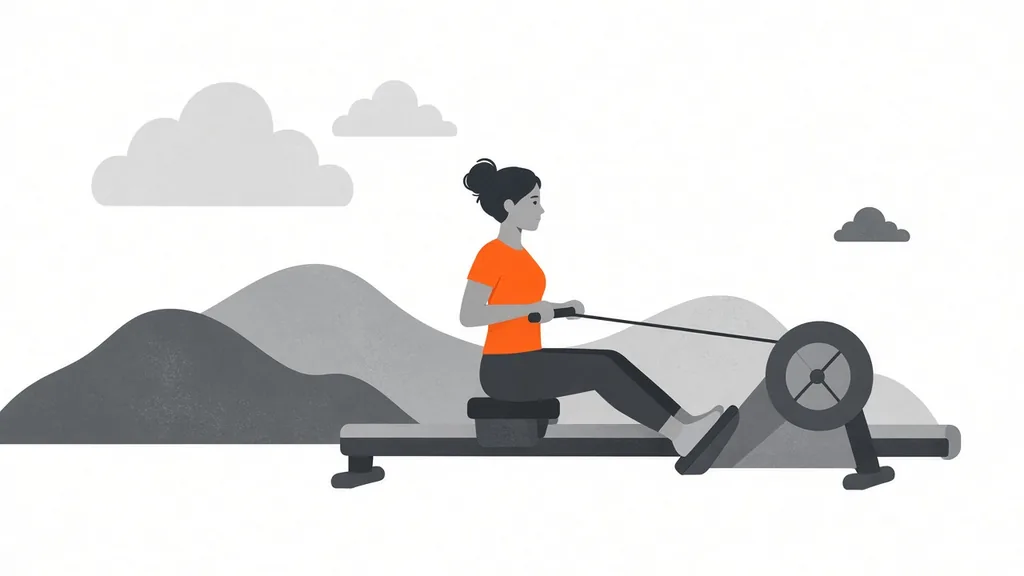
Illustrative scenario. Dan rows a 2k test in 7:40, an average split of 1:55/500 m. He sets training paces from it: steady rows at about 2:10–2:15/500 m (around 20 strokes per minute), threshold pieces like 3 × 10 min at about 2:02–2:05, and short intervals such as 8 × 500 m at roughly 1:52 with 2-min rests. He keeps the damper around 4–5 rather than 10, focusing on the legs–body–arms sequence. Eight weeks later he retests at 7:31 (1:52.8/500 m).
Action steps
- Learn the sequence: legs, then body, then arms; reverse on the recovery.
- Set the damper around 3–5 (drag factor ~110–130) for most people.
- Do a 2k test to anchor your training paces.
- Mix steady rows (about 15+ s/500 m slower than 2k pace) with intervals.
- Sync your rower (e.g., Concept2 Logbook) to track splits over time.
Related guides
- Concept2 Logbook and MoveVitals: RowErg, SkiErg and BikeErg sessions
- Cross-training: building fitness while sparing your joints
- Zone 2 training: the science and how to do it right
- Interval training and HIIT: designing sessions that work
- HYROX training: stations, run splits and how to use your watch on race day
- Stand-up paddling and kayaking: stroke rate, heart rate and calories
FAQ
What damper setting? Usually 3–5. Higher isn't harder training — it's heavier gearing.
Is rowing good for runners? Yes, as low-impact cross-training.
Does a higher damper mean a better workout? No; a very high damper feels heavier but often makes you slower and stresses the lower back.
Is rowing good cross-training for runners? Yes, it builds aerobic fitness with low impact and works the posterior chain and upper body.
What heart rate should steady rows be at? Similar to other easy aerobic work — conversational, roughly zone 2.
References
- Seiler (2010). What is Best Practice for Training Intensity and Duration Distribution in Endurance Athletes?. International Journal of Sports Physiology and Performance. https://doi.org/10.1123/ijspp.5.3.276
- Buchheit et al. (2013). High-Intensity Interval Training, Solutions to the Programming Puzzle. Sports Medicine. https://doi.org/10.1007/s40279-013-0029-x
For general information only. This is not medical advice — talk to a qualified professional about your health.
Keep reading
Training science
Zone 2 training: the science and how to do it right
4 min read
Training science
Polarized training (80/20): easy most of the time, hard some of the time
4 min read
Sports
Japanese interval walking: the 3-minute fast / 3-minute slow method, step by step
8 min read
Training science
Interval training and HIIT: designing sessions that work
4 min read
Sports
Trail running with a watch: heart rate, climbs and pacing by effort
7 min read
Sports
Walking for fitness and weight loss: pace, heart rate zones and how much is enough
9 min read