

Training science
RPE (rate of perceived exertion): the sensor you always carry
RPE is how hard an effort feels on a simple scale. It's free, always available and, with practice, surprisingly accurate.
Written by MoveVitals Editorial Collective
Community-authored educational content. Individual clinical review is identified only when a named review is actually recorded.
Editorial standards & corrections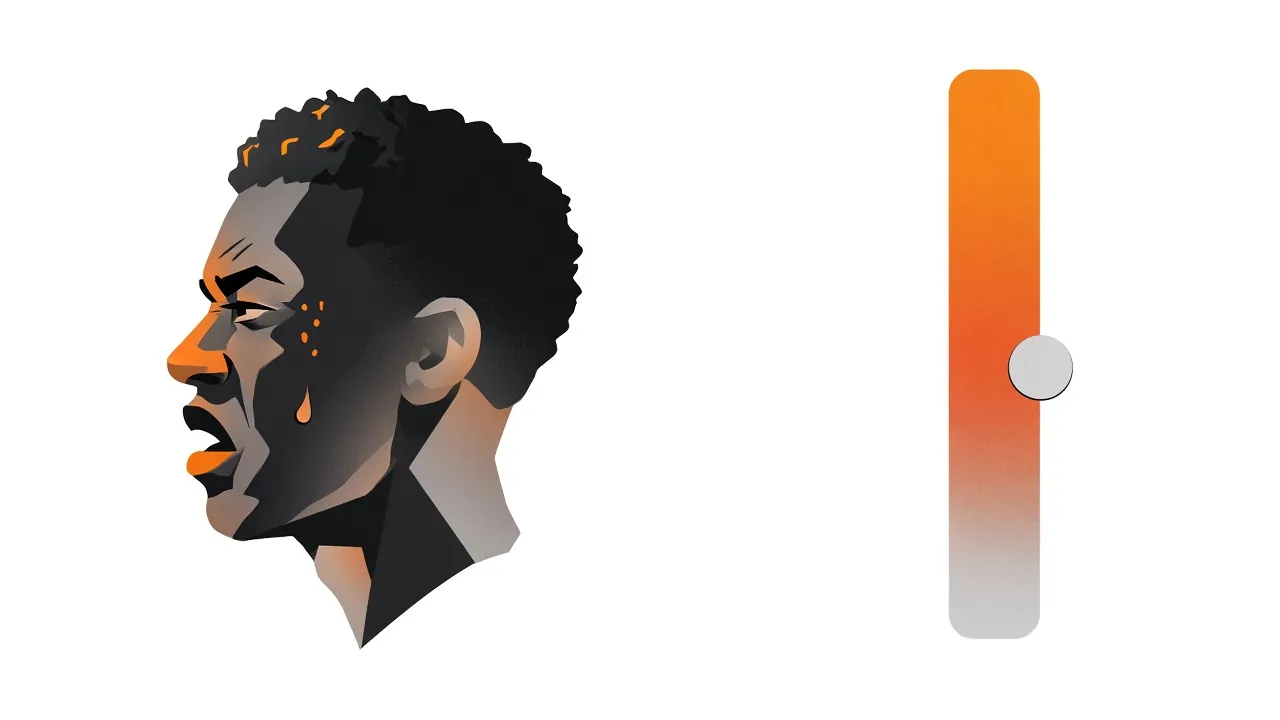
Key takeaways
- On the 0–10 scale, RPE 3–4 is easy, with full sentences, around zone 2, RPE 7–8 is hard, with only a few words, around threshold, and RPE 10 is maximal.
- Session load is RPE multiplied by duration, so 60 minutes at RPE 6 gives 360 arbitrary units; keep week-to-week increases to roughly 10–20% or less.
- Rate each session about 30 minutes after finishing, and on easy days keep RPE at 4 or below regardless of what the watch says.
- Borg's original 6–20 scale roughly tracks heart rate ÷ 10, and the same power feeling harder points to fatigue.
Rate of perceived exertion (RPE) rates effort subjectively. The modern 0–10 scale (CR-10) is the most practical:
| RPE | Feel | Talk test | Typical zone |
|---|---|---|---|
| 1–2 | Very easy | Full conversation | Recovery |
| 3–4 | Easy | Sentences | Zone 2 |
| 5–6 | Moderate / steady | Short sentences | Tempo |
| 7–8 | Hard | A few words | Threshold |
| 9 | Very hard | Single words | VO2 max |
| 10 | Maximal | None | Sprint |
Why RPE still matters with all the sensors
- It integrates everything: heat, sleep, stress, nutrition and fatigue.
- It works for strength, team sports and swimming, where heart rate is less useful.
- It helps catch problems: if a usual pace suddenly feels like RPE 8, something is off.
Session RPE for load
Multiply RPE (0–10) by session duration in minutes: 60 min at RPE 6 = 360 arbitrary units. Coaches use this "sRPE" to track training load across all sports, including lifting.
Using RPE well
- Rate the session about 30 minutes after finishing.
- Compare RPE with heart rate or power: same power feeling harder → fatigue.
- On easy days, keep RPE ≤ 4 regardless of what the watch says.
Worked example

Worked example (session RPE). Using the method of Foster et al. (2001), training load = session RPE (0–10) × duration in minutes. In this illustrative week: Monday 45-min easy run at RPE 3 = 135; Wednesday 60-min interval session at RPE 7 = 420; Friday 40-min strength at RPE 6 = 240; Sunday 100-min long run at RPE 4 = 400. Weekly load = 1,195 arbitrary units. If next week jumps to 1,700 (+42%), she knows the increase is steep. On a hot day her easy run felt like RPE 5 at the usual pace, so she slowed down — RPE captured heat stress that pace alone missed.
Action steps
- Rate each session 0–10 about 30 minutes after finishing.
- Multiply by duration to get session load; sum weekly.
- Keep week-to-week load increases moderate (roughly ≤10–20%).
- Compare RPE with heart rate and pace: rising RPE at the same pace signals fatigue.
- Use RPE to adjust on hot, hilly or high-altitude days.
Related guides
- Training load explained: TRIMP, TSS, strain and relative effort
- Heart rate zones explained: how to set and use them
- Progressive overload: the principle behind every improvement
- WHOOP Strain: how the 0–21 scale works
FAQ
Isn't RPE too subjective? It's personal, but consistent within a person once practised.
What about the 6–20 Borg scale? Also valid; ratings roughly match heart rate ÷ 10.
What's the difference between the 6–20 and 0–10 scales? Borg's original 6–20 scale roughly tracks heart rate ÷ 10; the CR-10 (0–10) scale is simpler and used for session RPE.
Is RPE reliable for beginners? It improves with practice; anchoring it to the talk test helps at first.
Can RPE replace a heart rate monitor? For many purposes yes, and it works without devices; combining both gives the most information.
References
- Borg (1982). Psychophysical bases of perceived exertion. Medicine & Science in Sports & Exercise. https://doi.org/10.1249/00005768-198205000-00012
- Foster et al. (2001). A New Approach to Monitoring Exercise Training. The Journal of Strength and Conditioning Research. https://doi.org/10.1519/1533-4287%282001%29015%3C0109:anatme%3E2.0.co;2
- Halson (2014). Monitoring Training Load to Understand Fatigue in Athletes. Sports Medicine. https://doi.org/10.1007/s40279-014-0253-z
For general information only. This is not medical advice — talk to a qualified professional about your health.
Keep reading
Training science
Zone 2 training: the science and how to do it right
4 min read
Training science
Polarized training (80/20): easy most of the time, hard some of the time
4 min read
Sports
Japanese interval walking: the 3-minute fast / 3-minute slow method, step by step
8 min read
Training science
Interval training and HIIT: designing sessions that work
4 min read
Sports
Trail running with a watch: heart rate, climbs and pacing by effort
7 min read
Devices & setup
WHOOP and MoveVitals: what syncs and how to get the most from it
3 min read