

Training science
Cadence drills for cyclists and runners
Short, focused drills improve pedalling smoothness and running rhythm. Add them to easy sessions a couple of times a week.
Written by MoveVitals Editorial Collective
Community-authored educational content. Individual clinical review is identified only when a named review is actually recorded.
Editorial standards & corrections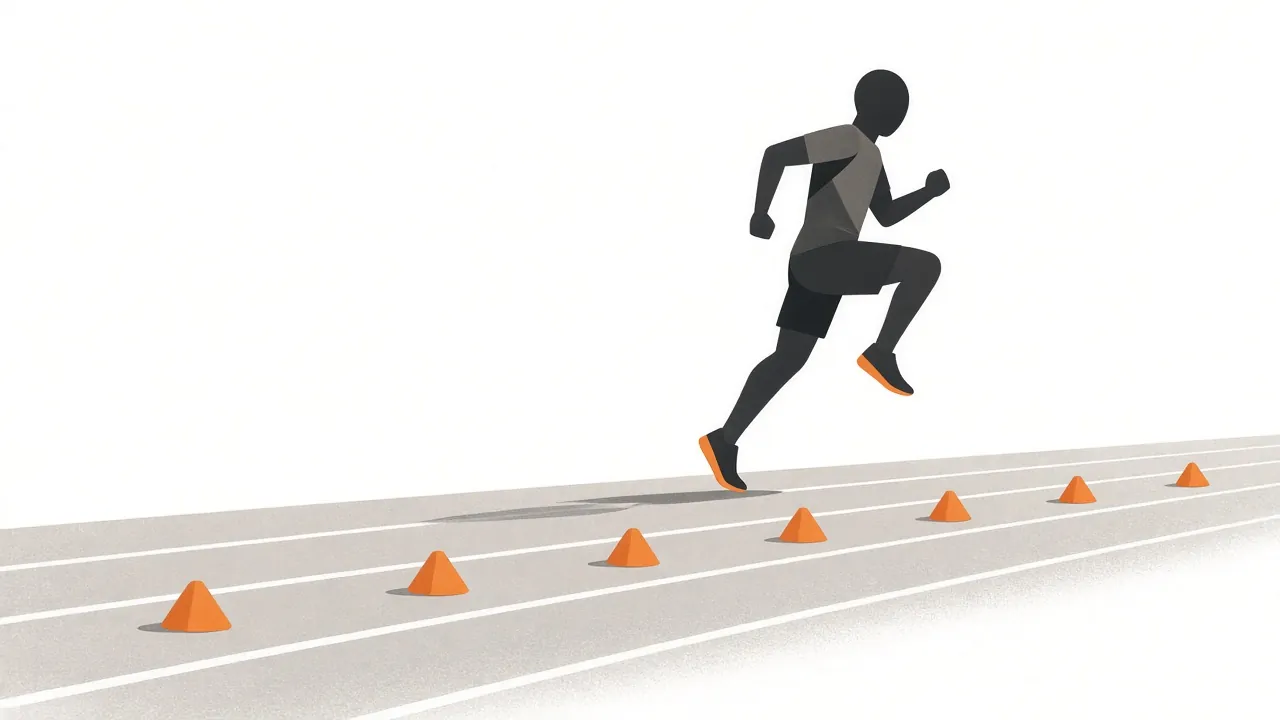
Key takeaways
- A cadence ladder of 2 minutes each at 80, 90, 100 and 110 rpm builds range and control on the bike.
- Low-cadence strength work is 4 × 5 minutes at 55–65 rpm at tempo power, seated, and it builds torque and climbing strength.
- For running, add 4–6 × 20-second strides after easy runs twice a week, or use a metronome 5–10% above your current cadence.
- Bouncing on the saddle marks your current cadence limit, so stay just below it and it will rise; check progress after 4–6 weeks.
Good cadence is less about hitting a number and more about being comfortable across a range. These drills widen that range.
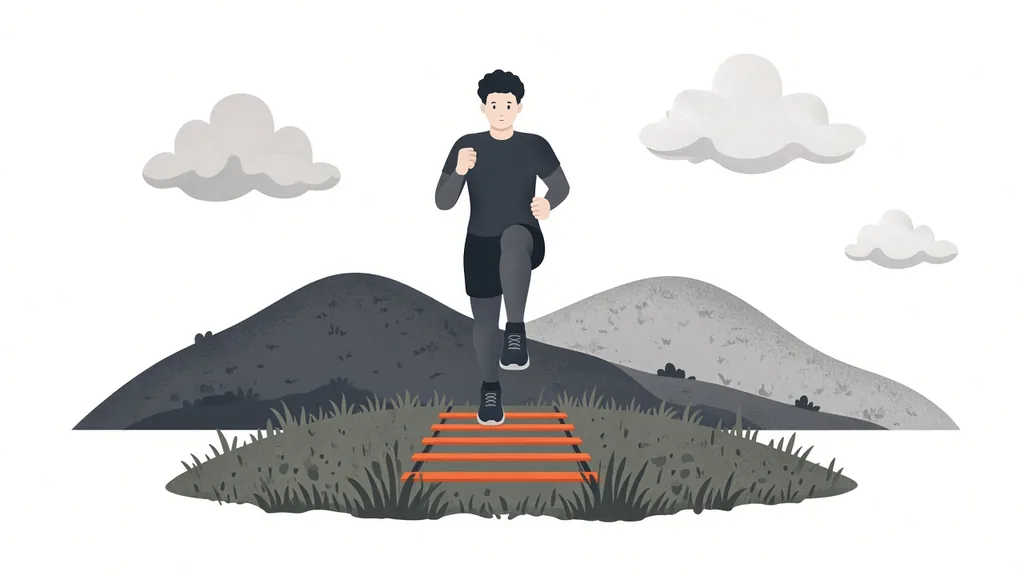
Cycling drills
| Drill | How | Purpose |
|---|---|---|
| Spin-ups | Over 30–45 s, increase cadence to the highest you can hold without bouncing, then ease off. 4–6 reps | Neuromuscular smoothness |
| High-cadence blocks | 5 × 2 min at 105–115 rpm, low power | Efficiency at high rpm |
| Low-cadence strength | 4 × 5 min at 55–65 rpm, tempo power, seated | Torque, climbing strength |
| Single-leg pedalling | 4 × 30 s per leg on a trainer, other foot resting | Remove dead spots |
| Cadence ladder | 2 min each at 80, 90, 100, 110 rpm | Range and control |
A smart trainer like the Magene T600 in ERG mode holds power constant while you vary cadence — perfect for these drills.
Running drills
| Drill | How | Purpose |
|---|---|---|
| Strides | 4–6 × 20 s relaxed acceleration to ~mile pace | Speed, form |
| Metronome runs | 3 × 3 min at +5 % of normal cadence | Gradual cadence increase |
| Quick feet | 3 × 15 s very fast short steps | Turnover |
| A-skips and B-skips | 2 × 20 m each | Coordination |
| Downhill strides | 4 × 15 s on a gentle slope | Leg speed |
How to fit them in
Do them after a warm-up or at the end of an easy session, 1–3 times a week. Keep them short and crisp — they shouldn't cause fatigue.
Worked example
Illustrative scenario. Omar runs at about 160 spm and often feels like he is over-striding. Twice a week, after an easy run, he does 4 × 20 seconds of quick-feet drills, then 4 × 20-second strides with a metronome set to 168 spm — a 5% increase, the range Heiderscheit and colleagues found reduced loading at the knee and hip. On the bike he adds 5 × 1-minute spin-ups from 90 to 110 rpm without bouncing in the saddle. After six weeks his easy-run cadence averages 166 spm without consciously thinking about it, and his smooth-pedalling range has widened.
Action steps
- Measure your current easy-run cadence or cycling cadence over a few sessions.
- Running: add 4–6 × 20-second strides or quick-feet drills after easy runs, twice a week.
- Use a metronome at 5–10% above your current running cadence.
- Cycling: do 4–6 × 1-minute spin-ups, raising rpm until just before you bounce.
- Check progress after 4–6 weeks and only increase targets if form stays relaxed.
Related guides
- Cadence in running and cycling: is there an ideal number?
- Running dynamics: ground contact time, vertical oscillation and stride length
- Injury prevention for runners: load, strength and listening early
- The ideal warm-up: raise, activate, mobilise, potentiate
FAQ
Will high-cadence drills make me faster? Indirectly — they improve skill and comfort, which helps in races.
I bounce on the saddle at 110 rpm. That's your current limit; stay just below it and it will rise.
How often should I do cadence drills? Two short sessions a week are enough; they are skill work, so do them fresh rather than at the end of hard training.
Do I need a footpod or cadence sensor? Most GPS watches estimate running cadence from the wrist; a cycling cadence sensor or power meter is the reliable option on the bike.
References
- Heiderscheit et al. (2011). Effects of Step Rate Manipulation on Joint Mechanics during Running. Medicine & Science in Sports & Exercise. https://doi.org/10.1249/mss.0b013e3181ebedf4
For general information only. This is not medical advice — talk to a qualified professional about your health.
Keep reading
Training science
Zone 2 training: the science and how to do it right
4 min read
Devices & setup
Strava and MoveVitals: workouts, streams and devices that arrive via Strava
3 min read
Training science
Interval training and HIIT: designing sessions that work
4 min read
Training science
Sweet spot and threshold training: raising your FTP
3 min read
Mobility & stretching
Mobility vs flexibility: what's the difference and what do you need?
3 min read
Training science
Polarized training (80/20): easy most of the time, hard some of the time
4 min read