

Sports
Open-water swimming with a watch: GPS tracks, sighting, cold water and safety
A watch can record an open-water swim, but its GPS track is a noisy sketch and the distance it shows is usually longer than your course. Here is how to read it, sight and draft well, handle cold water and stay safe, including how to pace a triathlon swim.
Written by MoveVitals Editorial Collective
Community-authored educational content. Individual clinical review is identified only when a named review is actually recorded.
Editorial standards & corrections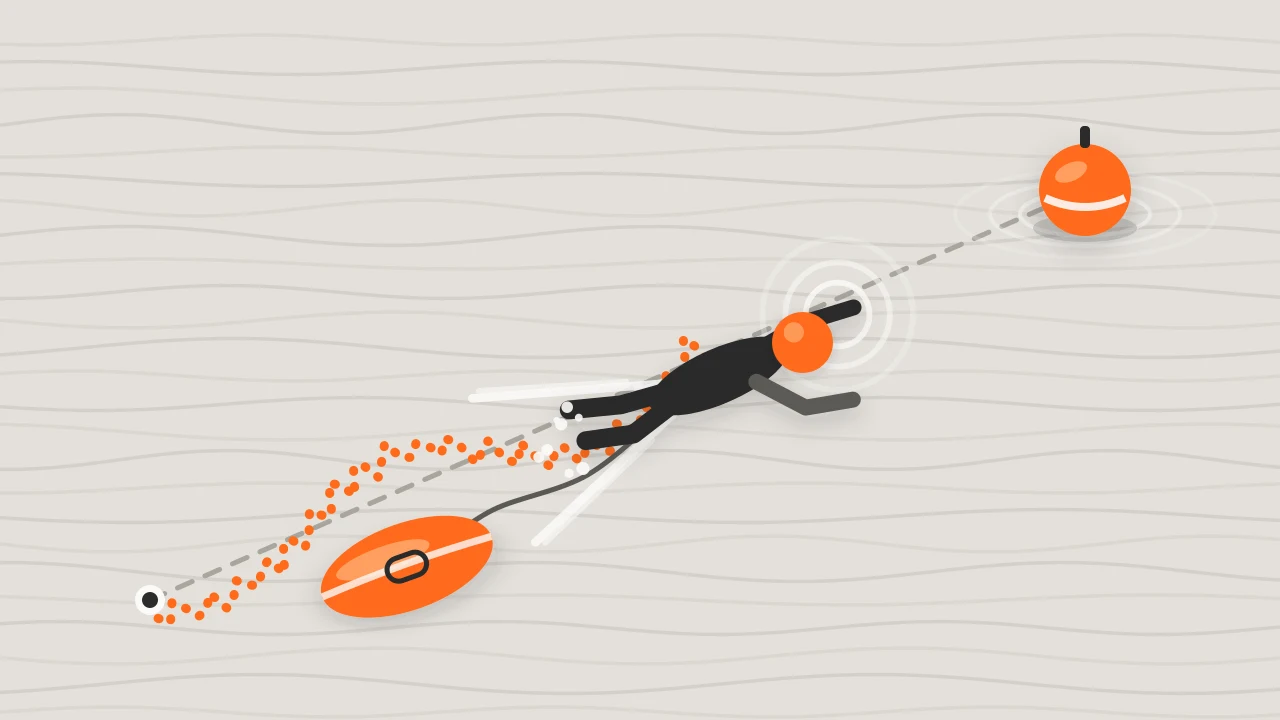
Key takeaways
- GPS only fixes a position when the wrist is out of the water, so the track is jagged; judge a swim by buoy-to-buoy distance divided by time.
- Water below about 15 °C can trigger cold shock in the first minutes, so enter slowly, settle your breathing and cap your first cold swims at 10–15 minutes.
- Sight every 6–10 strokes and draft on another swimmer's feet or hip, because a straighter line saves more than extra effort.
- Wrist SpO2 and heart rate are unreliable in cold water and a watch cannot call for help, so never swim alone, and ask your doctor before cold-water swimming with a heart condition or high blood pressure.
How a watch tracks an open-water swim
GPS signals do not pass through water, so the watch can only record a position when the antenna on your wrist is out of the water, usually during arm recovery, and it fills the gaps by smoothing. The result is a join-the-dots track rather than a precise path.
| Reading | How it is measured | How far to trust it |
|---|---|---|
| Track and distance | GPS fixes when the wrist is out of the water, then smoothed | Often within a few percent on a calm, straight swim; worse in chop, near cliffs, trees or buildings, or with a loose watch |
| Pace per 100 m | Distance over the ground divided by time | Currents and drift change it: with the current behind you the pace looks fast |
| Stroke rate | Wrist accelerometer | Usually reasonable; stroke count and SWOLF are mainly pool metrics |
| Heart rate (wrist) | Optical sensor | Often patchy in water, with cold skin and wrist angles; a strap or armband that records to memory is steadier, see swimming heart rate |
Wait for a GPS lock before you enter the water, choose the open-water mode rather than the pool mode, and wear the watch snugly. Some swimmers wear it under the swim cap for steadier GPS, at the cost of wrist heart rate.
Reading the numbers: why the watch reads long
The wobble and your veering both add distance. Without sighting most swimmers drift toward their stronger side, and GPS noise adds more. On a 1,500 m course a watch that shows 1.64 km is 140 m, or about 9 %, long. The same smoothing issues affect running GPS, see running pace.
Open-water pace is usually slower than pool pace for the same effort: there are no walls to push off, you stop to sight, and chop and crowds slow you. A wetsuit gives a few percent back through buoyancy, more for weaker swimmers. For pacing, use buoy-to-buoy distance divided by time (the course pace) and use the GPS track to see where you veered, not to judge speed.
Sighting and drafting
- Sighting: at the end of a breath, lift your eyes just clear of the water, look ahead, then roll to breathe. Choose a landmark behind the buoy, such as a tree or a building, because buoys are low and hard to see in chop. Sight every 6–10 strokes, more often in waves or near a turn. Practise in the pool with an eyes-up drill.
- Drafting: swimming close behind or beside the hip of another swimmer reduces the drag you push through, and studies show the effort needed at a given speed falls (Chatard and Wilson, 2003). Do not grab feet, and keep sighting yourself, since the swimmer ahead can swim off line.
Cold water, heart rate and SpO2
Water below about 15 °C (59 °F) can trigger cold shock: gasping, rapid breathing and a sharp rise in heart rate and blood pressure during the first minutes. Over roughly the next half hour the arms and hands lose strength and coordination, and only later does the body core cool enough to cause hypothermia (Tipton et al., 2017). For the evidence on cold exposure see cold water immersion.
- Enter slowly. Wade in, splash your neck and face, and let your breathing settle for a few minutes before you swim.
- Heart rate on entry can spike for a minute or two, and wrist readings may drop out as cold skin reduces blood flow at the wrist. In warm water, a wetsuit can overheat you and raise heart rate.
- SpO2 from a wrist watch is not a safety tool: cold, wet skin makes optical readings unreliable and many watches do not read it in the water. A low number after a cold swim often reflects cold skin, but if you feel unwell, act on symptoms, not a number (see blood oxygen).
If you have a heart condition, high blood pressure or take medicines that affect your heart or blood pressure, ask your doctor before cold-water swimming. Get out and seek help for chest pain, dizziness, fainting, palpitations, confusion or uncontrolled shivering.
Safety rules
- Never swim alone: use a buddy or a group, and tell someone ashore your route and time.
- Wear a bright cap and tow a bright float you can rest on.
- Check the conditions: waves, wind, current, boat traffic and any water-quality notices.
- Swim parallel to the shore, near exits, rather than straight out.
- Cap your first swims in cold water at 10–15 minutes and leave early if your hands go numb or you shiver hard.
- Warm up gradually afterwards with dry layers and a warm drink.
A watch can show where you swam, but it cannot call for help. It is not a safety device.
Triathlon swim pacing and a training week
Start controlled: for the first 100–200 m swim at a steady, slightly easier pace than you plan to hold, find clear water or feet to draft, and settle into a rhythm. Many age-groupers aim for about their pool CSS pace, or a few seconds per 100 m slower, adjusted for wetsuit, chop and crowds. Leave the water with energy to ride; see brick workouts and the triathlon training plan.
| Session | Where | Focus |
|---|---|---|
| Technique and threshold | Pool | CSS sets, drills and pacing |
| Open-water skills | Lake or sea, with others | Sighting, drafting, entries and exits, wetsuit practice |
| Steady swim | Pool or open water | 20–40 minutes continuous without walls |
Common mistakes
- Trusting the watch's pace and distance without checking the buoy-to-buoy course.
- Sighting too rarely, or lifting the whole head and sinking your hips.
- Starting a race at full speed in the crowd.
- Ignoring cold shock: diving in or going straight to full effort.
In MoveVitals
Swims recorded on Garmin, Polar, COROS, Suunto or WHOOP watches, or relayed by Strava (Apple Watch swims arrive via Strava), are recognised as swims, pool and open water together. MoveVitals keeps duration, distance and heart rate as the source provides them, and the same swim sent by two providers is merged when the recordings overlap by at least half of the shorter one. For the route itself, your watch app or Strava is still the best place to look; MoveVitals adds context such as time in heart-rate zone and how the swim sits beside your sleep, HRV and weekly load.
Worked example
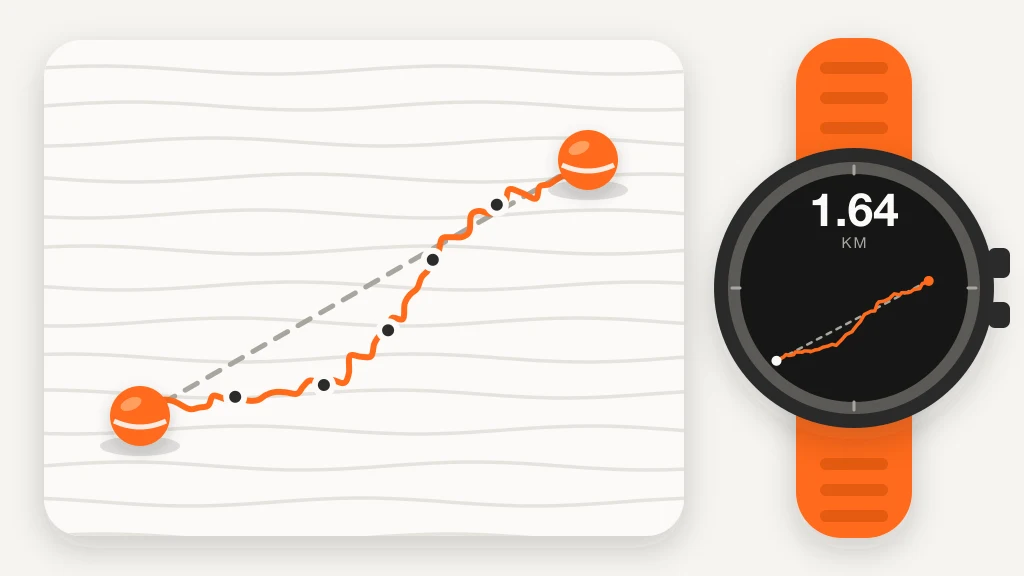
Illustrative scenario. Sam has a pool CSS of 1:35 per 100 m and plans a 1,500 m wetsuit race. On a practice swim over a 1,500 m buoy course, his watch shows 1.64 km in 26:20, which looks like 1:36 per 100 m. Over the buoy course it is 26:20 ÷ 15 = 1:45 per 100 m, and 140 m, about 9 %, was wobble and veering. Entering 16 °C water, his wrist heart rate jumps to about 150 bpm in the first minute although he is only standing in it, so he now waits a few minutes to breathe slowly before starting. After two weeks of sighting every 8–10 strokes, the watch shows 1.56 km in 25:00: 1:36 on the watch, but 1:40 over the course, with 60 m extra. His race plan is 1:38–1:40 per 100 m, a controlled first 200 m and a tow float on every training swim. Figures are illustrative.
Action steps
- Start the GPS and let it lock before you enter the water, and choose open-water mode.
- Judge each swim by buoy-to-buoy distance divided by time, and use the track to see where you veered.
- Practise sighting every 6–10 strokes, then add drafting and group starts with others.
- Enter cold water slowly, settle your breathing, build up over weeks and never swim alone, with a bright float.
- For triathlon, set pace from your pool CSS plus a few seconds, and start the swim controlled.
Related guides
- Swim pace per 100 m, CSS and SWOLF: reading your pool data
- Heart rate in swimming: why it runs lower, zones in the pool and wrist-sensor accuracy
- Triathlon training plan: sprint to 70.3, balancing swim, bike and run load
- Brick workouts: training the bike-to-run transition
- Cold water immersion and ice baths: what the evidence says
- Surfing with a watch: wave counts, paddling load and heart rate
FAQ
How accurate is a watch's GPS in open water? Often within a few percent on a calm, straight swim, but it only gets a position when your wrist is out of the water, so the track is jagged and the distance usually reads long. It is worse in chop and near trees, cliffs or buildings.
Do I need a wetsuit for open-water swimming? Many swimmers wear one when the water is cooler than roughly 18–20 °C, for warmth and buoyancy, and events set their own rules on when they are allowed or required. Check the rules of your event, and practise in the suit.
How cold is too cold? There is no single safe number. Below about 15 °C (59 °F) cold shock is a real risk, so acclimatise gradually, keep swims short, swim with others and a float, and get out early if you feel numb or shivering hard.
Is it safe to swim open water alone if my watch tracks me? No. A watch records where you were but cannot raise an alarm or help you. Swim with a buddy or group, and use a bright tow float.
References
- Tipton et al. (2017). Cold water immersion: kill or cure? Experimental Physiology. https://doi.org/10.1113/EP086283
- Chatard and Wilson (2003). Drafting Distance in Swimming. Medicine & Science in Sports & Exercise. https://doi.org/10.1249/01.MSS.0000074564.06106.1F
For general information only. This is not medical advice — talk to a qualified professional about your health.
Keep reading
Devices & setup
How MoveVitals handles multiple devices: provenance, duplicates and conflicts
5 min read
Metrics explained
Resting heart rate: normal ranges and what changes it
4 min read
Devices & setup
Strava and MoveVitals: workouts, streams and devices that arrive via Strava
3 min read
Sports
Hiking and trekking: heart rate on climbs, pacing and how to train for it
8 min read
Metrics explained
VO2 max: what it means and how to improve it
4 min read
Metrics explained
Heart rate zones explained: how to set and use them
4 min read