

Sports
Pilates and your wearable: why calories look low and what to track instead
Pilates calories burned look low on a watch because the work is slow and controlled, keeps heart rate modest and is hard for wrist sensors to read. This guide explains why, how to get a cleaner reading and what to track instead of calories.
Written by MoveVitals Editorial Collective
Community-authored educational content. Individual clinical review is identified only when a named review is actually recorded.
Editorial standards & corrections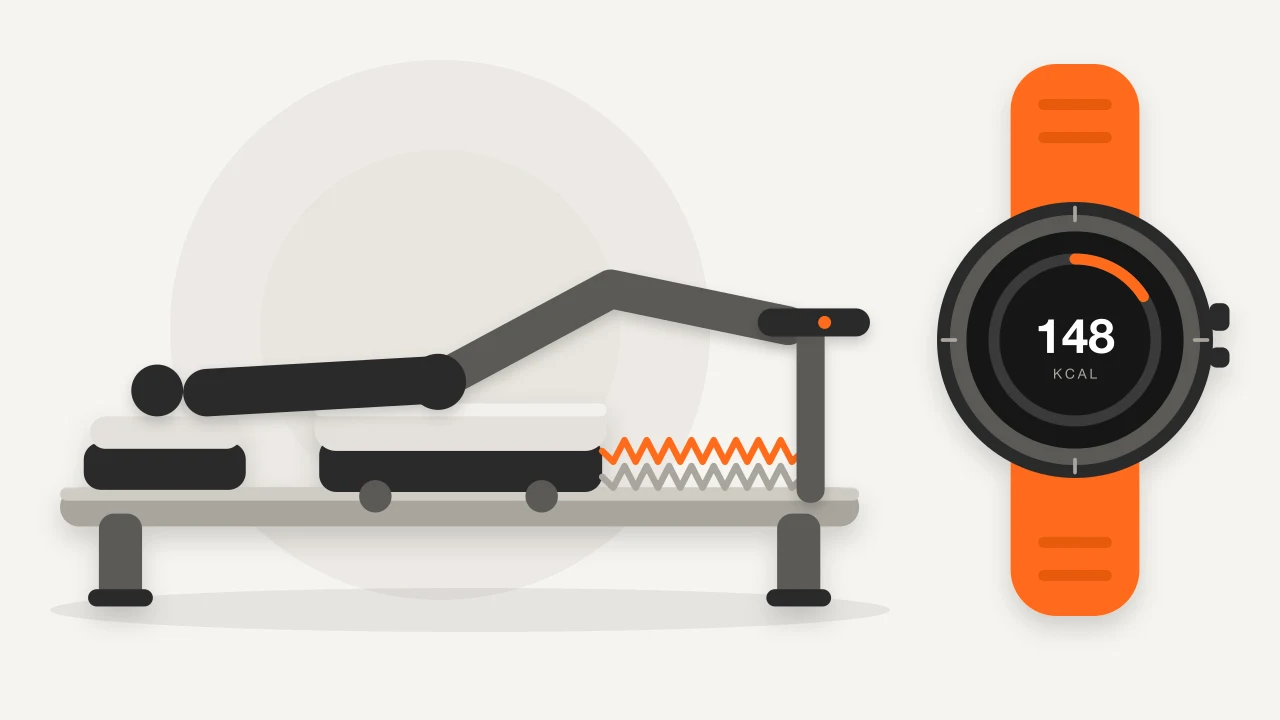
Key takeaways
- General Pilates is rated at about 3.0 METs, a little below a 4.8 km/h walk, or about 150–225 kcal for a 50-minute class at 60–90 kg.
- Heart rate in many Pilates classes sits around 50–70 % of maximum with short rises during planks or jump-board work.
- Gripping straps and bearing weight on your hands shift the watch on the skin, so choose a Pilates or yoga profile and wear it snug, clear of straps and handles.
- Track 2–3 sessions a week, minutes, an RPE note and strength markers such as plank hold, retested every 4–6 weeks, and add aerobic work, because Pilates does not replace it.
Pilates builds strength through slow, precise movement: spring-loaded leg presses on a reformer, controlled roll-ups on the mat, holds that last several breaths. That is real muscular work with little oxygen demand compared with running or cycling, and that gap is exactly where wearables go wrong.
Why Pilates under-registers
- Pilates heart rate stays low and flat. In many classes it sits somewhere around 50–70 % of maximum, with short rises during planks or jump-board work. Calorie models that lean on heart rate read this as light activity.
- The wrist sees little movement. You are lying, kneeling or sitting, so motion-based models credit few steps and few big arm swings.
- Sensors get disturbed. Gripping straps, bearing weight on your hands and flexing the wrist tighten the tendons under the sensor and shift the watch on the skin, so optical readings can lag or drop out — see wearable heart rate accuracy.
- The reference tables agree it is modest. The Compendium of Physical Activities lists general Pilates at about 3.0 METs, a little below a 4.8 km/h (3 mph) walk.
Energy is roughly MET × body weight (kg) × hours:
| Body weight | General Pilates (3.0 METs), per hour | A 50-minute class |
|---|---|---|
| 60 kg | ~180 kcal | ~150 kcal |
| 75 kg | ~225 kcal | ~190 kcal |
| 90 kg | ~270 kcal | ~225 kcal |
There is no standard value for reformer Pilates calories in fast, circuit-style classes with a jump board. They are harder, so expect somewhat more, with wide variation between people. The full table for other activities is in calories burned by activity.
What to track instead of calories
| Look at | Why it works | Where it comes from |
|---|---|---|
| Sessions per week | Consistency drives results | Workout count on your watch or app |
| Minutes | Total time spent moving with control | Workout duration |
| Effort (RPE, 1–10) | Captures what a wrist cannot — see RPE | A one-line note after class |
| Average heart rate | Context only; a wrist is fine for averages, not peaks | Watch or strap |
| Strength markers | Plank hold, single-leg balance, spring load, controlled reps | Your notebook, every 4–6 weeks |
| Resting heart rate, HRV, sleep | Whole-body recovery rather than the class itself | Watch or ring overnight |
Pilates on an Apple Watch and other watches: getting a cleaner reading
- Choose the right profile. Apple Watch, Garmin, Polar, COROS, Suunto and others offer Pilates or yoga-type profiles; use one instead of "Other" or a running profile. Heart rate is recorded either way, but the profile changes how effort is modelled.
- Fit. Wear the watch snug, one to two finger widths above the wrist bone, and keep the sensor away from straps and handles. A watch that slides during planks gives a ragged trace.
- Keep your profile current. Calorie models lean on age, height and weight.
- Use a chest strap only if heart rate matters to you. An ECG-type strap such as the Polar H10 follows each beat, but for Pilates the average is usually enough.
- Treat energy as a rough guide. Compare your own classes with each other; do not compare your watch with a friend's.
What Pilates adds
Pilates trains the trunk, hips and shoulders through a full, controlled range, with breathing and posture as part of the exercise. The springs on a reformer let you adjust load gradually. A Cochrane review found low-to-moderate quality evidence that Pilates reduces pain in chronic non-specific low back pain compared with minimal care, and about the same effect as other exercise; it is not a treatment plan, so talk to a clinician about persistent pain. For the principles behind it, see core stability training.
It does not replace aerobic work. WHO guidelines suggest 150–300 minutes of moderate activity a week and muscle strengthening on two or more days, so pair classes with walking, cycling or easy zone 2 sessions and some progressive strength work (strength training for endurance athletes).
Pilates vs yoga? Pilates leans toward controlled trunk and hip strength, often with spring resistance; yoga toward flexibility, balance and breath across postures (yoga and your wearable). Both rate low on wrists (yoga about 2.5 METs), and the difference between them is flexibility versus strength, not calories — see mobility vs flexibility.
How often, and what to expect
Two to three sessions of 45–60 minutes a week is a common, sustainable pattern for beginners; start with one or two if the movements are new, and leave a day or two of easier activity between classes if you are sore. Most people notice better control and posture within a few weeks, and slower changes in body composition over months. Fat loss depends on overall energy balance, food, sleep and daily activity, not on Pilates calories, so do not expect a fixed timetable.
Common mistakes
- Judging a class by its calorie total.
- Recording it as a run or HIIT session to "get more calories".
- Never changing the springs, holds or repetitions, so the work stops being a stimulus.
- Doing only Pilates and skipping aerobic and heavier strength work.
In MoveVitals
Pilates and yoga-type sessions from Apple Health, Garmin, COROS, Polar, Suunto, Strava and WHOOP arrive with duration, heart rate and energy where the device recorded them; MoveVitals groups them under its yoga sport type. If a watch and another app recorded the same class, the duplicate is merged and fields are chosen by your priorities, for example heart rate from a strap and energy from the watch (how conflicts are resolved). Use the weekly view for session count and minutes, and read the energy figure as a device estimate.
Worked example
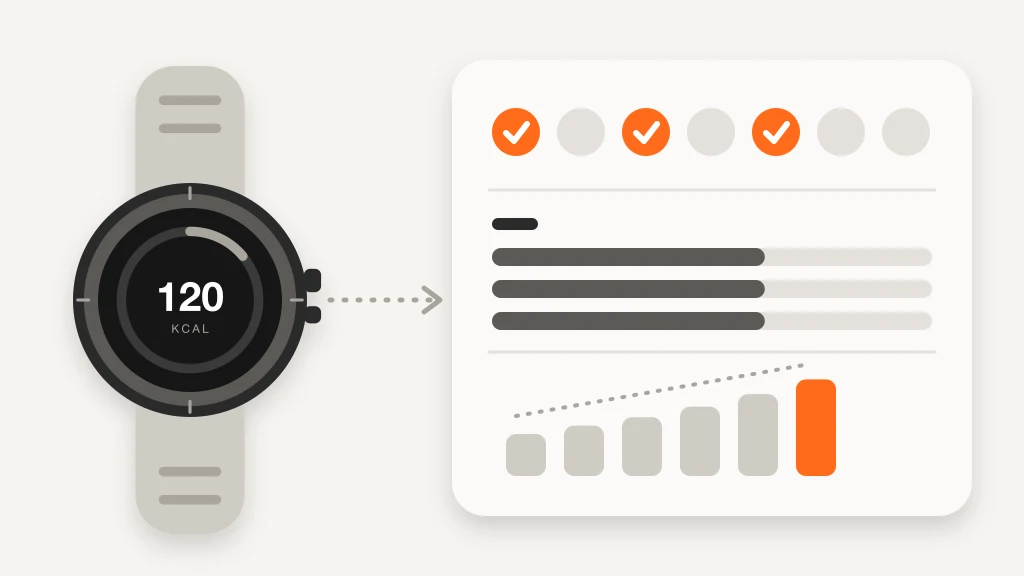
Illustrative scenario. Lena, 36, weighs 62 kg and takes a 55-minute reformer class three times a week. Her watch shows an average heart rate of 109 bpm (about 60 % of her estimated maximum of 183, from 208 − 0.7 × 36), a peak of 138 bpm during jump-board work and 120 kcal. The MET arithmetic gives 3.0 × 62 kg × 55/60 h ≈ 170 kcal, so the watch is low, but the gap is not the point. For eight weeks she logs sessions (24), adds a one-line effort rating and tests a plank hold every fortnight: 40 seconds at the start, 65 seconds by week eight, and she adds one spring on footwork. She also walks 30 minutes on two other days for aerobic work.
Action steps
- Pick the Pilates or yoga profile on your watch, wear it snug and clear of the straps and handles.
- Stop using calories to judge classes; log sessions, minutes and an RPE note instead.
- Pick two or three strength markers (plank hold, single-leg balance, spring load) and retest every 4–6 weeks.
- Plan 2–3 classes a week, and add walking, cycling or easy zone 2 sessions plus some heavier strength work.
- Read your morning resting heart rate, HRV and sleep for recovery, not the class itself.
Related guides
- Yoga and your wearable: heart rate, calories, HRV and stress
- Core training that matters: planks, anti-rotation and what a wearable can tell you
- Calories burned by activity: MET values, per-hour tables and how wearables estimate them
- Mobility vs flexibility: what's the difference and what do you need?
- Strength training for endurance athletes
FAQ
Why does my Apple Watch show so few calories for Pilates? Heart rate in a class is usually modest and your wrist moves little, so calorie models read it as light activity. Gripping, planks and wrist flexion can also disturb the optical sensor. Choose the Pilates profile and treat the number as a rough estimate.
How many calories does reformer Pilates burn? About 150–225 kcal for a 50-minute class at around 3 METs for a 60–90 kg person; faster circuit-style classes may reach more, and nobody has a precise figure.
Is Pilates or yoga better? Neither is better; they train different things. Pilates emphasises controlled strength in the trunk and hips, yoga emphasises flexibility, balance and breath. Many people enjoy both.
How often should a beginner do Pilates? Two to three sessions a week, 45–60 minutes each, is a common starting point; one or two is fine at first.
Will Pilates help me lose weight? It can support it by building strength and a habit, but it burns relatively few calories per hour, so results depend mainly on food, sleep and total daily activity.
References
- Yamato et al. (2015). Pilates for low back pain. Cochrane Database of Systematic Reviews. https://doi.org/10.1002/14651858.CD010265.pub2
- Ainsworth et al. (2011). 2011 Compendium of Physical Activities: A Second Update of Codes and MET Values. Medicine & Science in Sports & Exercise. https://doi.org/10.1249/MSS.0b013e31821ece12
- Bull et al. (2020). World Health Organization 2020 guidelines on physical activity and sedentary behaviour. British Journal of Sports Medicine. https://doi.org/10.1136/bjsports-2020-102955
- Gillinov et al. (2017). Variable Accuracy of Wearable Heart Rate Monitors during Aerobic Exercise. Medicine & Science in Sports & Exercise. https://doi.org/10.1249/MSS.0000000000001284
For general information only. This is not medical advice — talk to a qualified professional about your health.
Keep reading
Sports
Walking for fitness and weight loss: pace, heart rate zones and how much is enough
9 min read
Sports
Pickleball and your health data: heart rate zones, calories and joint load
6 min read
Metrics explained
Resting heart rate: normal ranges and what changes it
4 min read
Metrics explained
VO2 max: what it means and how to improve it
4 min read
Metrics explained
Heart rate zones explained: how to set and use them
4 min read
Devices & setup
How MoveVitals handles multiple devices: provenance, duplicates and conflicts
5 min read