

Sports
Jump rope: heart rate, calories and how to build up
Jump rope heart rate climbs fast because every skip is a small whole-body effort, so 150–180 bpm is common in a hard session. This guide covers what is normal by age, how jump rope calories compare with running and a progression that spares your shins and calves.
Written by MoveVitals Editorial Collective
Community-authored educational content. Individual clinical review is identified only when a named review is actually recorded.
Editorial standards & corrections
Key takeaways
- Moderate jump rope at 100–120 skips a minute is rated at 11.8 METs, about the same as running at roughly 13 km/h, or about 118–177 kcal per 10 minutes at 60–90 kg.
- For people in their 20s and 30s, 160–170 bpm is about 82–91 % of the estimated maximum: hard but common.
- Start with 30 seconds on and 60 seconds off for 8 rounds, 2–3 non-consecutive days a week, and add no more than a minute or two of jumping a week.
- The skipping cadence of 100–160 a minute overlaps the heart rate range, so optical wrist sensors can lock onto it; a chest strap shows true peaks.
- If you are over 40, have been inactive, have high blood pressure or a heart condition, or take medication that affects heart rate, ask your doctor which ceiling suits you.
Jump rope packs a lot of work into a small space: every skip is a hop, a landing and a wrist turn. Heart rate rises quickly because you are using calves, hips, shoulders and core continuously, with no coasting. Early on you also waste energy: high jumps, stiff landings and big arm circles cost more than they should, so a beginner's heart rate is often higher than a skilled skipper's at the same pace.
What is a normal jump rope heart rate?
There is no single right number. This table uses the Tanaka estimate of maximum heart rate (208 − 0.7 × age); an individual's true maximum often differs from the formula by 10 bpm or more — see maximum heart rate.
| Age | Estimated max (bpm) | 70–85 % (hard but steady) | 90 % (hard intervals) |
|---|---|---|---|
| 20 | 194 | 136–165 | ~175 |
| 30 | 187 | 131–159 | ~168 |
| 40 | 180 | 126–153 | ~162 |
| 50 | 173 | 121–147 | ~156 |
| 60 | 166 | 116–141 | ~149 |
| 70 | 159 | 111–135 | ~143 |
So is 160–170 bpm normal? At 20–30 it is about 82–91 % of the estimated maximum: hard, but ordinary in a vigorous session. At 40 it is close to maximum, fine for a short interval but not for 20 steady minutes. From 50 upwards it is at or above the formula's average maximum, so check the reading with a chest strap, slow down and see how you feel. A reading of 180 is a normal peak for a fit person under 30 and above the expected maximum after 40.
If you are over 40, have been inactive, have high blood pressure or a heart condition, or take medication that affects heart rate, ask your doctor which ceiling suits you. Stop and seek medical help for chest pain or pressure, fainting or near-fainting, palpitations with dizziness, or breathlessness out of proportion to the effort. A watch cannot diagnose any of these — see high heart rate during exercise and heart rate zones.
Jump rope calories burned, and jump rope vs running
Energy is roughly MET × body weight (kg) × hours. The Compendium of Physical Activities rates rope jumping by pace:
| Pace | Skips per minute | MET | Per 10 min, 60 kg | 75 kg | 90 kg |
|---|---|---|---|---|---|
| Slow | under 100 | 8.8 | ~88 kcal | ~110 kcal | ~132 kcal |
| Moderate | 100–120 | 11.8 | ~118 kcal | ~148 kcal | ~177 kcal |
| Fast | 120–160 | 12.3 | ~123 kcal | ~154 kcal | ~185 kcal |
Moderate rope is rated about the same as running at roughly 13 km/h (8 mph, 7:30/mile), a fast pace for most people. Per minute of actual skipping it is very demanding; per session, running usually wins because people can keep going for much longer. A small 1968 study of college men found that about 10 minutes of daily rope skipping improved cardiovascular fitness over several weeks about as much as 30 minutes of daily jogging, which is why rope is a time-efficient choice, not a magic one. The wider comparison is in calories burned by activity.
For weight loss, rope helps through total energy balance like any activity; it does not burn fat in a special way. A 10-minute session is roughly 120–180 kcal, so food, sleep and total weekly activity decide the result.
What a watch can and cannot do
- Wrist heart rate is unreliable on rope. Your arms and wrists move constantly and the skipping cadence (100–160 a minute) overlaps the heart-rate range, so optical sensors can lock onto it and draw a flat line near your cadence — see wearable heart rate accuracy.
- A chest strap is better. An ECG-type strap such as the Polar H10 follows every beat and shows true peaks and recovery between sets.
- Jump counts are estimates. Some watches have a jump rope profile that counts skips from the accelerometer; others record only time and heart rate. Double-unders, tangles and small hops are often miscounted, so use time as your main measure.
- Energy is a model. Calories from the watch assume steady effort, so interval sessions with rests often read high.
A jump rope workout for beginners: building up
Rope impact is repeated on the same tissues, and shin, calf and Achilles problems usually come from doing too much too soon. Start with intervals after a 5-minute warm-up (easy bounces, ankle circles — see warm-up routine), 2–3 non-consecutive days a week:
| Week | Work : rest | Rounds | Jumping time |
|---|---|---|---|
| 1 | 30 s : 60 s | 8 | 4 min |
| 2 | 30 s : 45 s | 10 | 5 min |
| 3 | 40 s : 40 s | 10 | ~6.5 min |
| 4 | 45 s : 30 s | 10 | 7.5 min |
After that, add no more than a minute or two of jumping a week towards 10–15 minutes. How many a day? There is no magic number: at 100–120 skips a minute, about 1,000 skips is roughly 10 minutes. Think in minutes, not counts. Keep jumps 1–2 cm high, land softly on the forefoot with soft knees, turn the rope from the wrists, and choose a wooden or rubber floor over concrete. Stand on the middle of the rope: the handles should reach about armpit height.
Jump rope HIIT
Once you can skip for a few minutes with good rhythm, rope makes tidy intervals — see interval training and HIIT:
- 20 s fast : 10 s rest × 8, then 2 minutes of rest; repeat 2–3 times.
- 30 s hard : 30 s easy bounce × 10.
Aim for hard but controlled effort, about 8 out of 10. One or two HIIT sessions a week is plenty, never on consecutive days. Heart rate will saw-tooth, peaking in the hard blocks and dropping towards 60–70 % of maximum in the rests.
Looking after shins, calves and ankles
Calf strain, shin pain along the front of the lower leg, Achilles tendon irritation and sore arches are the usual overload sites. Keep the work gradual, rotate it with low-impact days, and add ankle work (ankle mobility) and calf strength. If you have joint problems or carry a lot of extra weight, start with lower-impact options and ask a clinician. Persistent or sharp pain in the shin or heel means stop and have it checked — see also runner injury prevention.
Common mistakes
- Chasing a fixed heart rate such as 180 instead of judging effort against your own maximum.
- Trusting a flat wrist reading or the watch's calorie total.
- Jumping high, landing stiff and skipping on concrete.
- Jumping hard on consecutive days, or ramping minutes up weekly by 50 % or more.
In MoveVitals
Jump rope sessions from Apple Health, Garmin, COROS, Polar, Suunto, Strava and WHOOP arrive with duration, heart rate and energy where the device recorded them. MoveVitals has no jump rope sport type, so they usually appear as "other" or HIIT depending on how the source labels them. If a watch and a chest-strap app recorded the same session, the duplicate is merged and fields are chosen by your priorities, for example heart rate from the strap and energy from the watch (how conflicts are resolved). Time in zone comes from the heart-rate stream, so a strap recording shows how long you really spent near your maximum.
Worked example
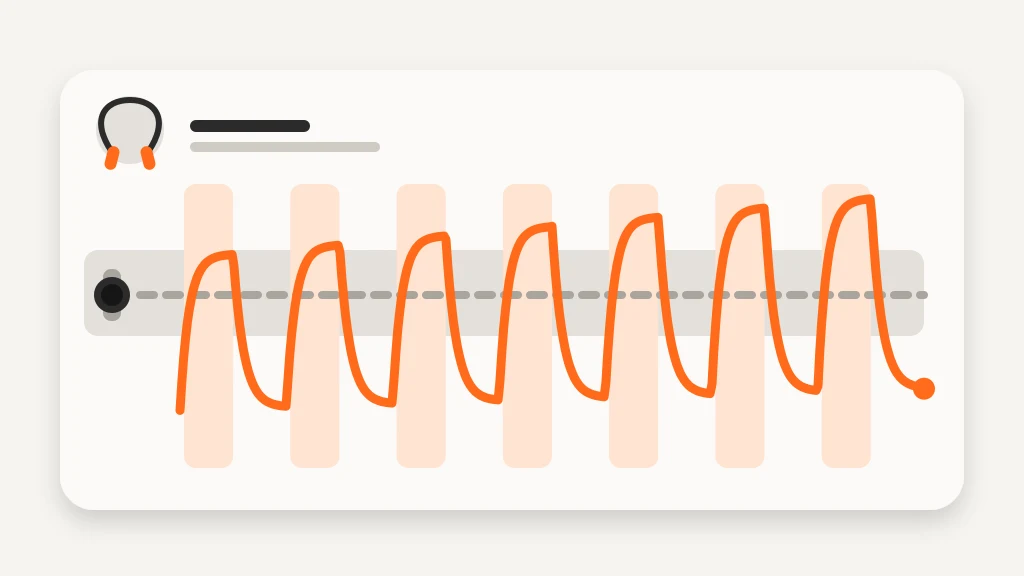
Illustrative scenario. Wei, 38, weighs 70 kg; his estimated maximum is about 181 bpm (208 − 0.7 × 38). He does 10 rounds of 30 seconds on, 30 seconds off, jumping about 130 skips a minute. His watch shows a flat line near 132 bpm, suspiciously close to his cadence. A chest strap on the same session shows peaks of 168 bpm (about 93 % of the estimate) falling to about 140 in the rests. Five minutes of jumping at 11.8 METs is 11.8 × 70 kg × 5/60 h ≈ 69 kcal, roughly 75 kcal with the rests, against the 125 kcal his watch reports. Over four weeks he follows the table, drops a session in week 3 when his shins feel tight, and reaches 10 × 45 s on, 30 s off.
Action steps
- Estimate your maximum heart rate (Tanaka formula as a placeholder) and wear a chest strap for a session to see true peaks.
- Start with 30 s on : 60 s off intervals, 2–3 non-consecutive days a week, and add only a minute or two of jumping a week.
- Keep jumps low, land softly, and use a forgiving surface and a correctly sized rope.
- Keep HIIT to one or two sessions a week at about 8/10 effort; stop for chest pain, fainting or palpitations with dizziness.
- Estimate calories from minutes of real jumping and judge results by your weight trend.
Related guides
- Maximum heart rate: formulas, field tests and why age-based estimates fail
- Interval training and HIIT: designing sessions that work
- Calories burned by activity: MET values, per-hour tables and how wearables estimate them
- Injury prevention for runners: load, strength and listening early
- Ankle mobility: the knee-to-wall test and exercises that work
FAQ
Is a heart rate of 160–170 bpm normal when skipping rope? For people in their 20s and 30s, yes: it is about 82–91 % of the estimated maximum, which is hard but common. It is close to maximum at 40 and above the formula's average from 50 upwards, so check the reading with a chest strap and slow down. Seek medical help for chest pain, fainting or palpitations with dizziness.
Does jump rope burn more calories than running? Per minute at a moderate pace, about the same as running at 13 km/h. Per session, running usually burns more because most people can sustain it longer, and rope is higher impact.
How many jumps a day should I do? Think in time rather than counts: about 1,000 skips is roughly 10 minutes at 100–120 a minute. Beginners can build towards that over several weeks.
Is jump rope good for weight loss? It can help as part of your total energy balance, at roughly 120–180 kcal per 10 minutes, but food, sleep and overall activity decide the result.
Why does my watch show a flat heart rate on rope? Wrist optical sensors can lock onto your skipping cadence. A chest strap gives a truer trace.
References
- Baker (1968). Comparison of Rope Skipping and Jogging as Methods of Improving Cardiovascular Efficiency of College Men. Research Quarterly. https://doi.org/10.1080/10671188.1968.10618043
- Ainsworth et al. (2011). 2011 Compendium of Physical Activities: A Second Update of Codes and MET Values. Medicine & Science in Sports & Exercise. https://doi.org/10.1249/MSS.0b013e31821ece12
- Tanaka et al. (2001). Age-predicted maximal heart rate revisited. Journal of the American College of Cardiology. https://doi.org/10.1016/S0735-1097(00)01054-8
- Gillinov et al. (2017). Variable Accuracy of Wearable Heart Rate Monitors during Aerobic Exercise. Medicine & Science in Sports & Exercise. https://doi.org/10.1249/MSS.0000000000001284
For general information only. This is not medical advice — talk to a qualified professional about your health.
Keep reading
Training science
Zone 2 training: the science and how to do it right
4 min read
Sports
Walking for fitness and weight loss: pace, heart rate zones and how much is enough
9 min read
Training science
Polarized training (80/20): easy most of the time, hard some of the time
4 min read
Sports
Japanese interval walking: the 3-minute fast / 3-minute slow method, step by step
8 min read
Training science
Interval training and HIIT: designing sessions that work
4 min read
Sports
Trail running with a watch: heart rate, climbs and pacing by effort
7 min read