

Sports
Climbing and bouldering: heart rate, recovery and training load for climbers
Climbing heart rate stays moderate even when a problem feels maximal, because the effort is mostly gripping and pulling with the forearms and the rests are long. This guide covers what a watch records, how to plan a week and why fingers and tendons need more recovery than your HRV can show.
Written by MoveVitals Editorial Collective
Community-authored educational content. Individual clinical review is identified only when a named review is actually recorded.
Editorial standards & corrections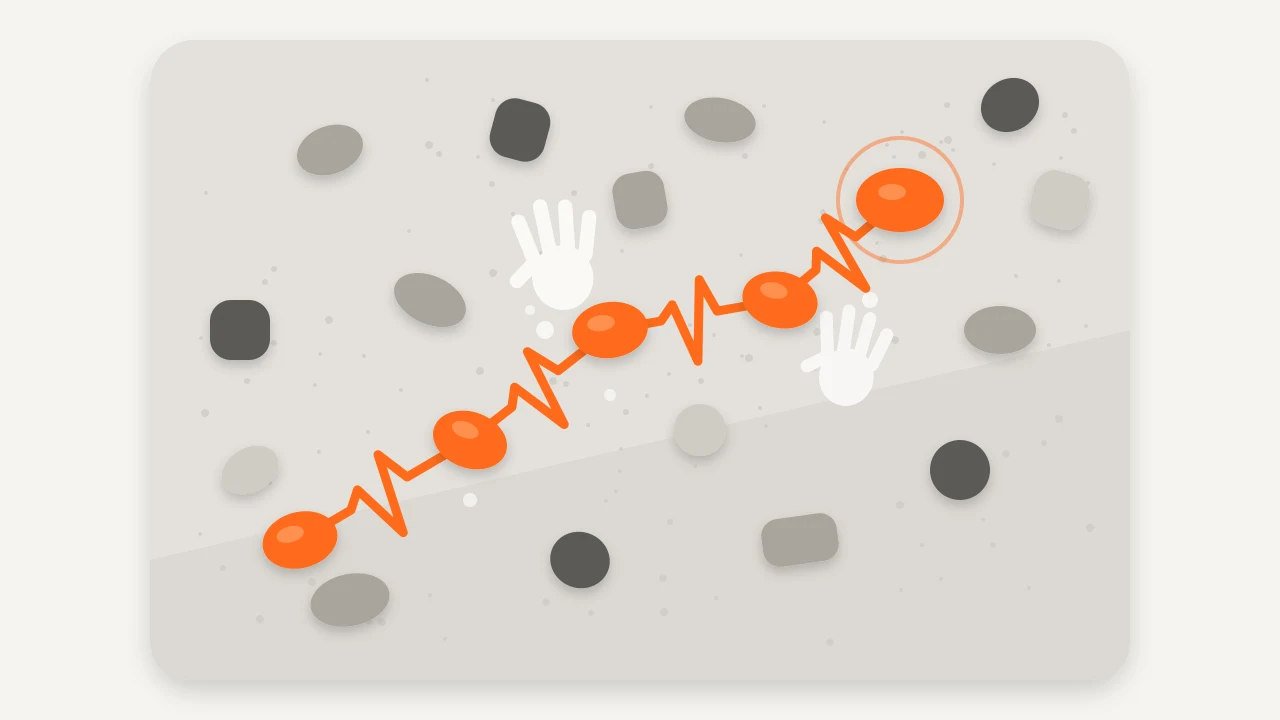
Key takeaways
- Limit bouldering means 10–60 second attempts with 2–5 minute rests, so heart rate draws a saw-tooth with a low average and short peaks; bouldering builds strength-endurance and skill more than aerobic fitness.
- Fingers, pulleys and tendons adapt more slowly than muscle, and resting heart rate or HRV cannot see them, so judge them by next-morning stiffness and pain when crimping.
- Plan 2–3 climbing sessions a week with 48 hours or more between finger-heavy days, and take an easier week at roughly half the usual volume every 4–8 weeks.
- Stop and get sharp finger pain or a pop assessed.
Bouldering means short, hard problems on low walls with a crash pad and long rests; roped climbing is longer and more continuous. Both load the same weak spots: fingers, forearms, shoulders and skin.
Why climbing heart rate is moderate
Climbing is mostly isometric and forearm-driven. The finger flexors work close to their limit while the legs and heart carry far less load than in running, so forearms "pump out" long before the heart and lungs are the limit. In bouldering you climb for 10–60 seconds and then rest 2–5 minutes, which gives a saw-tooth trace: an average that is often roughly 50–70 % of maximum, with short peaks above 80 %, varying a lot between people.
Heart rate can also run higher than the effort suggests. Reviews of sport-climbing physiology note that sustained gripping and arms working above the heart raise heart rate more than oxygen use would predict. So heart rate can look low (bouldering with rests) or high (a long, continuous route), and neither says much about difficulty.
| Style | Typical effort | What heart rate does | Main limiter |
|---|---|---|---|
| Limit bouldering | 10–60 s attempts, 2–5 min rests | Saw-tooth; low average, short peaks | Finger strength, power, skill |
| Volume or circuits | 4–6 problems back to back, short rests | Higher average, drifting up | Forearm endurance |
| Roped routes | 3–15 min continuous | Higher and sustained | Forearm endurance, skill |
| Multi-pitch or outdoor day | Hours: approach, climb, descent | Mostly low with spikes | Fatigue, food, weather |
Is bouldering good cardio? Mostly it is strength-endurance and skill. The Compendium of Physical Activities rates rock climbing at about 5.8 METs for low-to-moderate difficulty and higher for hard routes, but a gym session has long rests, so time on the wall may be a third of the session or less. Add easy zone 2 work if aerobic fitness matters to you. For the energy tables see calories burned by activity.
What a climbing watch records
- Indoor climbing or bouldering profile. It records duration, heart rate and energy. Some Garmin and COROS models also log ascents, grades and rest time; others have only a generic profile. If yours has none, use a generic strength or "other" profile.
- No GPS indoors, and indoor elevation is unreliable: air conditioning and doors shift the pressure, and walls are low.
- Wrist heart rate is disturbed. Gripping, wrist flexion, chalk and knocks against the wall tighten the tendons under the sensor and move the watch. Wear it snug on your non-dominant wrist, above the wrist bone, or use a chest strap (Polar H10) if the numbers matter — see wearable heart rate accuracy.
- Outdoors, the barometer matters. A barometric altimeter logs total ascent on multi-pitch and approach days. Calibrate at a known elevation and re-check after weather changes. GPS under a cliff can drift, and long days drain the battery.
- A watch is not a safety device. Do not rely on it for navigation without a backup.
Recovery: what HRV cannot see
Resting heart rate, HRV and sleep describe whole-body stress and recovery. They can look normal while the finger flexor tendons and pulleys are overloaded. Tendons and pulleys adapt more slowly than muscle, over weeks to months, and give less warning. Use both kinds of signals:
- Whole body: the trend in resting heart rate, HRV and sleep against your baseline, and heart rate recovery after hard efforts.
- Fingers and forearms: stiffness the next morning, tenderness at the base of a finger, pain when crimping, and whether you can repeat last week's grade with the same quality.
Finger pulley injuries are among the common climbing injuries. Sharp pain on the palm side of a finger, a pop during a move, or tenderness that lingers for days means stop climbing and have it assessed by a clinician or physiotherapist.
Climbing training plan: weekly volume and rest
A common, cautious approach looks like this; adjust to your experience and how your fingers feel.
| Level | Sessions a week | Structure |
|---|---|---|
| Beginner (first 6 months) | 2 | 60–90 min on easy and moderate problems; technique, footwork, no maximal attempts |
| Intermediate | 3 | One limit or power session, one volume or endurance session, one easy or technique session |
| All levels | 1–2 short extras | Pulling, pushing, shoulder and trunk work (strength training for endurance athletes) and thoracic mobility |
Climbing recovery between sessions: many coaches suggest 48 hours or more between sessions that load the fingers hard, and a rest day after any session where you tried maximal moves. Take 2–4 minutes between hard attempts so quality stays high, and stop when the movement turns sloppy. Fingers need more patience than lungs: avoid hangboards and campus boards until you have months of regular climbing behind you.
Every 4–8 weeks, take an easier week at roughly half the usual volume — see deload weeks. Persistent fatigue, a falling climbing level, and rising resting heart rate together are worth reading against overtraining.
Bouldering for beginners: first weeks
For a bouldering beginner, the most useful numbers are not heart rate: how many attempts you make at the same grade, how many problems you finish with good footwork, and how your fingers feel the next morning. Start with two sessions a week, climb easier problems than you could survive, and finish while you still feel good. Skin and tendons take time. Chalk and a short rest between attempts help; so does a pause the first time a finger feels sore.
Common mistakes
- Judging a session by heart rate or calories.
- Adding hangboard or campus work too early, or loading the fingers daily.
- Ignoring early finger pain and continuing to climb through it.
- Never taking an easier week.
- Skipping shoulders, antagonist pushing work and thoracic mobility.
In MoveVitals
Climbing sessions from Garmin, COROS, Polar, Suunto, Apple Health, Strava and WHOOP arrive as climbing activities with duration, heart rate and energy where the device recorded them. If a watch and another app recorded the same session, the duplicate is merged and fields are chosen by your priorities (how conflicts are resolved). Load numbers built from heart rate or energy (training load) understate the finger and forearm stress of climbing, so read them as the aerobic part of the picture. Resting heart rate, HRV and sleep from your devices sit beside them for whole-body recovery; they will not flag a sore finger, so your own notes have to.
Worked example
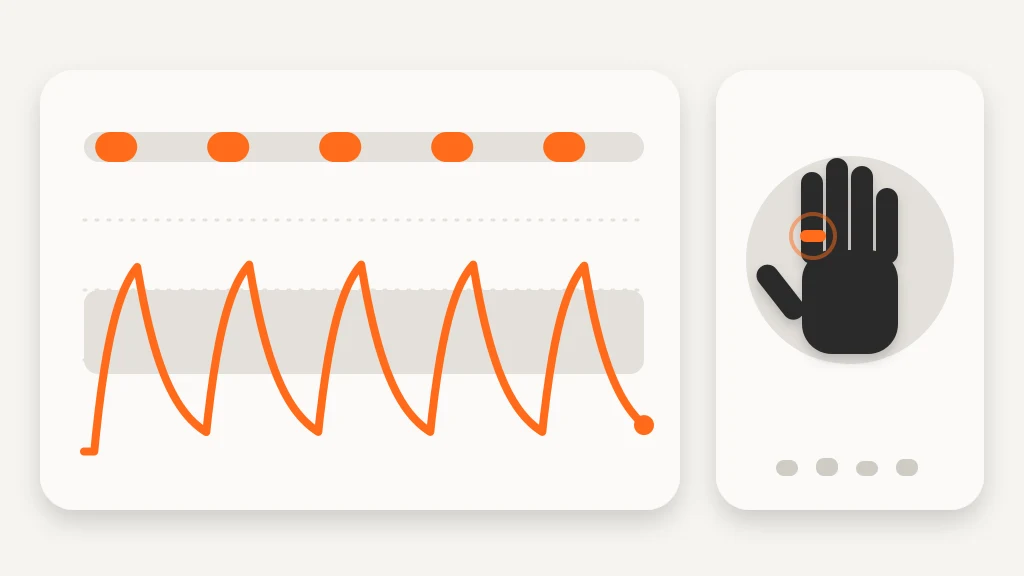
Illustrative scenario. Sofia, 29, weighs 62 kg and boulders three evenings a week. Her watch logs 105 minutes, an average of 118 bpm (about 63 % of her estimated maximum of 188, from 208 − 0.7 × 29), a peak of 164 bpm and 260 kcal. Only about 35 minutes were on the wall: 5.8 METs × 62 kg × 35/60 h ≈ 210 kcal for the climbing, plus a little energy for the rest, so the watch is not far off, but neither figure says anything about her fingers. Her HRV and resting heart rate are normal, yet in week six the base of her index finger is tender after back-to-back evenings. She moves to a limit session on Monday, an easy volume session on Wednesday and a longer technique session on Saturday, with no consecutive evenings and an easy week every sixth week. The tenderness settles within a few days; had it not, she planned to see a physiotherapist.
Action steps
- Use an indoor climbing or bouldering profile if your watch has one, wear it snug on your non-dominant wrist, and use a chest strap only if heart rate matters.
- Track attempt quality, an RPE note and the top grade you can repeat, not calories.
- Plan 2–3 sessions a week with 48 hours or more between finger-heavy days; beginners start with two.
- Take an easier week every 4–8 weeks and add 1–2 short strength sessions plus thoracic mobility.
- Add easy aerobic sessions if cardio fitness matters, and read HRV and resting heart rate as whole-body signals only.
- Stop and get sharp finger pain or a pop assessed.
Related guides
- Heart rate recovery: how fast your heart rate drops after exercise
- Training load explained: TRIMP, TSS, strain and relative effort
- Deload weeks: why planned easy weeks make you fitter
- Overreaching and overtraining: warning signs and what to do
- Thoracic spine mobility: for cyclists, rowers and desk workers
FAQ
What is a normal bouldering heart rate? It varies a lot. Averages of roughly 50–70 % of maximum with short peaks above 80 % are common because of the long rests; a sustained roped route can run higher. Heart rate says little about how hard a problem was.
Is bouldering good cardio? Partly: it builds strength-endurance and skill more than aerobic fitness. Circuits and continuous routes raise heart rate more; add easy zone 2 sessions for cardio.
How many rest days do I need? Many coaches suggest 48 hours or more between sessions that load the fingers hard, so 2–3 climbing days a week is common for beginners and intermediates.
Why does my HRV not show climbing fatigue? HRV reflects whole-body stress and recovery. Finger tendons and pulleys are small and slow to adapt, so they can be overloaded while HRV looks normal.
What should I look for in a climbing watch? An indoor climbing or bouldering profile, a barometric altimeter for outdoor days, a durable screen and strap, long battery life and, if heart rate matters, support for a Bluetooth chest strap.
References
- Sheel (2004). Physiology of sport rock climbing. British Journal of Sports Medicine. https://doi.org/10.1136/bjsm.2003.008169
- Giles et al. (2006). The Physiology of Rock Climbing. Sports Medicine. https://doi.org/10.2165/00007256-200636060-00006
- Miro et al. (2021). Finger Flexor Pulley Injuries in Rock Climbers. Wilderness & Environmental Medicine. https://doi.org/10.1016/j.wem.2021.01.011
- Ainsworth et al. (2011). 2011 Compendium of Physical Activities: A Second Update of Codes and MET Values. Medicine & Science in Sports & Exercise. https://doi.org/10.1249/MSS.0b013e31821ece12
For general information only. This is not medical advice — talk to a qualified professional about your health.
Keep reading
Sports
Trail running with a watch: heart rate, climbs and pacing by effort
7 min read
Metrics explained
VO2 max: what it means and how to improve it
4 min read
Sports
Hiking and trekking: heart rate on climbs, pacing and how to train for it
8 min read
Metrics explained
Heart rate zones explained: how to set and use them
4 min read
Training science
Zone 2 training: the science and how to do it right
4 min read
Devices & setup
Strava and MoveVitals: workouts, streams and devices that arrive via Strava
3 min read