

Sports
Dance workouts and Zumba: calories, heart rate and how wearables miss the arms
A dance workout burns roughly 200–500 kcal an hour for most adults, from a slow ballroom evening to a Zumba class, and your heart rate shows which one you really did. Wrists struggle with dance, though: arm-heavy choreography confuses the sensors, so read the trend rather than one number.
Written by MoveVitals Editorial Collective
Community-authored educational content. Individual clinical review is identified only when a named review is actually recorded.
Editorial standards & corrections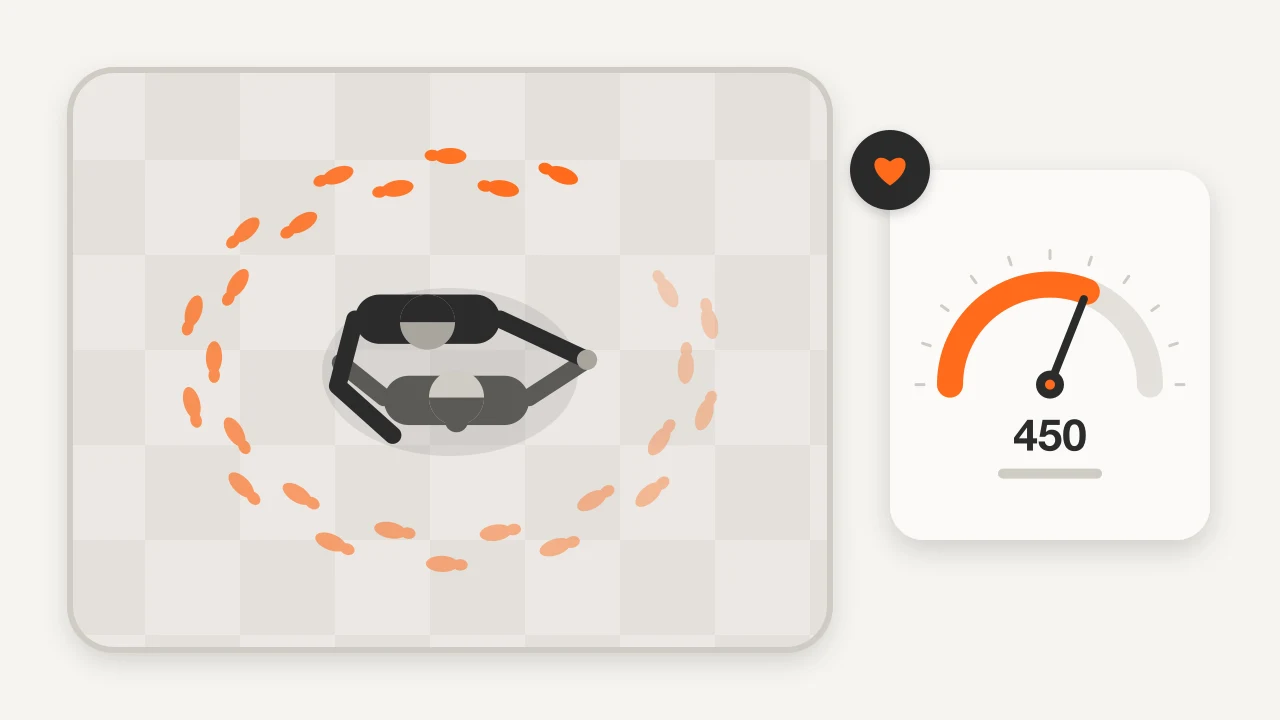
Key takeaways
- At 70 kg, slow ballroom at 3.0 METs burns about 210 kcal an hour, a Zumba group class at 6.5 METs about 455 and high-impact aerobic dance at 8.0 METs about 560.
- Zumba heart rate is very roughly 65–85 % of maximum, with peaks near the top in fast songs and lower values for relaxed social dancing.
- Waving arms, claps and spins shake the optical sensor, so wrist readings can lag, flat-line or lock onto the beat; a chest strap gives more trustworthy peaks.
- Choose a dance profile rather than walking and judge a session by average heart rate, time in zones and RPE, not by steps or the name of the style.
Dance is not one workout. A slow waltz, a salsa night, a 60-minute Zumba class and a routine in the living room sit in different intensity brackets, and so do two people in the same class.
Dance workout calories: how much does it burn?
Estimates use the usual formula, MET × body weight (kg) × hours (calories burned by activity). These values come from the 2024 Compendium of Physical Activities:
| Style | MET | Roughly, per hour at 70 kg |
|---|---|---|
| Slow ballroom (waltz, foxtrot, slow dancing) | 3.0 | 210 kcal |
| Salsa with a partner | 4.8 | 335 kcal |
| Ballet, modern or jazz class | 5.0 | 350 kcal |
| Zumba, home video | 5.5 | 385 kcal |
| Zumba, group class | 6.5 | 455 kcal |
| Aerobic dance, high impact | 8.0 | 560 kcal |
The values are gross, so they include the resting energy you would use anyway, and they assume non-stop dancing: a class with instructions, water breaks and slow songs lands lower. Zumba has no long-standing code of its own, but the 2024 update lists group classes (6.5) above home videos (5.5), which matches studies. In one, a one-hour Zumba class used about 410 kcal in inactive women, against about 210 for partnered salsa. In another, young women used about 6.8 kcal per minute in classes against 5.6 following a DVD. Effort decides the number: two people in the same class can differ by a factor of two, and a watch's figure is an estimate either way (calories burned).
Zumba heart rate and dance cardio benefits
Dance behaves like an interval session: fast songs push heart rate up, slow songs and water breaks let it fall. Zumba and dance cardio classes usually land in the moderate-to-vigorous range, very roughly 65–85 % of maximum, while relaxed social dancing is lighter. In a study of post-menopausal women at Zumba Gold classes the average was about 70 % of maximum. Read it with heart rate zones, the talk test or RPE: if you can only manage a few words, you are in the hard part.
The dance cardio benefits go beyond calories. A meta-analysis of structured dance programmes found them as effective as, and sometimes more effective than, other structured exercise for body composition, blood markers and musculoskeletal function, with similar effects on cardiovascular function. Dance also trains rhythm, coordination and balance, and a class keeps people coming back, which usually matters more than the style.
Dancing with an Apple Watch: why wrists miss the arms
- Heart rate. Waving arms, claps, spins and wrist flicks shake the optical sensor, so wrist readings can lag, flat-line or lock onto the beat of the music. Chest straps are generally more accurate than wrist sensors in arm-heavy, stop-start exercise, and wrist peaks usually look smaller and later (wrist vs chest strap accuracy).
- Calories. Watches blend heart rate and motion. A noisy heart rate gives noisy calories, and a wrist motion sensor can over-read arm-heavy moves and under-read routines where your arms stay still or are held by a partner. Compare the figure with the MET table before believing it.
- Steps. Dance steps are small, sideways or on the spot, so counts from a session are unreliable. Judge it by duration and heart rate; the day's total still adds to your daily steps.
- Workout type. Pick a dance profile if your watch has one (Apple Watch separates cardio dance from social dance). Otherwise choose cardio or HIIT rather than walking, which applies a walking model. Check your model.
Dance for older adults: balance, mood and safe intensity
Dance suits older adults because it combines balance, memory, rhythm and company; for strength and fall prevention see exercise for older adults. Community formats such as line dancing, folk dancing and ballroom classes are usually moderate: the 2024 Compendium rates moderate folk dancing at about 5 METs. Set intensity by talk test rather than "220 − age", which can be off by 10 bpm or more (maximum heart rate); some heart medicines such as beta-blockers lower heart rate, so ask your clinician how to gauge effort. Keep a chair or rail within reach, wear shoes with grip on a clear floor, and stop for chest pain or pressure, fainting, unusual breathlessness or palpitations with dizziness (high heart rate during exercise).
In MoveVitals
Dance sessions arrive as ordinary workouts from whichever source recorded them: Garmin, Polar, COROS, Suunto or WHOOP through their direct connections, or Apple Watch sessions that reach your Strava account. MoveVitals has no dedicated dance sport type, so they appear as general workouts. Duration, heart rate and calories are what the device supplied, and time in heart rate zones is calculated from the heart rate stream when the source provides one. If a watch and a chest strap both recorded the class, MoveVitals groups them as one session (how MoveVitals handles multiple devices). Direct Apple Health sync is planned, not available.
Worked example
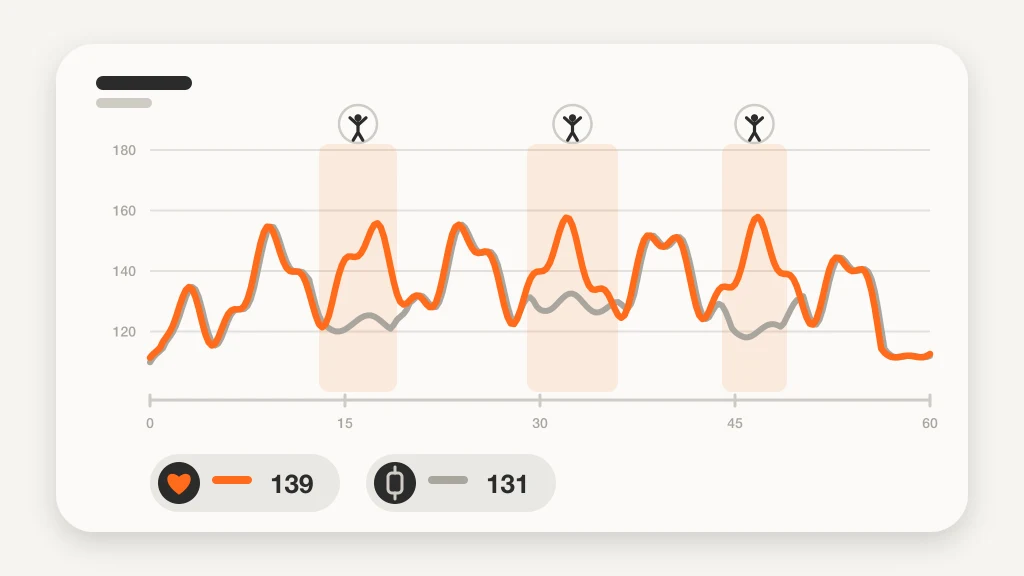
Illustrative scenario. Lucía, 46, 65 kg, takes a 60-minute Zumba class wearing a watch on her left wrist and a chest strap. Her measured maximum is about 174 bpm. The strap shows an average of 139 bpm (80 % of maximum), a peak of 162 and about 12 minutes above 148 bpm (85 %). The watch averages 131 bpm and flat-lines near 120 through an arm-heavy salsa block, so it shows only about 4 minutes above 148. It estimates 410 kcal of active energy and 3,900 steps, which looks low. A MET estimate (6.5 × 65 kg × 1 h) gives about 420 kcal gross, roughly 355 above rest, so she works with 350–420 and ignores the steps. She switches to the cardio-dance profile and uses the strap for classes. Numbers are illustrative.
Action steps
- Choose a dance profile (cardio dance or social dance, if offered) rather than walking.
- For classes, use a chest strap if you want trustworthy peaks, or wear the watch snug a finger-width above the wrist bone and check that the trace does not flat-line.
- Judge a session by average heart rate, time in zones and RPE, not by steps or the name of the style.
- Expect roughly 200–500 kcal an hour, check the watch's number against the MET table, and use your weight trend over weeks as the final check.
- Build up with two or three sessions a week, pick low-impact versions if joints complain, drink, and cool down with a few minutes of slow movement.
Related guides
- Calories burned by activity: MET values, per-hour tables and how wearables estimate them
- Heart rate zones explained: how to set and use them
- How accurate is wrist heart rate? Optical sensors vs chest straps, by sport
- Exercise for older adults: heart rate, strength, balance and fall prevention
- Cross-training: building fitness while sparing your joints
FAQ
How many calories does a Zumba class burn? Zumba calories burned in an hour are roughly 350–500 kcal for a 55–75 kg adult by MET values, and studies of classes report around 400. Watches that show active energy read lower, and both are estimates.
What is a normal heart rate during Zumba? Very roughly 65–85 % of maximum, with peaks near the top in fast songs. One study of Zumba Gold in older women found about 70 %. Use your own zones.
Which workout type should I use for dancing? A dance profile if your watch offers one; otherwise cardio or HIIT. Avoid walking, which applies a walking model.
Is dancing good for weight loss? Like other moderate exercise, it helps through total energy used over weeks. The best style is the one you keep doing; check your weight trend rather than a single calorie number.
References
- Herrmann et al. (2024). 2024 Adult Compendium of Physical Activities: A third update of the energy costs of human activities. Journal of Sport and Health Science. https://doi.org/10.1016/j.jshs.2023.10.010
- Domene et al. (2016). Salsa dance and Zumba fitness: Acute responses during community-based classes. Journal of Sport and Health Science. https://doi.org/10.1016/j.jshs.2015.04.004
- Delextrat and Neupert (2016). Physiological load associated with a Zumba fitness workout: a comparison pilot study between classes and a DVD. Journal of Sports Sciences. https://doi.org/10.1080/02640414.2015.1031162
- Delextrat et al. (2024). Heart Rate Responses of Post-Menopausal Women to Zumba Gold Classes. Biology. https://doi.org/10.3390/biology13070462
- Fong Yan et al. (2018). The Effectiveness of Dance Interventions on Physical Health Outcomes Compared to Other Forms of Physical Activity: A Systematic Review and Meta-Analysis. Sports Medicine. https://doi.org/10.1007/s40279-017-0853-5
- Shcherbina et al. (2017). Accuracy in wrist-worn, sensor-based measurements of heart rate and energy expenditure in a diverse cohort. Journal of Personalized Medicine. https://doi.org/10.3390/jpm7020003
For general information only. This is not medical advice — talk to a qualified professional about your health.
Keep reading
Sports
Walking for fitness and weight loss: pace, heart rate zones and how much is enough
9 min read
Devices & setup
Polar watches and MoveVitals: Polar Flow sync explained
3 min read
Sports
Pickleball and your health data: heart rate zones, calories and joint load
6 min read
Devices & setup
How MoveVitals handles multiple devices: provenance, duplicates and conflicts
5 min read
Training science
Zone 2 training: the science and how to do it right
4 min read
Metrics explained
Resting heart rate: normal ranges and what changes it
4 min read