

Recovery & sleep
Napping for athletes: how long, when and does it count?
A well-timed nap can boost alertness, mood and performance, and partly offset a short night. Timing and length decide whether it helps or hurts night sleep.
Written by MoveVitals Editorial Collective
Community-authored educational content. Individual clinical review is identified only when a named review is actually recorded.
Editorial standards & corrections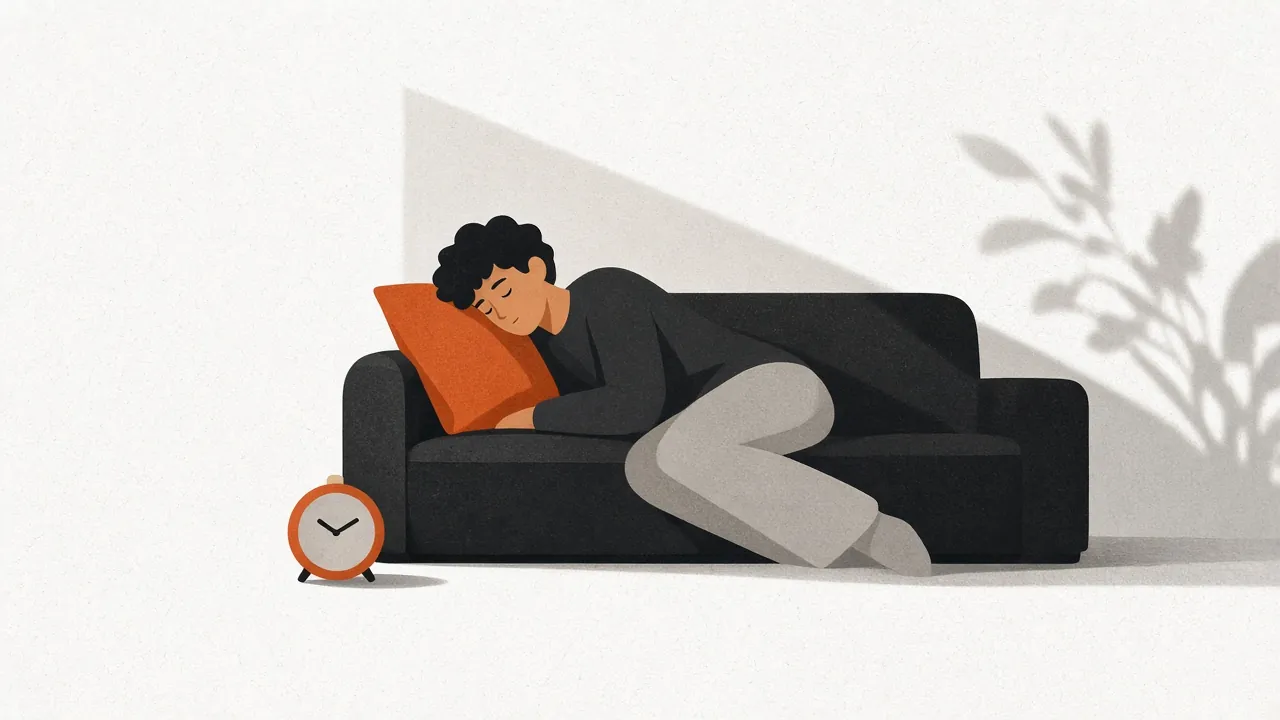
Key takeaways
- A 10–20 minute nap gives a quick alertness boost with little grogginess, a 60-minute nap includes deep sleep and more grogginess, and a 90-minute nap is a full cycle useful after sleep loss.
- The best time is early to mid-afternoon, roughly 13:00–15:00, and avoid naps within about 6 hours of bedtime if you have trouble sleeping at night.
- Waking from deep sleep causes sleep inertia that can last 30 minutes or more, so allow 15–30 minutes before hard training.
- A coffee nap means drinking a coffee and then napping 20 minutes, so the caffeine kicks in as you wake.
Nap lengths
| Length | Effect |
|---|---|
| 10–20 min | Quick alertness boost, little grogginess |
| 30 min | Some risk of grogginess (sleep inertia) |
| 60 min | Includes deep sleep; helps memory, more grogginess |
| 90 min | A full cycle; useful after sleep loss, may affect night sleep |
Best timing
- Early to mid-afternoon (roughly 13:00–15:00), when alertness naturally dips.
- Avoid naps within about 6 hours of bedtime if you have trouble sleeping at night.
- Allow 15–30 minutes after waking before hard training.
For athletes
- Useful during heavy training blocks, travel and after early race starts.
- Can partly repay sleep debt — but doesn't replace adequate nightly sleep duration.
- The "coffee nap": drink a coffee, then nap 20 minutes — caffeine kicks in as you wake.
Do wearables count naps?
WHOOP, Oura, Garmin and others detect many naps and may add them to daily sleep totals or sleep need. Short naps are sometimes missed. MoveVitals stores naps as separate sleep records with their source, so night sleep and naps aren't mixed up.
Worked example
Illustrative scenario. Kai has a 6 am swim session, sleeps about 6.5 hours on weekdays and feels drowsy by mid-afternoon. He tries a 20-minute nap at 1:30 pm with an alarm, lying down in a dark room. On nap days he reports better alertness for his evening run and doesn't feel groggy, consistent with the short-nap benefits summarised by Milner & Cote (2009). When he tried 90-minute naps after 4 pm, he fell asleep later at night, so he keeps naps short and early. His wearable logs some naps separately from night sleep; he checks the app to see how it counts them.
Action steps
- Keep most naps to 10–30 minutes to avoid grogginess.
- Nap in the early afternoon, ideally before about 3 pm.
- Set an alarm and lie down somewhere dark and quiet.
- Try caffeine just before a short nap only if it doesn't disturb your night sleep.
- Use naps to top up, not to replace a consistent night-sleep schedule.
Related guides
- How much sleep do you need? Sleep duration and sleep debt
- Sleep consistency: why a regular schedule beats a long lie-in
- Caffeine: performance benefits and how timing affects sleep
- Sleep hygiene: evidence-based habits for better sleep
FAQ
Do naps ruin night sleep? Long or late naps can; short early-afternoon naps usually don't.
I can't fall asleep in a nap. Lying quietly with eyes closed still offers some rest.
Why do I feel worse after a long nap? Waking from deep sleep causes sleep inertia — grogginess that can last 30 minutes or more.
Do naps count toward my sleep score? It depends on the device; some add naps to daily totals, others show them separately.
Can napping hurt night sleep? Late or long naps can reduce sleep pressure and delay bedtime, especially if you have insomnia.
References
- Milner & Cote (2009). Benefits of napping in healthy adults: impact of nap length, time of day, age, and experience with napping. Journal of Sleep Research. https://doi.org/10.1111/j.1365-2869.2008.00718.x
- Watson et al. (2015). Recommended Amount of Sleep for a Healthy Adult: A Joint Consensus Statement of the American Academy of Sleep Medicine and Sleep Research Society. Journal of Clinical Sleep Medicine. https://doi.org/10.5664/jcsm.4758
- Hirshkowitz et al. (2015). National Sleep Foundation’s updated sleep duration recommendations: final report. Sleep Health. https://doi.org/10.1016/j.sleh.2015.10.004
For general information only. This is not medical advice — talk to a qualified professional about your health.
Keep reading
Devices & setup
How MoveVitals handles multiple devices: provenance, duplicates and conflicts
5 min read
Recovery & sleep
Sleep hygiene: evidence-based habits for better sleep
4 min read
Metrics explained
Normal heart rate variability (HRV) by age: RMSSD vs SDNN
6 min read
Metrics explained
Resting heart rate: normal ranges and what changes it
4 min read
Recovery & sleep
Alcohol, HRV and sleep: what your wearable shows the night after
3 min read
Metrics explained
Blood oxygen (SpO2): what wearables measure and when to worry
4 min read