

Recovery & sleep
Active recovery: when easy movement beats complete rest
Light movement on recovery days increases blood flow and helps you feel fresher, as long as it stays truly easy.
Written by MoveVitals Editorial Collective
Community-authored educational content. Individual clinical review is identified only when a named review is actually recorded.
Editorial standards & corrections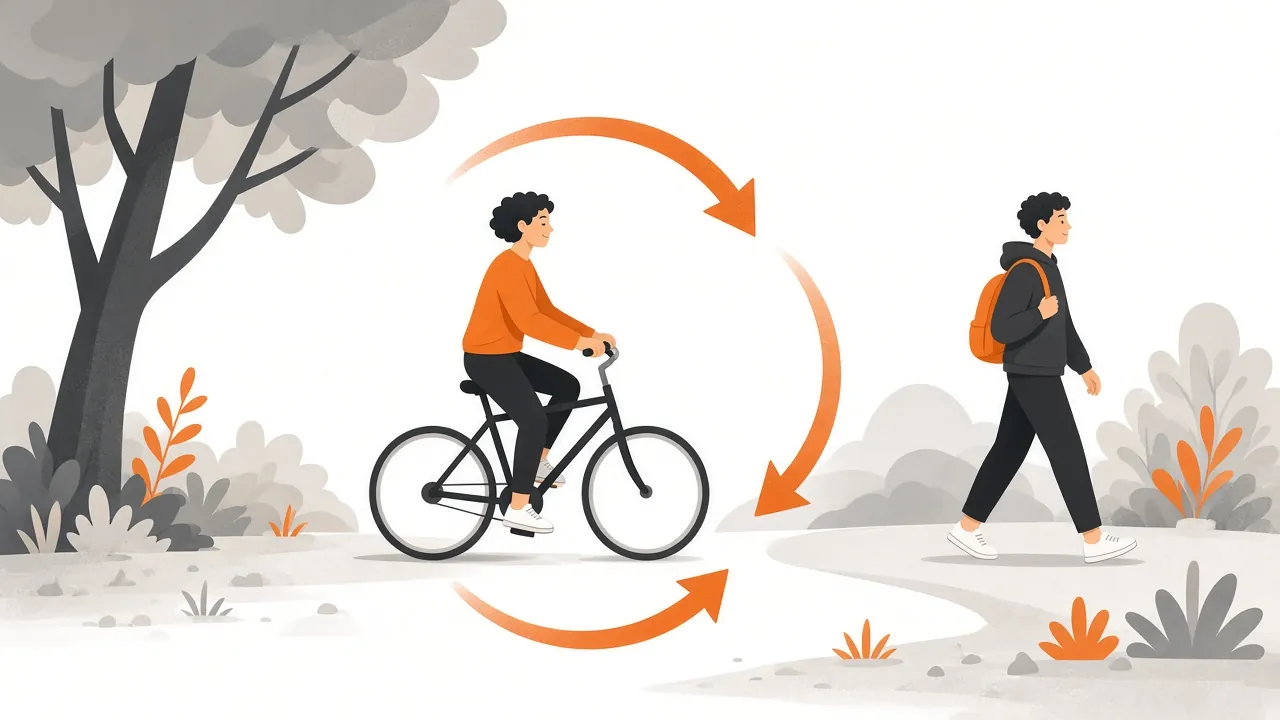
Key takeaways
- Active recovery means low-intensity exercise, typically below about 60 % of max heart rate or RPE 2–3, on days after hard training or between intervals.
- Good active recovery options are a 20–45 minute easy spin, a 20–60 minute walk or a 15–30 minute easy swim.
- Between intervals, light movement clears lactate faster than standing still.
- If you feel worse after easy movement, or you are unwell, very fatigued or injured, take a full rest day instead.
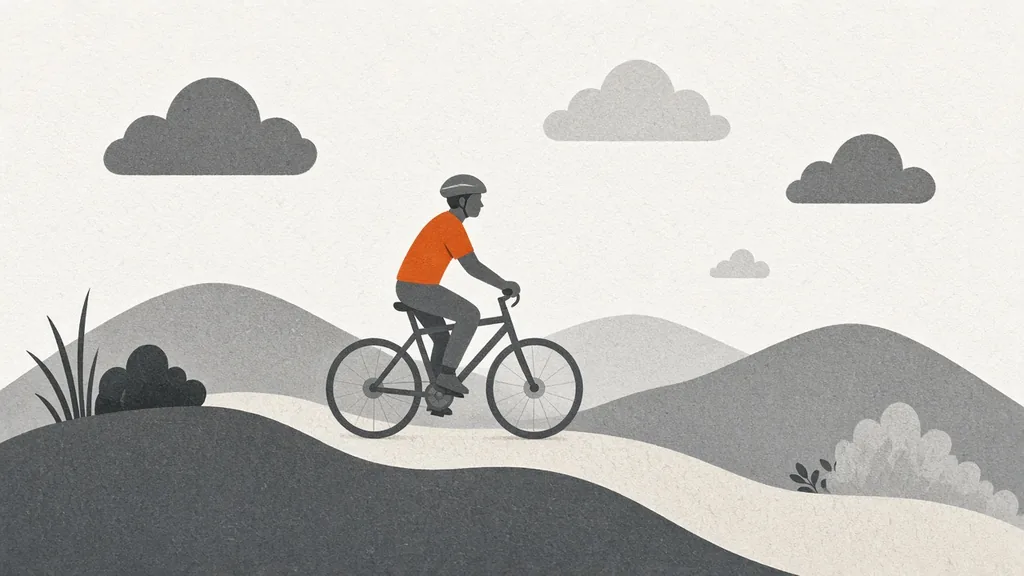
Active recovery means low-intensity exercise — typically below ~60 % of max heart rate or RPE 2–3 — on days after hard training or between intervals.
Benefits
- Improves blood flow and may reduce perceived soreness
- Helps maintain routine and mood
- Adds a little aerobic volume without extra fatigue
- Between intervals, light movement clears lactate faster than standing still
Good options
| Activity | Duration | Notes |
|---|---|---|
| Easy spin on a bike or trainer | 20–45 min | Low resistance, 85–95 rpm |
| Walking | 20–60 min | Ideal on any day |
| Easy swim | 15–30 min | Gentle on joints |
| Yoga or mobility flow | 15–30 min | See mobility vs flexibility |
| Very easy run | 20–30 min | Only for experienced runners |
Keep it easy
The most common mistake is turning recovery into a moderate workout. Use a heart rate cap (e.g. zone 1) or ride in ERG mode at a low wattage. If your recovery score or Body Battery is very low, or you're ill, choose full rest instead.
Active vs passive rest
Both have a place. Take full rest days when fatigue is high, you're ill, or life stress is heavy. Use active recovery when you're simply sore or stiff.
Worked example
Illustrative scenario. Mia runs a hard interval session on Tuesday. On Wednesday her HRV is a little below her 7-day average and her legs feel heavy. Instead of a full rest day or another hard run, she does 30 minutes of easy cycling at a pace where she can talk in full sentences (RPE 2–3/10), then 10 minutes of mobility. On Thursday her HRV is back near baseline and the planned tempo run feels normal. The point is not that active recovery "flushes lactate" — blood lactate clears within an hour either way — but that light movement keeps training consistent without adding meaningful load.
Action steps
- Keep it truly easy: RPE 2–3/10, nasal breathing, or below roughly 60–70% of max heart rate.
- Cap the session at 20–45 minutes; longer becomes a training session, not recovery.
- Choose low-impact modes (cycling, swimming, walking) if your legs are the sore part.
- Check the next morning's HRV and resting heart rate trend rather than a single reading.
- If you feel worse after easy movement, take a full rest day instead.
Related guides
- WHOOP Recovery score: what drives it and how to act on it
- Zone 2 training: the science and how to do it right
- Foam rolling: what it does and how to use it
- Overreaching and overtraining: warning signs and what to do
- Yoga and your wearable: heart rate, calories, HRV and stress
- Tai chi and qigong (Baduanjin): heart rate, balance and who benefits
FAQ
Does active recovery count toward training load? Yes, a little — but it should barely move your fitness and fatigue.
Is foam rolling active recovery? It's complementary — see foam rolling.
How easy should active recovery be? Very easy — roughly RPE 2–3/10, where you could chat comfortably; if it feels like training, slow down.
Is a rest day better than active recovery? Both have a place; full rest may suit you better when you're unwell, very fatigued or injured.
References
- Halson (2014). Monitoring Training Load to Understand Fatigue in Athletes. Sports Medicine. https://doi.org/10.1007/s40279-014-0253-z
- Meeusen et al. (2013). Prevention, diagnosis and treatment of the overtraining syndrome: Joint consensus statement of the European College of Sport Science (ECSS) and the American College of Sports Medicine (ACSM). European Journal of Sport Science. https://doi.org/10.1080/17461391.2012.730061
- Kerksick et al. (2018). ISSN exercise & sports nutrition review update: research & recommendations. Journal of the International Society of Sports Nutrition. https://doi.org/10.1186/s12970-018-0242-y
For general information only. This is not medical advice — talk to a qualified professional about your health.
Keep reading
Training science
Zone 2 training: the science and how to do it right
4 min read
Training science
Polarized training (80/20): easy most of the time, hard some of the time
4 min read
Training science
Interval training and HIIT: designing sessions that work
4 min read
Mobility & stretching
Mobility vs flexibility: what's the difference and what do you need?
3 min read
Devices & setup
Strava and MoveVitals: workouts, streams and devices that arrive via Strava
3 min read
Metrics explained
VO2 max: what it means and how to improve it
4 min read