

Training science
The Norwegian method: double-threshold training explained (and who it suits)
The Norwegian method fits a lot of controlled threshold running into the week, sometimes as a double-threshold day with two sessions, and caps intensity by lactate or heart rate rather than pace. It is a promising but lightly tested approach, and elite schedules should not be copied as written.
Written by MoveVitals Editorial Collective
Community-authored educational content. Individual clinical review is identified only when a named review is actually recorded.
Editorial standards & corrections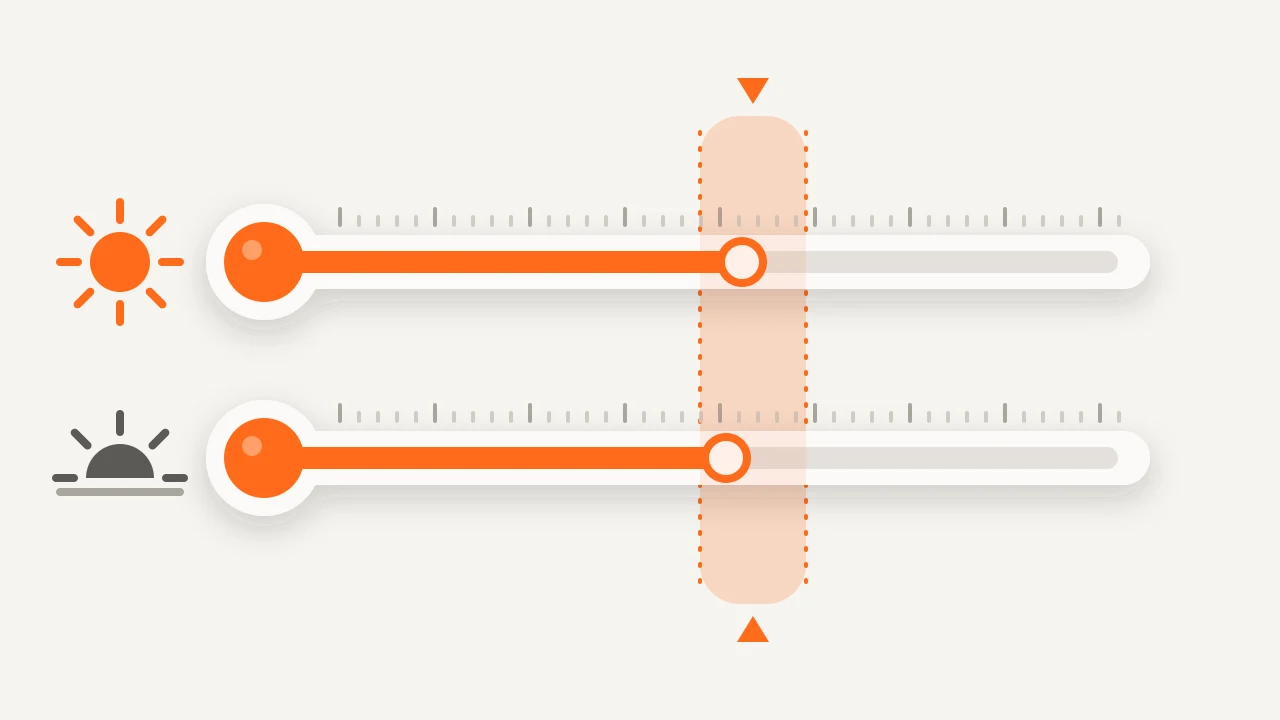
Key takeaways
- Sub-threshold means below the point where lactate climbs fast, and elite reports target roughly 2–4.5 mmol/L.
- Elite double-threshold schedules report 3–4 threshold sessions a week and 150–180 km of weekly volume, while "Norwegian singles" uses 1–2 sessions of reps such as 4–6 × 5–8 minutes.
- Without a lactate meter, start a few beats, roughly 3–8 bpm, below your threshold heart rate from a 30-minute test, with RPE of about 6–7 out of 10.
- The finishing rule is simple: the last rep should look like the first, with the same heart rate band and a similar pace.
- The evidence is mostly descriptive, with no head-to-head trials in recreational runners, and beginners or anyone returning from injury should not copy it.
What the Norwegian method is
Norwegian method running takes its name from Norwegian coaches and endurance athletes, and double threshold training, its best-known feature, has been described in the sports-science literature. A recent review (Casado et al., 2023) outlines it as three to four lactate-guided threshold interval sessions plus one VO2max session a week, with easy running making up the rest, at up to 150–180 km (93–112 miles) a week in world-class runners. In the threshold sessions, pace is dictated by a blood lactate target, typically 2–4.5 mmol/L, measured every one to three reps. Some of those sessions are split into a morning and an afternoon workout on the same day: the "double-threshold" day. That allows more total threshold work without any single session being exhausting.
| Elite double-threshold | "Norwegian singles" (amateur version) | |
|---|---|---|
| Threshold sessions per week | 3–4, some as morning plus afternoon | 1–2, one per day |
| Typical work | Reps of about 3–10 min, such as 5 × 6 min or 10 × 3 min, with a minute or less of jogging | 4–6 × 5–8 min, or 3–4 × 10 min, with 1 min jogging |
| Weekly volume | Reported 150–180 km (about 93–112 miles) | Whatever you already run comfortably |
| Control | Finger-prick lactate every 1–3 reps | Heart rate cap and RPE; lactate meter optional |
| Other hard running | One VO2max-type session | Optional; many skip it |
Why intensity is governed by lactate or heart rate, not pace
Threshold pace is not a fixed number. Heat, hills, wind, sleep, stress, altitude and accumulated fatigue all change the pace that produces a given physiological cost. A fixed pace can be comfortably below threshold on a fresh, cool day and well above it after a poor night in summer. Lactate is a more direct measure of that internal load.
Staying sub-threshold, below the point where lactate accumulates quickly (see lactate threshold), is what lets you repeat sessions with limited fatigue. The reps allow fast absolute speeds while metabolic stress stays moderate (Casado et al., 2023). The practical rule is that the physiological signal sets the pace, not the other way round.
Doing it with a watch instead of a lactate meter
A lactate meter is the reference, but your watch already records signals that approximate the same control:
| Signal | How to use it | Limits |
|---|---|---|
| Chest-strap heart rate | Start a few beats (roughly 3–8 bpm) below the threshold heart rate from a 30-minute test, then adjust by feel | It lags 1–2 minutes at the start of each rep, so it is poor for reps under about 4 minutes; heat pushes it up |
| Pace within the session | Let heart rate set the pace; later reps may need to be slightly slower | Hills and wind distort pace |
| RPE | About 6–7 out of 10: hard but controlled, a few words possible, as if you could do more reps (RPE) | Subjective, so learn it alongside heart rate |
| Drift across reps | Same pace with rising heart rate means you are above sub-threshold, so ease off (cardiac drift) | Heat adds drift on its own |
| Morning HRV and resting heart rate | Well off your baseline for 2+ days: swap the session for easy running | Single mornings are noisy |
| Watch threshold estimate | Garmin and COROS estimate threshold pace and heart rate from runs on many models | A starting point only; check against a 30-minute test |
The finishing rule is simple: the last rep should look like the first, with the same heart-rate band and a similar pace. If the last rep is a struggle, the session was too hard. If later reps need a much slower pace to hold the same heart rate, stop early and keep the rest easy.
How it compares with polarized and 80/20 training
| Model | Where the hard work sits | Strength | Watch-out |
|---|---|---|---|
| Polarized (80/20) | Mostly easy, plus VO2max-type intervals above threshold | Best studied; hard days are clearly hard | Hard days are demanding and cost recovery |
| Traditional tempo / threshold | One continuous or cruise-interval session a week | Simple | Easy to run too hard; one session caps total threshold time |
| Norwegian | Several sub-threshold interval sessions plus easy running | A lot of quality at modest fatigue per session | Needs volume, a way to control intensity, and good recovery |
In practice the models overlap: all keep most running easy. The difference is where the harder minutes go. The Norwegian approach puts more of them at the threshold and fewer at VO2max.
Evidence and who it suits
The evidence is mostly descriptive: elite coaching practice and reviews (Tjelta, 2016; Casado et al., 2023), not randomised trials in recreational runners. Elite results are also confounded by talent, high volumes, altitude camps and recovery support. A 9-week trial in well-trained endurance athletes favoured polarized over threshold-focused training (Stöggl & Sperlich, 2014), but it compared different training mixes, not lactate-capped sub-threshold intervals, so it does not settle the question.
- May suit: runners who have trained consistently for a year or more, have a solid aerobic base, are injury-free and sleeping reasonably well, and have plateaued on their current structure.
- Should not copy it: beginners, anyone returning from injury or illness, low-mileage runners, people with poor sleep or high life stress, those with a history of overuse injuries, and anyone who tends to turn every "controlled" session into a race.
- Do not copy elite schedules: 150 km weeks and two-a-days come with coaching, testing and recovery support that most people lack.
In MoveVitals
Heart rate and pace streams from Garmin, COROS, Polar, Suunto, Strava or Apple Health come together in one activity view, so you can see how heart rate and pace evolved through each session and whether heart rate drifted. Time in zone is calculated from the heart rate stream, and morning HRV and resting heart rate from a watch, ring or WHOOP give readiness context against your personal baseline. MoveVitals does not measure lactate or prescribe sessions. See training load for tracking the weekly total.
Worked example
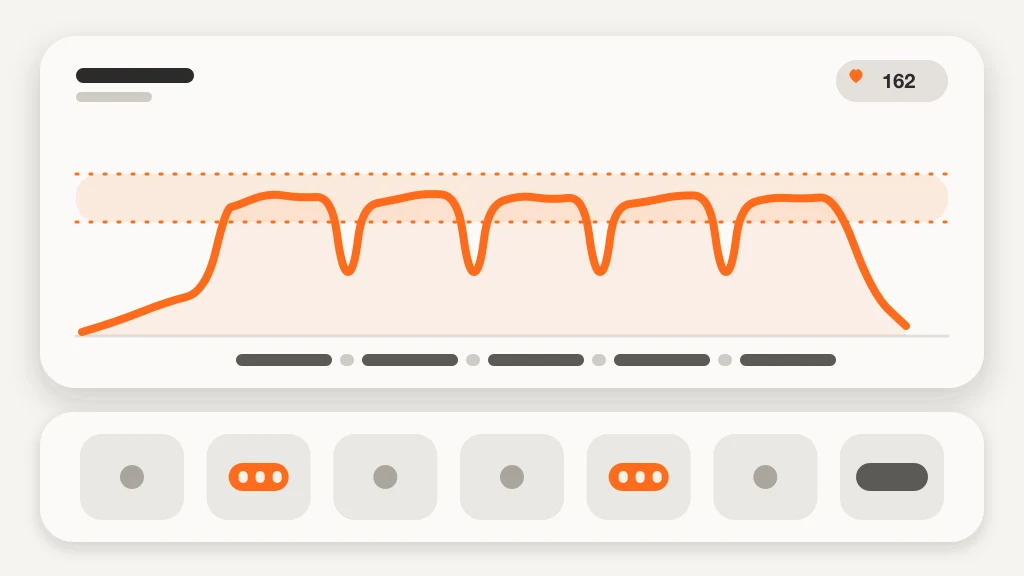
Illustrative scenario. Jonas, 38, runs about 55 km (34 miles) a week and races a 10K in 44:30. A 30-minute solo time trial gives an average heart rate of 168 bpm over the last 20 minutes at 4:30/km (7:15/mile), so he takes 168 as his threshold heart rate. His "singles" week has two sub-threshold sessions: Tuesday 5 × 6 min with 1-minute jogs and Friday 4 × 8 min, both capped at 160–164 bpm, which first lands at about 4:44/km (7:37/mile). Everything else is easy running below about 145 bpm, plus a 90-minute long run on Sunday. On a hot Friday his heart rate reaches 166 by the second rep at 4:42/km, so he slows to about 4:52/km (7:50/mile) to hold 162–164 rather than chase pace. When his morning HRV sits well below baseline for two days, he swaps one session for an easy run. After eight weeks the same 6-minute reps at 162 bpm run at about 4:36/km (7:25/mile), and a 10K time trial gives 43:50. Figures are illustrative.
Action steps
- Find your reference point: run a 30-minute solo time trial for threshold heart rate and pace (or use a lab or lactate test), and make sure you have been running consistently with a solid aerobic base.
- Start with singles: turn one hard run a week into 4–5 × 6 min with 1-minute jogs, capped a few beats below threshold heart rate. Add a second session after 2–3 weeks if you recover well.
- Let heart rate and RPE set the pace: slow down when heart rate drifts above the cap, and finish with a last rep that matches the first.
- Keep everything else easy, including the day after, and swap a session for easy running if HRV or resting heart rate are off for two or more days.
- Retest every 6–8 weeks under similar conditions, and consider doubles only after months of singles with enough sleep and recovery.
Related guides
- Lactate threshold: the most trainable marker of endurance
- Polarized training (80/20): easy most of the time, hard some of the time
- Tempo runs: how fast, how long and why they work
- Heart rate zones explained: how to set and use them
- Overreaching and overtraining: warning signs and what to do
FAQ
Is the Norwegian method better than polarized training? There are no head-to-head trials in recreational runners. Both keep most running easy; polarized training puts the hard minutes above threshold, the Norwegian approach at sub-threshold. Choose the one you can execute and recover from.
Can I do it without a lactate meter? Approximately, yes. A chest strap, RPE, drift checks and a 30-minute test give a workable control. A portable lactate meter is optional and takes practice to use consistently.
How many lactate threshold sessions per week? Elite reports describe three to four, some split into doubles. Most runners do well to start with one or two, with at least one easy day between them.
What heart rate should I use for the Norwegian method? A few beats below your lactate-threshold heart rate, for example 160–164 bpm for a threshold heart rate of 168, confirmed by RPE. Individual variation is large, and heart-rate control works best with reps of 5 minutes or longer.
Can cyclists or triathletes use the same idea? The principle of controlled sub-threshold intervals is similar in spirit to cycling's sweet spot training, where power rather than heart rate is usually the control.
References
- Casado et al. (2023). Does Lactate-Guided Threshold Interval Training within a High-Volume Low-Intensity Approach Represent the "Next Step" in the Evolution of Distance Running Training? International Journal of Environmental Research and Public Health. https://doi.org/10.3390/ijerph20053782
- Tjelta (2016). The training of international level distance runners. International Journal of Sports Science & Coaching. https://doi.org/10.1177/1747954115624813
- Stöggl & Sperlich (2014). Polarized training has greater impact on key endurance variables than threshold, high intensity, or high volume training. Frontiers in Physiology. https://doi.org/10.3389/fphys.2014.00033
- Seiler & Kjerland (2006). Quantifying training intensity distribution in elite endurance athletes: is there evidence for an "optimal" distribution? Scandinavian Journal of Medicine & Science in Sports. https://doi.org/10.1111/j.1600-0838.2004.00418.x
For general information only. This is not medical advice — talk to a qualified professional about your health.
Keep reading
Training science
Zone 2 training: the science and how to do it right
4 min read
Training science
Polarized training (80/20): easy most of the time, hard some of the time
4 min read
Training science
Interval training and HIIT: designing sessions that work
4 min read
Sports
Trail running with a watch: heart rate, climbs and pacing by effort
7 min read
Mobility & stretching
Mobility vs flexibility: what's the difference and what do you need?
3 min read
Devices & setup
Strava and MoveVitals: workouts, streams and devices that arrive via Strava
3 min read