

Training science
Indoor cycling and ERG mode: getting the most from a smart trainer
Smart trainers turn indoor riding into precise, structured training. ERG mode holds your target power automatically; resistance and simulation modes feel more like the road.
Written by MoveVitals Editorial Collective
Community-authored educational content. Individual clinical review is identified only when a named review is actually recorded.
Editorial standards & corrections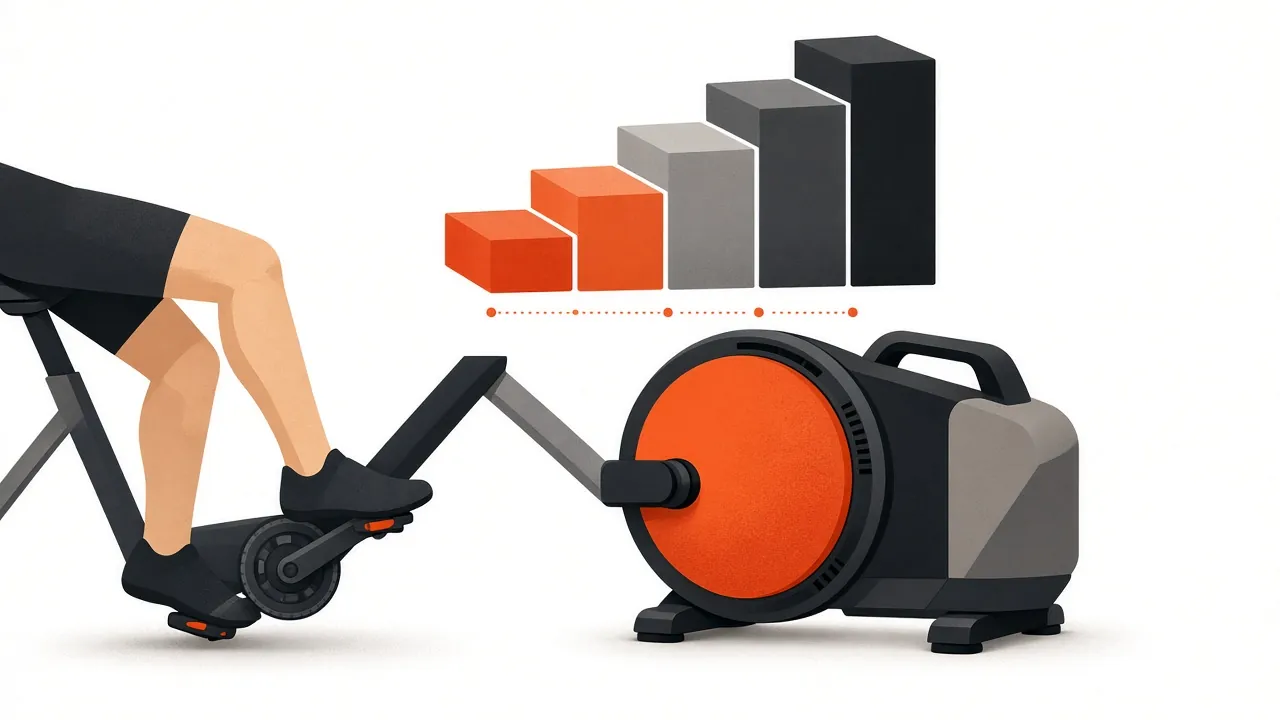
Key takeaways
- ERG mode holds a target wattage regardless of cadence or gear, simulation mode follows a virtual gradient, and a fixed resistance level suits sprints and free riding.
- If cadence drops in ERG, the trainer raises torque and you can grind to a halt, the "spiral of death", so use a moderate gear and turn ERG off for sprints shorter than about 15 seconds.
- Direct-drive trainers are typically accurate to ±1–2.5 %, and indoor FTP is often 5–10 % below outdoors, so consider separate values.
- You sweat more indoors, so use a strong fan and drink 500–1000 ml per hour.
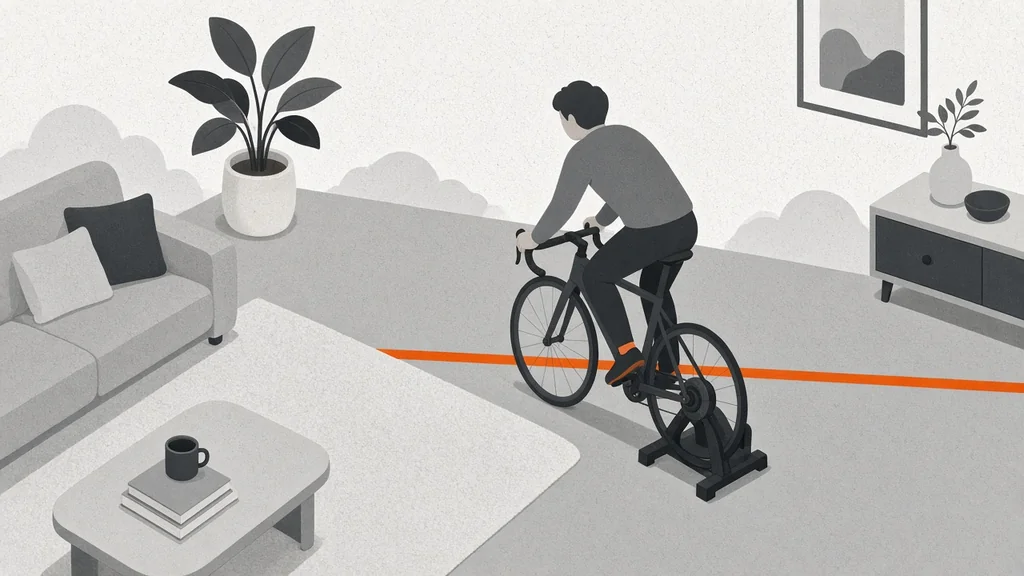
A smart trainer such as the Magene T600, Wahoo KICKR or similar measures power and controls resistance via Bluetooth/ANT+. Apps like Zwift, Wahoo SYSTM, TrainerRoad or the Magene app send it workouts.
Trainer modes
| Mode | What it does | Use for |
|---|---|---|
| ERG | Holds a target wattage regardless of cadence or gear | Structured intervals, sweet spot, zone 2 |
| Simulation (SIM) | Resistance follows virtual gradient | Zwift rides and races |
| Resistance / level | Fixed resistance level | Sprints, free riding |
ERG mode tips
- Avoid the "spiral of death": if cadence drops, ERG raises torque and you grind to a halt. Keep cadence up and shift to a smaller rear cog when starting hard intervals.
- Use a moderate gear (e.g. small chainring, middle cassette) for faster response.
- Turn ERG off for sprints shorter than ~15 seconds.
Make indoor riding effective
- Cooling: a strong fan or two. Heat raises heart rate and reduces power — see cardiac drift.
- Hydration: you sweat more indoors; drink 500–1000 ml per hour.
- Calibrate: spin-down or zero-offset regularly, per the manufacturer.
- Indoor FTP: often 5–10 % below outdoors; consider separate values.
- Structure: indoor time is efficient — 60 minutes of focused work can match a longer outdoor ride.
Getting the data into one place
Magene rides sync via the Magene app to Strava; Zwift uploads to Strava and Garmin. MoveVitals reads these through Strava and marks the original recording device, so a Zwift ride on a Magene trainer isn't duplicated or mislabelled.
Worked example
Worked example. Jo's FTP is 240 W. Her session is 3 × 12 minutes at 90% FTP (216 W) in ERG mode. The trainer holds 216 W whatever her cadence, so she focuses on steady 85–95 rpm. In the third interval her heart rate climbs from 152 to 164 bpm at the same power — cardiac drift from a warm room. Adding a second fan and 750 ml of drink per hour cut the drift on the next session. For sprints she switches to resistance mode, where ERG would lag behind her efforts.
Action steps
- Calibrate or spin-down the trainer regularly.
- Use ERG for steady intervals and resistance mode for sprints.
- Set up at least one strong fan and a towel.
- Drink more than outdoors — indoor sweat rate is often higher.
- Shift to an easier gear before intervals to keep cadence natural.
Related guides
- Zwift with MoveVitals: indoor rides and runs via Strava
- FTP (functional threshold power): what it is and how to test it
- Sweet spot and threshold training: raising your FTP
- Cardiac drift (decoupling): why heart rate rises at the same pace
- Indoor cycling classes (spin, Peloton): calories, heart rate zones and output
FAQ
Is trainer power accurate? Direct-drive trainers are typically ±1–2.5 %. Don't compare it blindly with a pedal power meter.
Can I do long rides indoors? Yes, but break them up mentally and keep cooling and fuelling on point.
Why does ERG feel harder at low cadence? At a fixed power, lower cadence means more force per pedal stroke, so it feels heavier; shifting or spinning faster eases it.
Is indoor FTP different from outdoor FTP? Many riders produce slightly less power indoors due to heat and less movement; some keep separate values.
References
- Racinais et al. (2015). Consensus recommendations on training and competing in the heat. British Journal of Sports Medicine. https://doi.org/10.1136/bjsports-2015-094915
- Thomas et al. (2016). Position of the Academy of Nutrition and Dietetics, Dietitians of Canada, and the American College of Sports Medicine: Nutrition and Athletic Performance. Journal of the Academy of Nutrition and Dietetics. https://doi.org/10.1016/j.jand.2015.12.006
- Seiler (2010). What is Best Practice for Training Intensity and Duration Distribution in Endurance Athletes?. International Journal of Sports Physiology and Performance. https://doi.org/10.1123/ijspp.5.3.276
For general information only. This is not medical advice — talk to a qualified professional about your health.
Keep reading
Training science
Sweet spot and threshold training: raising your FTP
3 min read
Training science
Zone 2 training: the science and how to do it right
4 min read
Devices & setup
Strava and MoveVitals: workouts, streams and devices that arrive via Strava
3 min read
Training science
Interval training and HIIT: designing sessions that work
4 min read
Mobility & stretching
Mobility vs flexibility: what's the difference and what do you need?
3 min read
Training science
Polarized training (80/20): easy most of the time, hard some of the time
4 min read